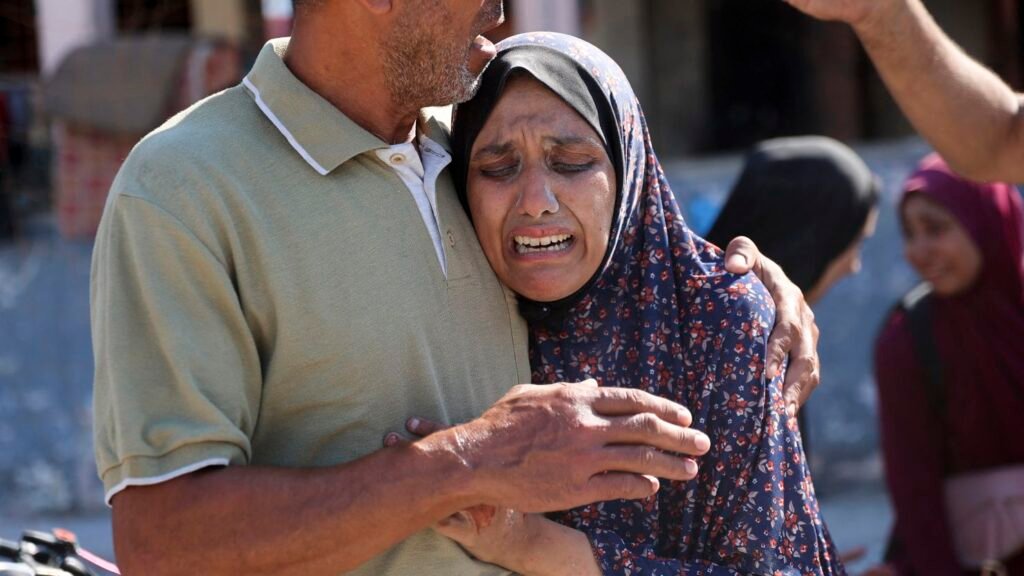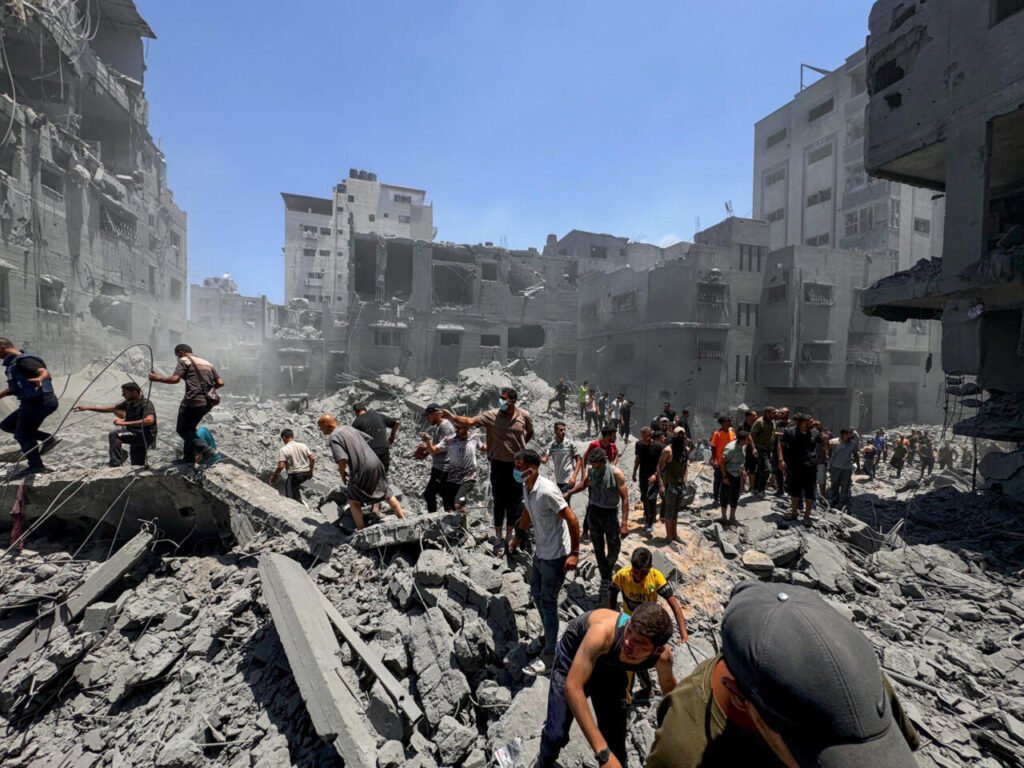
Gaza Herald _Families across Gaza wake each day surrounded by rubble and uncertainty, searching for food, safety, and a fragile sense of normalcy. Moving through damaged streets and nearly empty markets, residents attempt to preserve small routines of daily life despite constant pressure and instability. For many, adaptation has become a forced response to overlapping economic, social, and humanitarian crises.
The experience of Jwad Hazallah, 33, reflects this reality. Living in a tent beside the ruins of his home, he describes days that blur together without clear meaning. What once felt shocking has gradually become routine, a change that now worries him more than the hardship itself.
A Life Reduced to Survival
Inside tents and temporary shelters, daily life has narrowed to the most basic needs. Families spend hours searching for water, bread, and small amounts of food, carefully dividing what little they have to last another day.
Hazallah says the hardest part is not just the lack of resources but the constant sense of instability. Work opportunities are rare, and when they do appear, they are often temporary and poorly paid. For many young people, long-held dreams of education, careers, and stability have been replaced by the simple goal of surviving the day.
Living in Tents, Adapting to Loss
For Shaima Masoud, 37, who lives with her family in a tent at a displacement center west of Gaza City, the most difficult change has been how quickly people adapt to harsh conditions.
In the early days, cooking over an open flame in a metal container felt unbearable. Now she instinctively searches for dry cardboard to keep the fire burning. Sand fills their food, clothes, and bedding, yet the family has learned to accept it as part of daily life.
Her household belongings have been reduced to the bare minimum: a single pot, a small pan, a knife, and a few plastic plates. Meals are no longer about variety, but about having enough to eat.
A Generation Growing Up in Crisis
For Ramzi Al-Dahdouh, 19, the most unsettling part of life in Gaza is how quickly people become accustomed to devastation.
He describes streets filled with sewage pits and piles of garbage, conditions that once shocked residents but are now treated as ordinary. Even the coastline, once a place where young people gathered for relief and laughter, has transformed into a crowded landscape of tents and displaced families.
Like many students his age, Ramzi once imagined a future filled with university life, new friendships, and career ambitions. Today, education feels distant, replaced by the daily struggle to help his family survive.
Forced Adaptation: The Psychological Toll
Psychologist Raeda Awadallah explains that what appears to be calm among Gaza’s residents does not necessarily reflect genuine recovery. Instead, it represents what she describes as forced coexistence with an imposed reality.
According to Awadallah, many people continue their daily routines while carrying unresolved trauma. Long periods of displacement, overcrowded tents, and the absence of privacy have led to widespread psychological symptoms, including insomnia, anxiety, irritability, and difficulty concentrating.
Without long-term psychological support and a stable environment, she warns that these conditions may evolve into more serious mental health disorders, including depression and post-traumatic stress.
Community Bonds Under Pressure
Social specialist Mahmoud Abdul Aziz Mansour says the social adaptation seen in Gaza is largely driven by necessity. Families accept difficult circumstances not because they want to, but because the surrounding environment leaves them little choice.
He notes that people rely heavily on mutual support within families and neighborhoods, sharing limited resources and adjusting expectations to maintain social cohesion.
While this form of adaptation allows communities to endure extreme hardship, Mansour emphasizes that it does not necessarily indicate true stability. Instead, it is often a survival mechanism that helps people navigate ongoing pressure while preserving the social fabric of their communities.