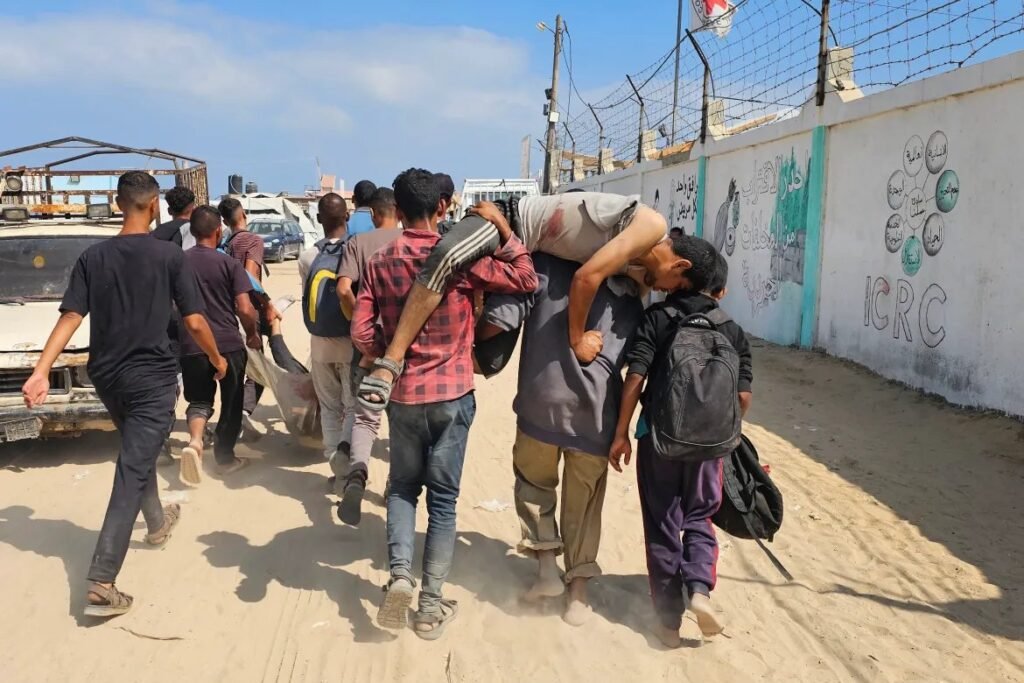
Gaza Herald_ While cameras focus on airstrikes, rubble, and mass destruction, Gaza is enduring another form of warfare, slower, quieter, yet no less lethal: the war of thirst. Through the systematic targeting of water wells, the destruction of distribution networks, and the obstruction of fuel and maintenance supplies, water has been transformed from a fundamental human right into a weapon of collective punishment.
From Gaza City in the north to the displaced families sheltering in makeshift tents in Al-Mawasi, west of Khan Younis, a calculated policy is unfolding, one that weaponizes dehydration to exhaust civilians, intensify suffering, and undermine daily survival, far from the spotlight of global media coverage.
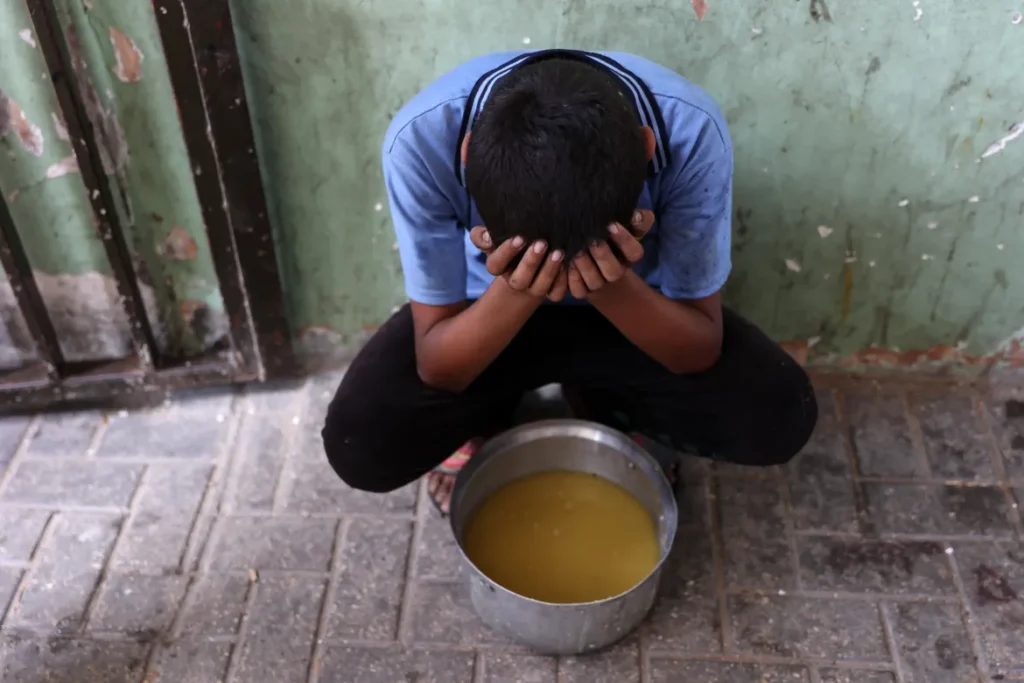
Recent data reveal a catastrophic collapse in per-capita water access. Today, the average individual in Gaza receives only 3 to 5 liters of water per day, far below the emergency minimum standard of 15 liters recommended by the World Health Organization. Prior to the war, daily consumption ranged between 80 and 90 liters. This dramatic decline reflects the scale of devastation inflicted upon Gaza’s water infrastructure and supply systems.
In Gaza City, municipal authorities report that over 70 percent of water wells have been rendered inoperable due to direct bombardment, power outages, and fuel restrictions. Current production meets only a quarter of the population’s actual needs, leaving entire neighborhoods without access to water for days, sometimes receiving it for only a few hours at a time.
Beyond well destruction, water distribution networks have been extensively damaged, causing massive leakage and contamination. In many areas, polluted water now seeps into intact pipelines, posing severe public health risks. Municipal repair crews are frequently denied access to damaged sites, and essential equipment has been repeatedly targeted, making maintenance operations dangerous or altogether impossible.
In southern Gaza, the humanitarian crisis is particularly severe in Al-Mawasi, where nearly 700,000 displaced people are concentrated. Approximately 80 percent of water wells in Khan Younis have been destroyed, while remaining sources are often located within restricted zones inaccessible to repair teams. As a result, families survive on extremely limited quantities of water, reserved primarily for drinking and cooking, while hygiene and sanitation needs go unmet.
This severe shortage has triggered alarming health consequences, including widespread outbreaks of skin and gastrointestinal diseases, disproportionately affecting children and the elderly. The collapse of sanitation conditions has transformed displacement zones into breeding grounds for illness, compounding the already dire humanitarian emergency.
What Gaza is experiencing is no longer a mere service disruption—it is a deliberate strategy of survival erosion. Water has become an instrument of coercion, designed to inflict collective suffering and enforce submission through slow, invisible means. Unlike airstrikes, this silent weapon leaves no immediate visual impact, yet it steadily dismantles the foundations of human life.
The war on Gaza has not ended; it has simply evolved. From overt bombardment to the quiet deprivation of essential resources, the assault now unfolds through starvation, dehydration, and infrastructural annihilation. In this unseen battlefield, civilians perish slowly, far from headlines and urgent alerts.
Gaza’s water crisis stands as one of the gravest chapters of this ongoing war, a stark reminder that denying water is not merely a humanitarian failure, but a systematic crime against life itself.