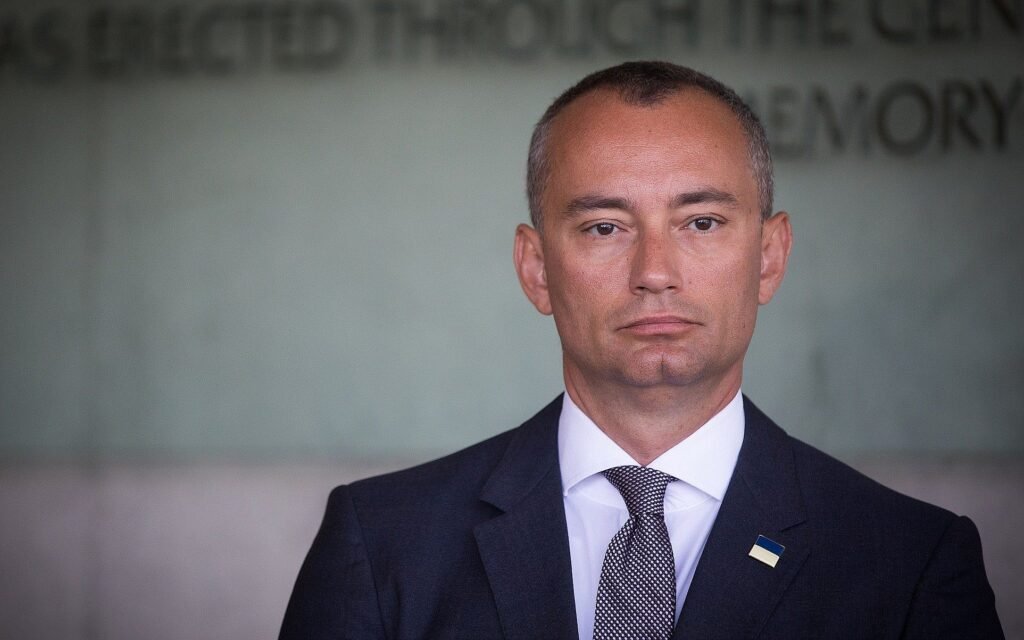
Gaza Herald_ Bulgarian diplomat Nikolay Mladenov is set to return to Gaza in a fundamentally different capacity from his previous role as a UN envoy. This time, he is expected to assume executive authority as head of the so-called Peace Council, tasked with overseeing the implementation of the second phase of the agreement aimed at halting Israel’s assault on the Gaza Strip. His return comes amid mounting political complexity and widespread skepticism over whether he will be able to act independently or will instead operate within limits imposed by Israel and the United States.
As the anticipated mid-month announcement approaches, questions continue to dominate political discourse in Gaza and beyond. The core issue is whether Mladenov will be granted real authority to manage the Strip as a whole or whether his mandate will be restricted by security conditions, Israeli vetoes, and U.S. political priorities.
In recent days, Mladenov has held meetings with Palestinian Authority officials in Ramallah and with Israeli Prime Minister Benjamin Netanyahu, focusing on mechanisms for activating the second phase of the ceasefire arrangement.
Executive Authority or Crisis Management Role
Political analyst Maer Abdel Qader argues that Mladenov’s mission will largely be shaped by his ability to balance crisis management with the protection of Palestinian rights. Drawing on Mladenov’s previous track record, Abdel Qader suggests that his role may remain confined to calming tensions and administering emergencies rather than delivering meaningful political or economic change.
According to Abdel Qader, any limited achievements, such as facilitating aid entry or restoring basic services, could be presented internationally as success stories, while the underlying causes of Gaza’s crisis remain untouched. He notes that occupation, the absence of sovereignty, and continued Israeli control over borders and resources severely restrict the potential impact of any executive body, regardless of its title.
Abdel Qader also points to Israeli conditions tied to the second phase of the agreement, including demands related to resistance disarmament and continued military control over eastern Gaza. These restrictions, he says, make Mladenov’s mission vulnerable to constant obstruction and reduce his role to managing a fragile status quo rather than advancing a sustainable political path.
Fragmentation Risks and Israeli Leverage
Political researcher Baha Shat warns that one of the most serious challenges facing Mladenov is preventing the fragmentation of Gaza into separate zones controlled by shifting security lines. He cautions that Israeli-imposed concepts such as “yellow” or “red” lines could be used to undermine the authority of the Peace Council and impose new realities on the ground.
Shat stresses that Israeli threats of renewed large-scale military operations, particularly in areas west of existing military lines, place the entire executive arrangement at risk. In his view, any attempt to govern Gaza while accepting territorial division would reduce the council’s role to that of a temporary crisis manager rather than a body capable of laying the foundations for long-term stability.
He also highlights the impact of clear U.S. alignment with Israeli policies, which could further limit the council’s independence and tie governance decisions to Israeli security preconditions, particularly those affecting civilian movement and territorial control.
Warnings Over Rafah and Forced Displacement
Shat further cautions against scenarios being promoted under humanitarian language, particularly plans linked to what has been termed “Green Rafah.” He warns that such proposals risk masking forced population concentration or displacement under the guise of relief efforts, a move that would undermine Palestinian rights and threaten the collapse of the entire agreement framework.
He emphasizes that the success of any executive authority depends on clear and unified control over the entire Gaza Strip, without isolated zones or security-managed enclaves. Without such guarantees, he argues, the Peace Council would amount to little more than an international façade, unable to challenge realities imposed by force.
A Mission Defined by Limits
Political analyst Majed Al-Khawaja believes Mladenov’s role will remain tightly bound by international and political constraints, with any progress dependent on navigating Israeli demands under firm U.S. cover. He notes that the absence of a binding international legal framework leaves the Peace Council exposed to obstruction and manipulation, sharply limiting its capacity to deliver real change.
Ultimately, analysts agree that Mladenov’s return places him at the center of a highly constrained mission. His performance will be measured not by sweeping political breakthroughs but by his ability to maintain fragile stability, prevent renewed escalation, and navigate deep-rooted power imbalances. Whether this mission evolves into a meaningful step toward Palestinian self-determination or remains an exercise in crisis administration will depend on how far executive authority is allowed to extend beyond words into reality.
4