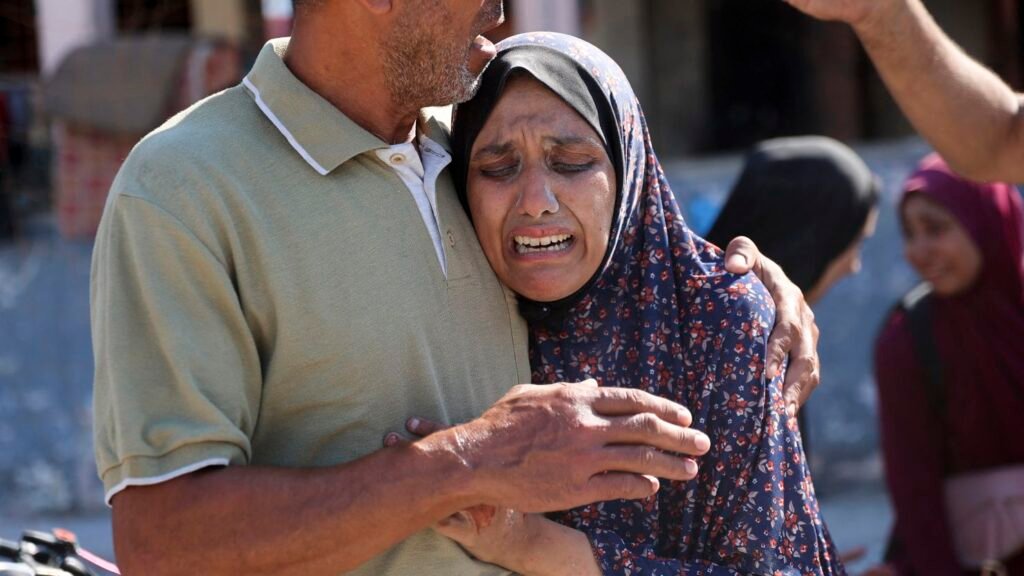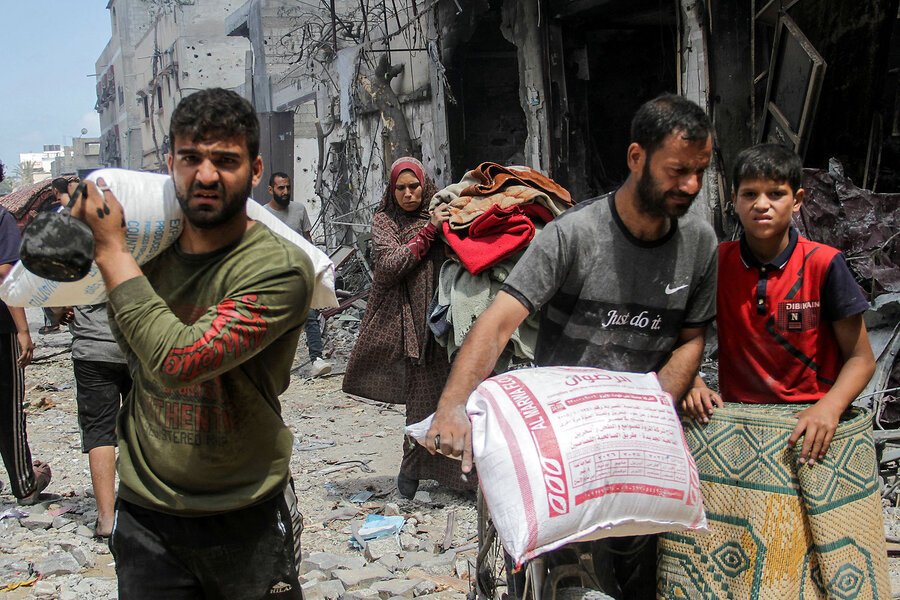
Gaza Herald- Since the beginning of Israel’s war on Gaza, an open secret has taken root beneath the dust and debris: destruction has become a business. Behind the smokescreens of “military necessity” and “security operations,” a sprawling system of profit-driven demolition has emerged, powered by private contractors, civilian bulldozers, and ideological zeal. What is unfolding is not just war. It is a campaign of erasure, structured, incentivized, and monetized.
A Lucrative War for Civilian Contractors
At the center of this economy is heavy machinery, bulldozers, excavators, cranes, and the civilians hired to operate them. In Gaza, these machines have flattened entire neighborhoods, leaving behind little more than dust and broken foundations. The operators, many of whom come from Israeli settler communities, can earn up to $9,000 per month. One bulldozer driver told reporters from TheMarker, “At first I did it for the money. Then for revenge. The work is hard and unpleasant. The army doesn’t operate smartly; it just wants to destroy as much as possible.”
The math is simple: the faster buildings are demolished, the more money flows. Contractors are paid by the job, around 2,500 shekels ($750) to destroy a mid-sized structure and up to 5,000 shekels ($1,500) for a taller building. The Israeli Ministry of Defense pays the equipment’s owner around 5,000 shekels per day. Civilian bulldozers and operators, though unarmored, are deployed deep into Gaza, with private security firms hired to protect them. These demolitions are not incidental to the military operation; they are essential to its pace and profit.
One soldier described the economic incentives plainly to Haaretz: “They’re making a fortune. From their perspective, any moment they aren’t demolishing houses is a loss of money. The forces have to secure their work.”
A Human Toll: Aid Seekers Killed for Excavator Profits
The consequences of this militarized profiteering have been deadly, particularly for starving civilians trying to reach aid. Soldiers interviewed by Haaretz have reported that contractors, in their rush to complete demolition work, often operate dangerously close to Palestinian civilians seeking food. When aid seekers come too near, soldiers open fire, citing security threats.
“So a contractor can earn another 5,000 shekels by bringing down a house,” one soldier said, “and it’s considered acceptable to kill people who are just looking for food.”
It’s not an isolated pattern. Aid seekers, including children and families, are being gunned down in open terrain, often while waiting near U.S.-supplied humanitarian convoys. In these areas, the military escorts contractors in bulldozers, demolishing surrounding infrastructure as if clearing a battlefield. In truth, there are often no combatants present, only the hungry and displaced.
Settler Militias and the Theology of Destruction
Many of the operators aren’t just civilians; they are ideologically committed settlers, often members of the so-called “hilltop youth,” a loose network of armed groups operating in the West Bank. These settlers, raised on slogans of land redemption and ethnic supremacy, now lead the campaign of destruction in Gaza.
One of the most visible figures is Rabbi Avraham Zarbib, a settler from Beit El, who has become a social media icon through videos showing him bulldozing Palestinian homes. “We will defeat this damn village until the end, until the victory, until the settlement,” he declares from a site in Khan Younis.
Another settler, Avraham Azoulay, was killed in Gaza while operating a bulldozer. His death was hailed by far-right politicians as the sacrifice of a hero “destroying in the name of the State of Israel.” MP Tzvi Sukkot, himself a hardline settler, praised another operator who was “directly responsible for the greatest achievement of the war in wiping out tens of thousands of homes.”
Recruitment of settlers into demolition brigades has become systematized. Two civilian demolition units, run under the Ministry of Defence, now oversee dozens of operators and machines, one in northern Gaza, another in the south. Both are led by individuals with deep ties to the military and the settler establishment.
Systematic Demolition as Doctrine
The destruction isn’t random. It is planned, systematic, and ideologically driven.
H., a reservist who served in Gaza twice in 2024, described how battalion commanders would mark buildings for demolition regardless of whether they posed a threat. “Some days we demolished eight to 10 buildings, some days none. But overall, in the 90 days we were there, my battalion destroyed between 300 and 400 buildings.”
He added, “There was no operational justification. It had become a routine: when you enter a house, you blow it up.”
Another soldier, Yotam, served over 200 days in Gaza and participated in the first ground incursion. When given demolition orders, he refused.
“They told me, ‘Go find something in the field and destroy it. If we didn’t pick, they’d choose buildings at random. The feeling was, ‘We’ve got an engineering company today; let’s go destroy something.’”
The goal was not tactical but territorial, to create a buffer zone uninhabitable by Palestinians. In just three months, demolitions expanded the Netzarim Corridor to seven kilometers wide. “There’s nothing left,” H. said. “Not a single wall higher than a meter.”
The Policy of Displacement by Ruin
What emerges is a pattern of destruction designed not only to punish but also to prevent return. Bulldozers follow combat units, reducing towns and neighborhoods to moonscapes. The resulting devastation has made large portions of Gaza permanently uninhabitable.
Doctors Without Borders has reported that 92% of all housing units in Gaza have been damaged or destroyed. Civilian infrastructure, hospitals, water systems, electric grids, schools, mosques, and libraries have been systematically wiped out. These are not collateral damages; they are the architecture of civil life, targeted as part of an overarching strategy of displacement.
This kind of widespread, deliberate demolition, without clear military necessity, is considered under international law a war crime of wanton destruction. Legal experts point to the scale, consistency, and targeting of civilian property as evidence of intent.
“There’s no clear evidence of a military necessity, at least for the level of destruction that’s been caused,” said one professor of international law. “The case for war crimes is strong.”
A Militarized Private Sector and Its Global Ties
Israel’s military has long relied on the private sector to fill gaps in logistics, construction, and transport. In Gaza, this has evolved into a full-fledged partnership, with civilians directly contributing to military objectives. The Department of Engineering and Construction, a branch of the Ministry of Defence, coordinates these operations with private actors.
Foreign entities are not absent. One organization, the Gaza Humanitarian Foundation, launched with support from the U.S. and Israel, now oversees food distributions in coordination with the army. It claims to have delivered over 46 million meals, even as civilians continue to die trying to reach its aid convoys.
The overlap between military operations and privatized logistics has blurred the lines between state violence and for-profit destruction. For many in Gaza, the bulldozer has replaced the tank as the face of occupation.
The Economy of Rubble
The war in Gaza is being fought not only with missiles and drones but with backhoes and spreadsheets. It is a war where destruction pays, where revenge is subcontracted, and where ideological fervor meets financial incentive in a terrain of total ruin.
Entire neighborhoods lie in ashes. Displaced families wander from one rubble field to another. Bulldozers, roaring like iron beasts, level homes where generations once lived.
This is not reconstruction. This is erasure, subsidized, televised, and normalized.
A genocide with a price list.