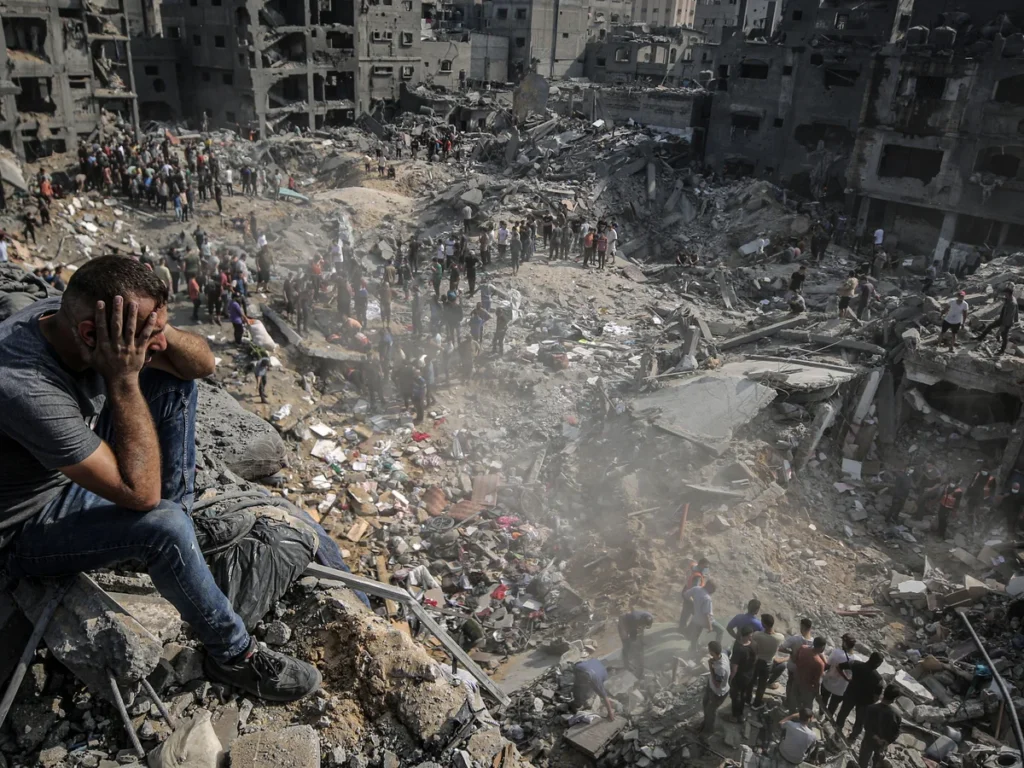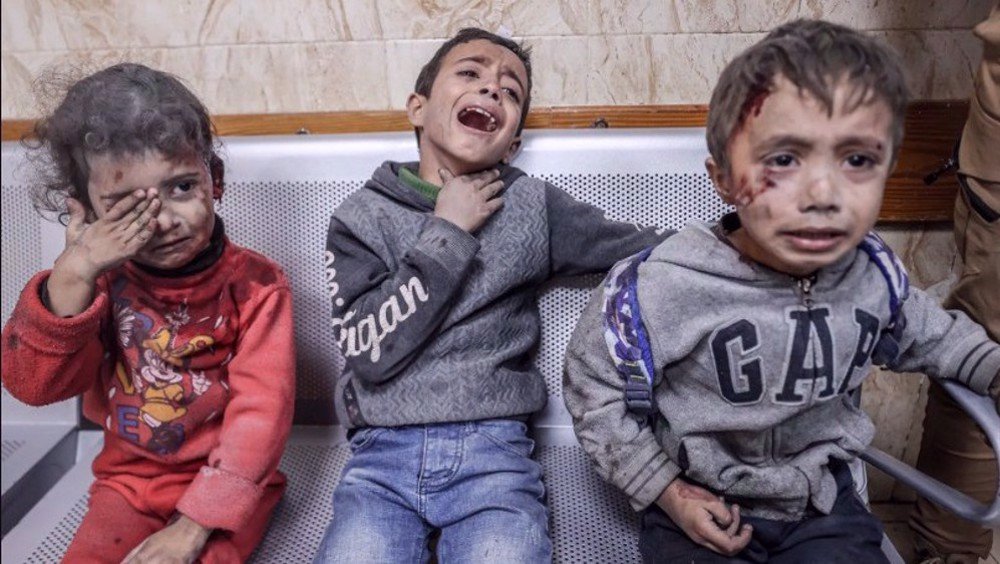
GAZA- What was promised as a humanitarian lifeline has turned into a mass graveyard. Since the controversial Gaza Humanitarian Foundation (GHF) began operating in late May with the backing of Israeli and U.S. authorities, over 600 Palestinians have been killed by Israeli forces while desperately waiting for food at aid distribution sites across Gaza.
The overwhelming majority of the victims are civilians—many of them young men and boys—seeking only a sack of flour to feed their starving families.
The GHF aid sites, touted as a neutral initiative to deliver life-saving supplies, have rapidly become infamous among Gaza’s residents. Survivors and bereaved families now refer to them not as lifelines, but as “death traps.”
Among the grieving is Islam Alzanin, whose son was shot and killed while queuing for aid. Her voice trembles with grief and disbelief as she describes how her son—her family’s breadwinner—was gunned down trying to secure food.
“My son was a provider, I depended totally on him. He was killed and I am left with nothing,” Alzanin told Al Jazeera. “He was the pillar and foundation of our life. After him, there is no life, nothing.”
Like thousands of others in the besieged Gaza Strip, Alzanin’s family had run out of flour and other basic supplies. With no functioning economy, destroyed farmlands, and a complete blockade on aid by Israeli forces, residents have little choice but to approach these so-called aid centers, despite knowing the risks.
“We are forced to go there out of desperation for food,” Alzanin said. “Instead of coming back carrying a bag of flour, they, themselves, are being carried back as bodies.”
Militarized “Aid”
The GHF aid system, under the guise of humanitarian work, has been heavily militarized. Armed drones hover overhead. Israeli tanks and snipers are positioned within visible range of waiting crowds. Witnesses report being shot at without warning, as hundreds gather around trucks or checkpoints.
Local Palestinian organizations and international observers have condemned the aid distribution process as inherently flawed and deliberately unsafe. No neutral oversight, no guarantees of civilian protection, and no organized crowd control have been implemented. Instead, the chaos is being exploited, critics say, to impose collective punishment.
The Hunger Weapon
This massacre of the hungry underscores a broader tactic: starvation as a weapon of war. Since October 2023, Israel’s full blockade of Gaza has cut off food, water, electricity, and medical supplies to 2.3 million people. Famine conditions have been confirmed by international bodies. Children are dying of malnutrition. Families boil grass or flourless bread just to trick their bodies into thinking they’ve eaten.
In this context, the GHF centers act not as aid hubs but as strategic bait—luring the desperate into open spaces where they become targets.
International Silence
Despite mounting evidence, the international community—especially Israel’s Western allies—remains largely silent. The United States, which directly supports and funds the GHF infrastructure, has not condemned the killings. Instead, it continues to frame the project as a “humanitarian initiative.”
The discrepancy between rhetoric and reality has shattered what little faith remained in international mechanisms. Gaza’s population, already subjected to war, displacement, and mass death, is now being shot down while begging for food.
The case of Islam Alzanin’s son is one among hundreds. But his story is also a universal one—of what happens when basic human dignity is stripped, and the right to live becomes a gamble at the gates of hunger.
As one Gaza resident bitterly put it:
“We are not dying of war anymore. We are dying of hunger—and they are shooting us even as we starve.”