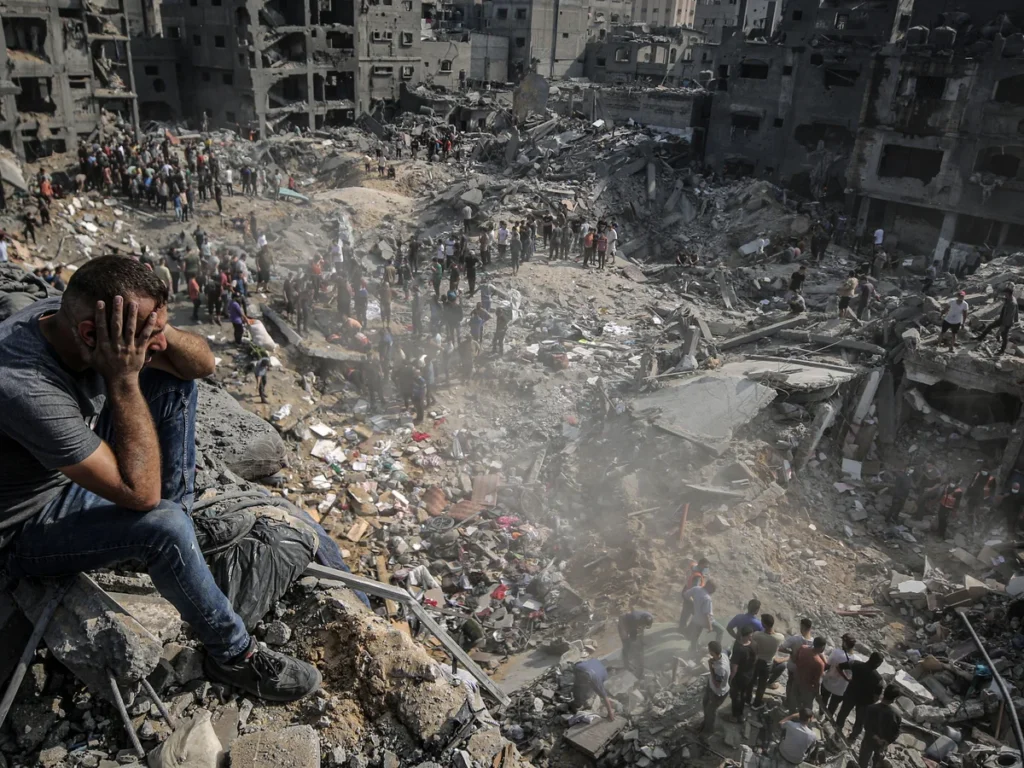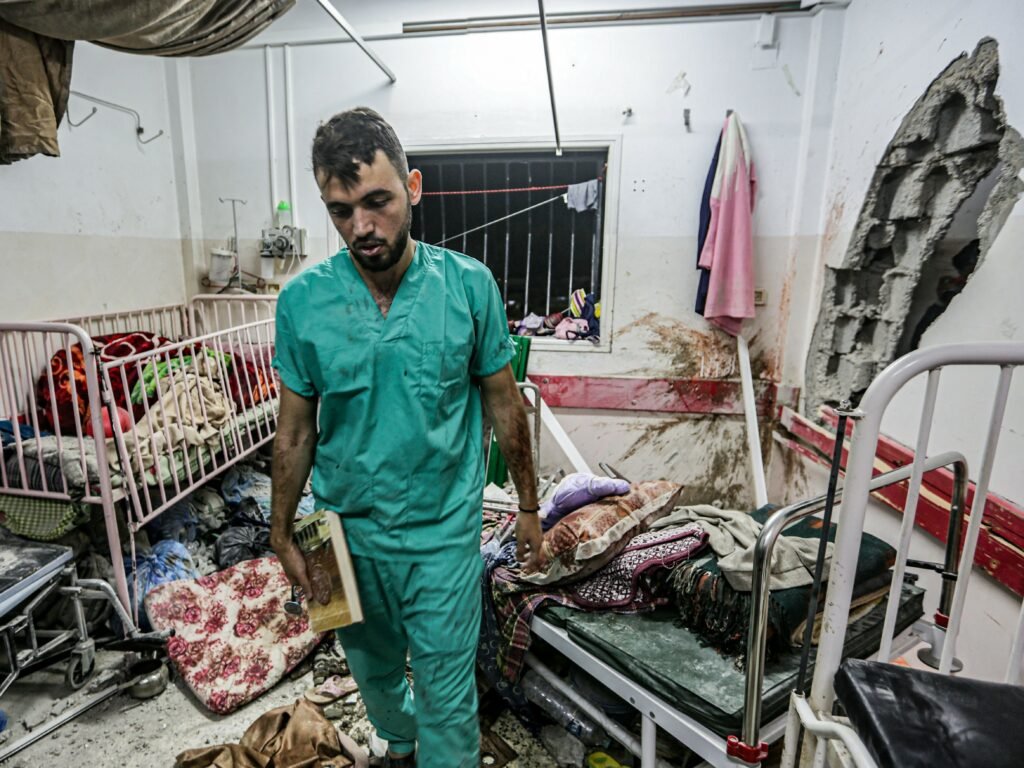
GAZA- Amid Gaza’s deepening humanitarian collapse, Al-Shifa Hospital, the Strip’s largest hospital, has been forced to shut down its dialysis ward, leaving over 350 kidney failure patients in immediate danger of death. This marks the first time since the beginning of Israel’s war on Gaza in October 2023 that Al-Shifa has completely halted dialysis services due to fuel depletion.
Dr. Muhammad Abu Hassira, a nephrology specialist at the hospital, told Middle East Eye that the last drops of fuel ran out on the morning of July 1, allowing only a single generator to keep the intensive care unit running. The dialysis machines, however, have fallen silent.
“Kidney failure patients came today, and we painfully had to ask them to go back home,” said Dr. Abu Hassira. “This has very serious repercussions on their health.”
Fuel Starvation as a Weapon of War
The shutdown is a devastating milestone in a war that has deliberately targeted Gaza’s healthcare system. Between May 15 and June 9, the UN Office for the Coordination of Humanitarian Affairs (OCHA) documented 14 Israeli denials of fuel delivery to northern Gaza. That blockade resulted in the loss of more than 260,000 litres of fuel—vital for powering hospital generators and life-saving equipment.
Olga Cherevko, a UN official with OCHA, warned two weeks earlier that Gaza was “hours away” from the catastrophic collapse of essential services. That warning has now materialized.
A Health System in Freefall
The implications of Al-Shifa’s dialysis unit shutdown are horrifying. Kidney failure patients typically require 12 hours of dialysis weekly to survive. In the increasingly desperate conditions of war-torn Gaza, even before the shutdown, the hospital was only able to offer four to six hours per week per patient.
Gaza’s Ministry of Health reports that 728 kidney patients are currently registered across the Strip, with roughly half receiving care at Al-Shifa. With the bombing of the Noura al-Kaabi dialysis centre in June, Al-Shifa became the primary facility for northern Gaza—a role it can no longer fulfill.
Death Toll and the Human Toll
Since the beginning of the war, over 400 kidney patients have died in Gaza due to war-related conditions, including the destruction of hospitals, medicine shortages, and severe water and food deprivation. Many of these deaths are directly linked to Israeli strikes on medical infrastructure and the systematic denial of aid.
The situation is exacerbated by Gaza’s crumbling water system. According to Oxfam, by mid-2024, 88% of the city’s water wells and all desalination plants had been damaged or destroyed. Dialysis procedures, which require clean water to function, were frequently cancelled due to this shortage even before fuel ran out.
“If [my grandmother] misses even one session, she feels suffocated and struggles to breathe,” said Ahmed al-Sayed, 31, whose elderly relative is among those turned away from Al-Shifa. “We already walk most of the way while pushing her in a wheelchair, but sometimes we miss her appointment while trying to find transport.”
Dialysis Patients: A Forgotten Casualty
Medical staff fear that many of the 350 kidney patients reliant on Al-Shifa could begin dying within days. Without dialysis, toxins build up in the body, leading to heart failure, seizures, and death.
“Some patients’ condition will already begin to deteriorate today,” Dr. Abu Hassira warned. “Most of them only have two or three days before they start dying.”
The pressure on the dialysis ward has not eased despite the death toll. On the contrary, the number of patients has grown as the war has pushed more Gazans into medical crises due to trauma, malnutrition, and lack of clean water.
Systematic Targeting of Healthcare
The collapse of dialysis services is emblematic of the broader strategy deployed by the Israeli military: the systematic targeting of Gaza’s healthcare system through siege, direct attacks, and obstruction of humanitarian supplies. These acts, if proven deliberate and widespread, constitute war crimes under international law.
Even after the partial rebuilding of Al-Shifa’s dialysis unit, patients continued to suffer from resource shortages, including power, water, and staff—problems compounded by Israel’s repeated raids and bombardments.
What’s unfolding in Gaza is more than a humanitarian crisis. It is the slow-motion death of a people through bureaucratic violence, infrastructure destruction, and deliberate neglect. The shutdown of Al-Shifa’s dialysis unit may not have the visual shock of a bombing, but its toll will be equally grim—and just as calculated.
The international community must confront this as what it is: the weaponization of public health as part of a broader war strategy. Hundreds of lives now hang in the balance—not due to a lack of medical expertise, but due to the politics of fuel, blockade, and inaction.
As Gaza’s hospitals fall silent, so does the world’s conscience.