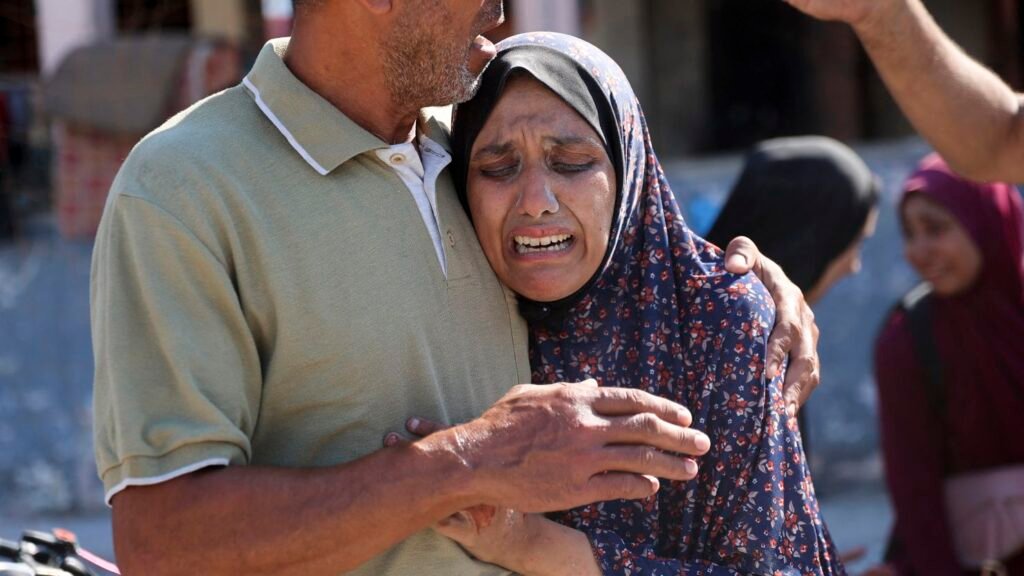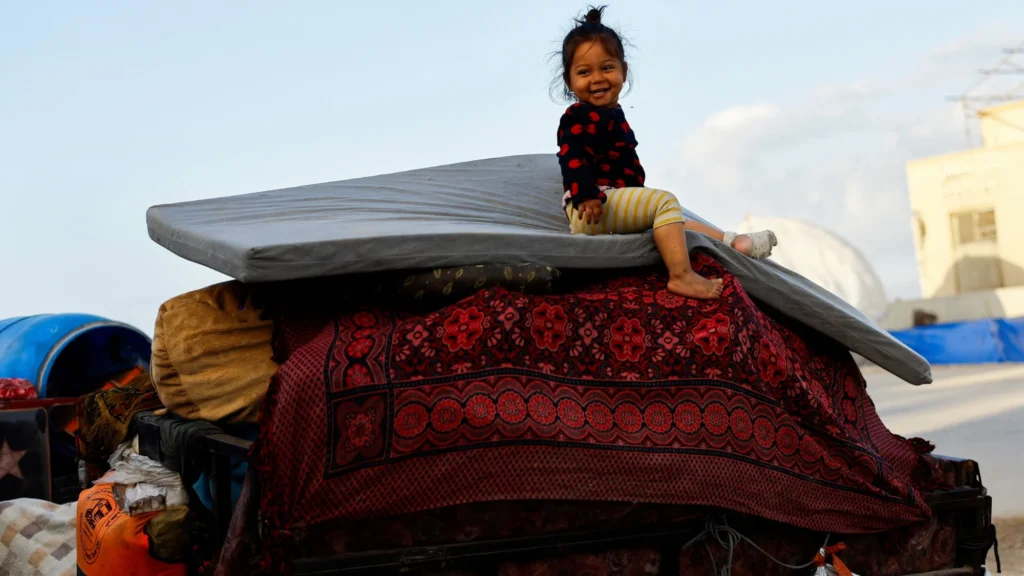
Gaza Herald_ As summer temperatures soar across Gaza, the territory’s sprawling tent camps have become nearly unlivable, exposing hundreds of thousands of displaced Palestinians to extreme heat, dehydration, disease, and worsening humanitarian conditions.
Under the blazing sun, thin fabric tents offer little protection from temperatures approaching 104°F (40°C). Instead, they trap heat, leaving families with an impossible choice: remain inside suffocating shelters or venture outdoors in search of a breeze.
Children, older adults, and people with chronic illnesses are among the hardest hit, facing dehydration, exhaustion, heat-related illnesses, and skin diseases amid severe shortages of clean water and functioning sanitation systems.
The United Nations has warned that displaced people in Gaza are trapped between unbearable heat, collapsing sanitation infrastructure, and contaminated water supplies. Aid agencies have also reported growing outbreaks of skin infections, gastrointestinal illnesses, and hepatitis as overcrowded shelters and unsafe water continue to threaten public health.
Escaping the Heat Along the Shore
Mohammed Abu Riala, a father in his late forties, once lived with his family in Gaza City’s Beach Refugee Camp before their home was destroyed during Israel’s military campaign.
Now displaced with his wife and five children in a nearby tent camp, he says their shelter has become “an unbearable oven” during July’s intense heat.
“I can’t stay inside the tent for even a minute from early morning until sunset,” Abu Riala says. “The heat is suffocating. The air feels heavy, as if we’re slowly being roasted.”
Each day, his family heads to the Mediterranean coast—not for recreation, but simply to escape the unbearable conditions inside their tent.
“The sea is our only refuge,” he says. “But it isn’t a permanent solution. We lost our home, our safety, and sometimes even our dignity. How are our children supposed to live like this?”
Abu Riala urged the international community to accelerate Gaza’s reconstruction and provide temporary housing that offers protection from both extreme heat and winter cold.
“We’re human beings,” he says. “We deserve to live with dignity—not inside burning tents surrounded by insects and disease.”
Mothers Struggle to Protect Their Children
For Wafaa Abed, a widow and mother of five living in a displacement camp in western Gaza City, each day is another battle to keep her children safe.
“Every day is a new struggle just to survive,” she says. “The heat is unbearable, especially for my young children, who don’t understand why we’re living this way.”
She purchased a small solar-powered fan hoping it would cool the tent, but instead found that it only circulated hot air.
“I thought it would help,” she says. “Instead, it made the heat even worse.”
With water supplies critically limited, even simple efforts to cool her children have become nearly impossible.
“I wanted to fill a large container so they could cool themselves with water,” Abed explains. “But we barely have enough water for drinking and basic needs.”
She spends sleepless nights watching her exhausted children struggle through the heat.
“I dream of cold water, shade, and a home that restores our dignity,” she says. “Is that really too much to ask?”
Heat Fuels Disease and Insect Infestations
For Abdel Rahman Mahna, another displaced father, rising temperatures have brought a different danger.
As the weather grows hotter, mosquitoes, flies, fleas, and even scorpions increasingly enter the family’s tent, exposing his wife and children to repeated bites and skin infections.
“Insects are everywhere during the hottest days,” Mahna says. “There’s no safe place left.”
He recalls the terrifying moment his 14-year-old daughter was stung by a scorpion and rushed to a nearby medical center.
“Thankfully she recovered,” he says. “But the fear never leaves us.”
His entire family has developed skin conditions linked to insect bites and poor living conditions.
“The itching never stops,” he says. “The medicine we can find barely eases the pain.”
Mahna says life in Gaza’s tent camps has become unbearable and urges immediate international action to improve living conditions for displaced families.
“We’re living in an unhealthy environment where disease spreads quickly,” he says. “Our children are paying the highest price. The world needs to see what’s happening here and help end this suffering.”