
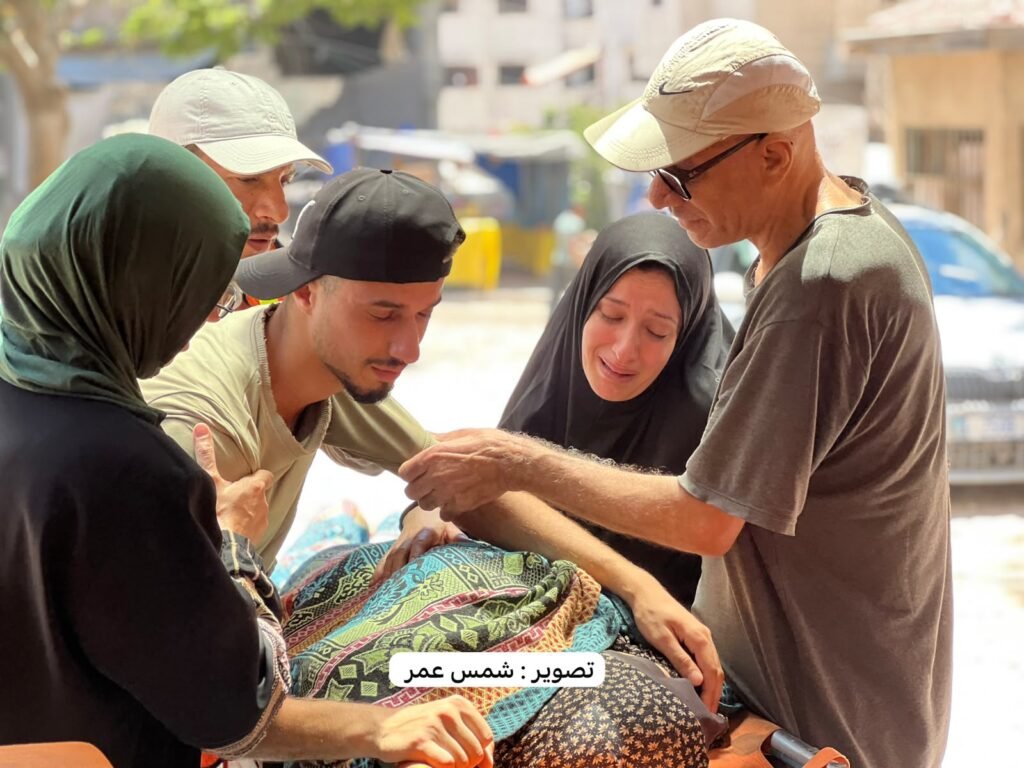
GAZA Herald — When Hamada al-Banna walked back into his family’s home after nearly a year, his mother collapsed in his arms.
His family had long believed he was dead. They had held a three-day mourning ceremony after being told he had been killed during Israel’s war on Gaza. But Hamada was alive, returning after a year of detention and months of suffering that transformed him forever.
His story has become a rare moment of hope in Gaza, where thousands of families are still waiting for news of loved ones who disappeared during the war, trapped between hope that they may still be alive and fear that they never will return.
According to Gaza’s Ministry of Health, nearly 3,500 people have been officially reported missing, while Palestinian human rights organizations, including Al-Dameer Association, estimate that as many as 9,500 Palestinians remain unaccounted for.
A search that ended in disappearance
Al-Banna’s ordeal began while searching for humanitarian aid near the Zikim crossing in northern Gaza. He had managed to obtain a bag of flour and was making his way home when someone informed him that his brother, Adham Yasser al-Banna, had been killed by Israeli forces.
“I was carrying a bag of flour home, happy that I had managed to get it,” he recalled. “Then someone called out to me and said, ‘Your brother has been killed.’”
Only a month earlier, Al-Banna had already lost another brother, Amjad. Unable to believe he had suffered another devastating loss, he rushed to search for Adham.
Moments later, a powerful explosion struck the area.
“I was wounded in my legs, hands, chest, and abdomen,” he said. “My whole body was injured.”
He lost consciousness and remained in a coma for two months before waking up at Soroka Medical Center in Beersheba. After receiving medical treatment there for six months, he said he was transferred to an Israeli prison, where he spent four months in solitary confinement.
“Nothing I say can fully describe what I endured,” Al-Banna said. “At times, death felt easier than living through the torture and suffering I witnessed.”
A family that mourned him
While Al-Banna remained in Israeli custody, his fiancée, Reem Jadallah, refused to give up searching for him.
She sold her gold jewelry to hire a lawyer in hopes of discovering his whereabouts after receiving no official information.
After six months of searching, the lawyer informed the family that Al-Banna had been killed.
Heartbroken, they held a three-day mourning ceremony, believing they had lost him forever.
Nearly two months later, Al-Banna was released.
His first phone call was to his father.
“I said, ‘Dad, it’s Hamada,’” he recalled. “He answered, ‘Who is Hamada? My son was killed. We already held a mourning ceremony for him.’”
“I kept telling him it was really me, but he asked, ‘Are you alive? Are you making fun of me?’”
Only after Al-Banna asked his father to meet him at the port with the International Committee of the Red Cross did his family begin to believe the unimaginable—that he had survived.
When he finally returned home, his mother fainted as she embraced him.
“Even now, she looks at me every day and says she still cannot believe I came back,” he said. “She tells me, ‘My son, we mourned you. We had lost all hope of ever seeing you again.’”
Freedom without peace
Although Al-Banna has regained his freedom, he says Israeli detention continues to haunt him.
“When I sleep, I dream that I’m still in prison,” he said. “Every day I remove shrapnel from my body. My leg hurts. My chest hurts. Everything hurts.”
“I may be free now, but I am no longer the person I used to be.”
Thousands still waiting
While Al-Banna returned home, thousands of Palestinian families remain suspended between hope and grief.
Among them is the family of Nafez Abed, whose fate remains unknown.
“Waiting to learn the fate of someone who disappeared is even more painful than receiving news of their death,” his mother, Aziza Abed, said.
His wife, Shaimaa Jundiya, said their four children continue to ask about their father every day.
She said their daughter watches fathers carrying their children through Gaza’s streets and quietly prays that her own father will one day come home.
Across Gaza, families of the missing continue organizing sit-ins, holding photographs of their loved ones and demanding answers about their fate.
Abdullah Qandil, director of the Waed Association for Prisoners and Ex-Prisoners, said thousands of families have appealed to international organizations to pressure Israel to disclose information about Palestinians who remain missing.
He said the absence of answers has deepened the psychological and humanitarian suffering of families forced to live each day between hope and heartbreak.

