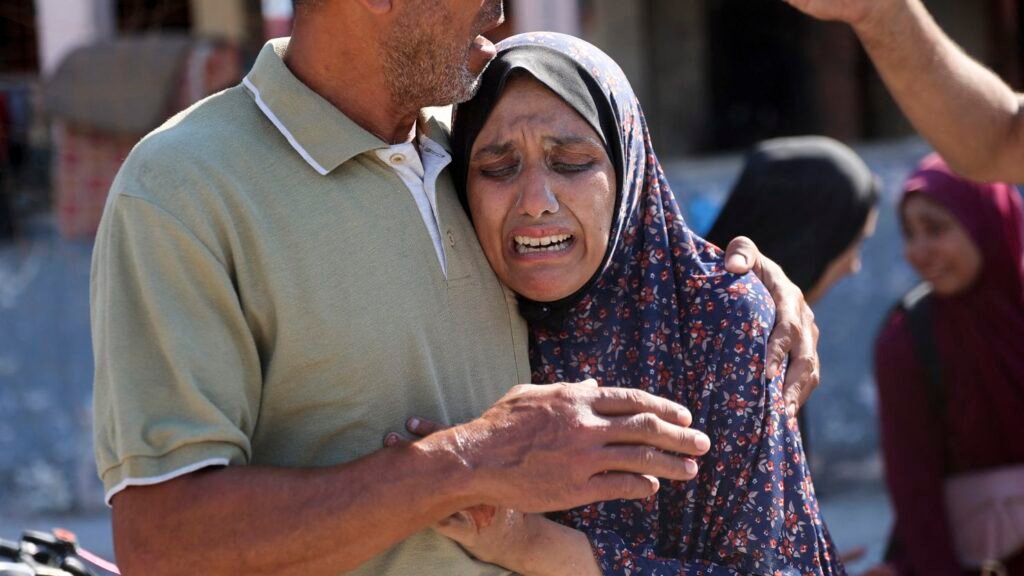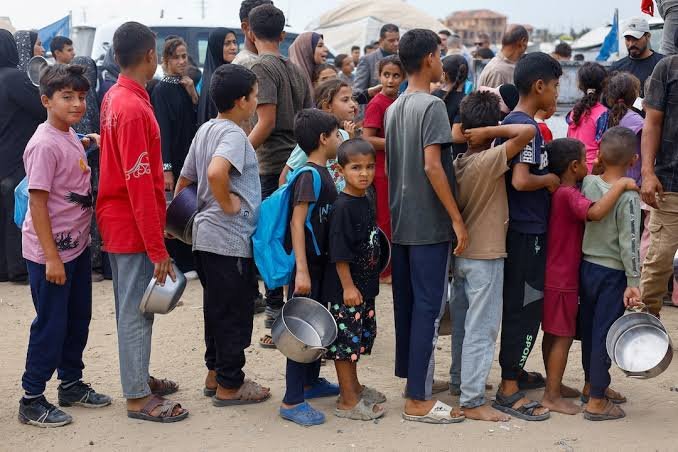
Gaza Herald — Hundreds of thousands of displaced Palestinian families across the Gaza Strip are facing a deadly fourth consecutive winter trapped inside deteriorating tents and ruined buildings without protection from severe cold, torrential rains, and flooding.
Over the past three winters, exposure to harsh weather conditions has resulted in tragic deaths from hypothermia, claiming the lives of dozens of infants, including 11 children who froze to death during the previous winter alone.
According to recent situation reports from the United Nations Office for the Coordination of Humanitarian Affairs (OCHA), the vast majority of Gaza’s population remains confined to flimsy, makeshift shelters while enduring an ongoing blockade on essential reconstruction supplies, mobile homes, and sturdy weatherproofing materials.
Shrinking Territory and Exorbitant Costs for Basic Shelter Supplies
The crisis is exacerbated by the continuous expansion of the “Yellow Line,” an arbitrary military boundary through which Israeli forces have systematically seized land and pushed displaced Palestinians onto just 30 percent of the enclave. UN Human Rights representative Ajith Sunghay emphasized that families displaced across the Strip face zero prospect of returning to their original homes, remaining under continuous military fire within overcrowded coastal enclaves.
Meanwhile, extreme supply shortages have inflated the cost of basic shelter materials beyond the reach of impoverished families. Small wooden planks that once cost 10 shekels now sell for 150 shekels, while securing basic tarps, nails, and support poles to construct a fragile shelter can cost up to 5,000 shekels ($1,600).
Displaced residents describe an unbearable daily ordeal as autumn winds tear through worn fabric. Displaced mother Khalda Ghattas, formerly an apartment resident in Gaza City’s Tuffah neighborhood, now shelters on bare sand at the Gaza port with her husband and children, many of whom suffer from asthma and respiratory illnesses.
Ghattas explained that a single basic tarp costs between 180 and 200 shekels ($57 to $64), making it impossible to secure her family against cold weather. Vendors like Nasser Al-Shanbari confirm that the few tarps entering the market are low-quality items that disintegrate within months under heavy wind and rain, leaving families defenseless against the approaching winter.
Collapse Risks and Survival Among Destitute Concrete Ruins
Deprived of alternative shelter options, thousands of Palestinian families have been forced to move into severely damaged, structurally compromised buildings that face imminent collapse.
In September, a catastrophic building collapse in Gaza City killed at least 21 Palestinians, including 12 children, and injured 45 others while over 100 displaced people were sheltering inside. Despite these life-threatening hazards, residents continue to occupy bombed-out structures along dangerous front lines.
In Jabaliya refugee camp near the Yellow Line, Mohammed Al-Shabrawi lives inside his family’s heavily bombed home, where airstrikes previously slaughtered several of his relatives. Lacking intact walls or concrete roofing, Al-Shabrawi uses scraps of fabric and expensive tarps to seal gaping structural openings, warning that winter rains pour directly through the shattered ceilings onto his family.
Human rights organizations stress that Israel’s deliberate restrictions on shelter materials and ongoing territorial expansion represent a calculated policy to destroy baseline conditions for human survival across the enclave.