
Gaza Herald— Five-year-old Saba Mohammad Masbah could not hear the explosion that tore through her family’s tent in Gaza City’s Zeitoun neighborhood. But the images she witnessed are likely to stay with her forever.
Saba, who has a hearing disability, was bleeding from her foot after shrapnel tore into her leg. As neighbors rushed to help, she remained frozen, staring in shock at her mother, Reda Abu Asr, who was killed when an Israeli strike hit the tent where the family had sought shelter.
Neighbor Alaa Qaddoum said he ran to the site around 1 a.m. on Sunday, July 19, moments after hearing the explosion.
“We entered the tent and found Saba bleeding from her foot. She couldn’t hear anything, but she kept looking at her mother in fear and disbelief,” Qaddoum recalled.
Together with other neighbors, Qaddoum carried the injured child nearly 700 meters to Salah al-Din Street, where ambulances were waiting outside the shelling zone. He then returned to rescue her father, who had been seriously wounded, and helped evacuate her older brother, who survived the attack.
By daylight, neighbors discovered that Reda’s father, Abdel Karim Abu Asr, and her uncle, Fadl Abu Asr, had also been killed. Their bodies were later recovered from the site.
A night of fear across Zeitoun
Hours before the strike, thousands of displaced families sheltering in camps across Zeitoun were already bracing for another military operation.
On the afternoon of Saturday, July 18, residents said they received phone calls from Israeli military officers warning that operations would soon begin around the Dawla Junction area.
The warnings revived memories of a similar night only days earlier, when advance notices were followed by ground incursions, heavy artillery fire, and relentless gunfire.
This time, however, residents said no safe evacuation route was provided.
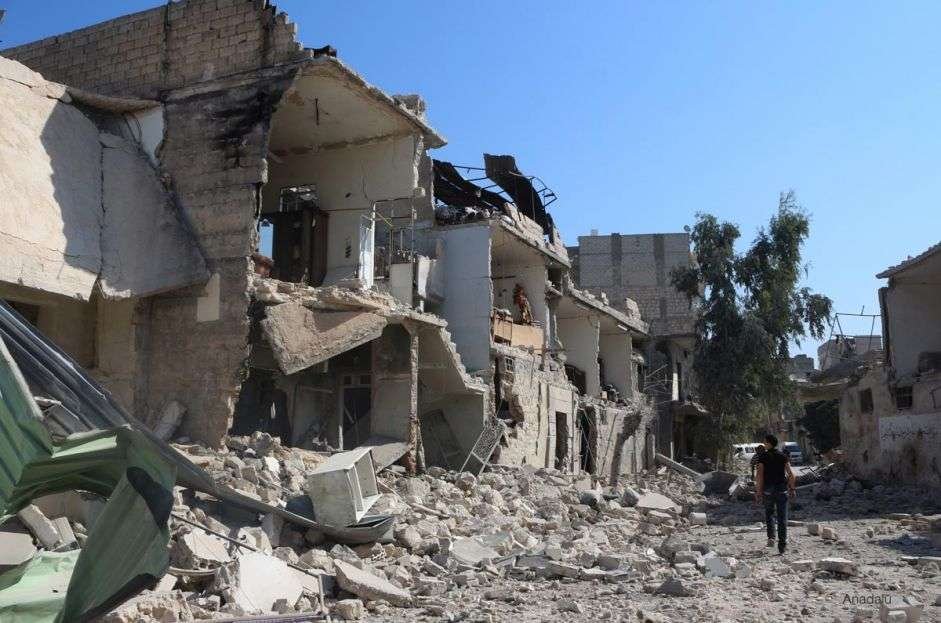
From sunset until dawn, artillery shelling, sustained gunfire, helicopter activity, and Israeli quadcopter drones surrounded the area, trapping hundreds of families inside makeshift tents.
Many lay flat on the ground inside shelters that offered little protection from bullets or shrapnel. Others abandoned their tents altogether, spending the night on roadsides and in open areas, hoping to return after sunrise.
No place was safe
The Abu Asr family believed they had found relative safety after relocating to Kashko Street, east of Salah al-Din Street and roughly one kilometer from Dawla Junction.
Instead, an Israeli drone struck their tent, killing Reda, her father, and her uncle, while wounding Saba and her father.
According to Qaddoum, Reda had already endured unimaginable loss earlier in the war after several of her siblings and their children were killed in a previous attack.
“She had already lost almost her entire family,” he said. “Now she has become another victim herself.”
Families trapped under fire
At Dar Al-Salam camp near Dawla Junction, displaced resident Mohammad described a night without respite.
Shells fell continuously while exposed tents left families defenseless against bullets and flying debris.
“Many families fled their tents under fire and spent the entire night in the streets,” he said. “It was one of the hardest nights we have ever lived.”
Residents also reported seeing heavy military vehicle movements between the Kuwaiti area and Dawla Junction, fueling fears of an imminent ground advance.
Dar Al-Salam camp shelters around 108 families within an area of just five dunams. Positioned on elevated ground, the camp’s tents are exposed to fire from Israeli military vehicles stationed east of Zeitoun.
Mohammad also recalled that Ahmed Abu Zur, Salem Tawfiq Abu Zur, 48, and Luay Nimer Al-Mubayyad, 18, were killed two days earlier while attempting to move merchandise from their family store near the junction before Israeli forces reached the area.
“No words can truly describe what happened,” he said.
“It felt like waiting for death”
Another displaced resident, Abdel Qader Dader, said the night felt like an endless wait for death.
Heavy gunfire echoed from the direction of Israeli military vehicles, while only thin tent fabric separated families from live ammunition.
“People began praying, asking for forgiveness, and reciting the shahada as if they were saying goodbye to life,” Dader said.
Despite the danger, many families were unable to flee. Hiring a tuk-tuk to relocate costs around 4,000 shekels, a sum far beyond the reach of most displaced households.
Fear gripped both children and adults alike. No one slept as shelling and gunfire continued until dawn.
“It felt like the horrors of Judgment Day,” Dader said.
He added that such nights have become an almost daily reality as Israeli artillery, military vehicles, and drones continue operating around the area.
A childhood forever changed
By morning, roads surrounding Zeitoun were crowded with families carrying whatever belongings they could salvage. Others sat silently along the roadside, uncertain where to flee next.
Saba survived the attack, leaving the camp in the arms of her neighbors while her mother’s body remained behind.
She may never hear the sound of war, but in a single night, she witnessed enough to forever alter what remained of her childhood.

