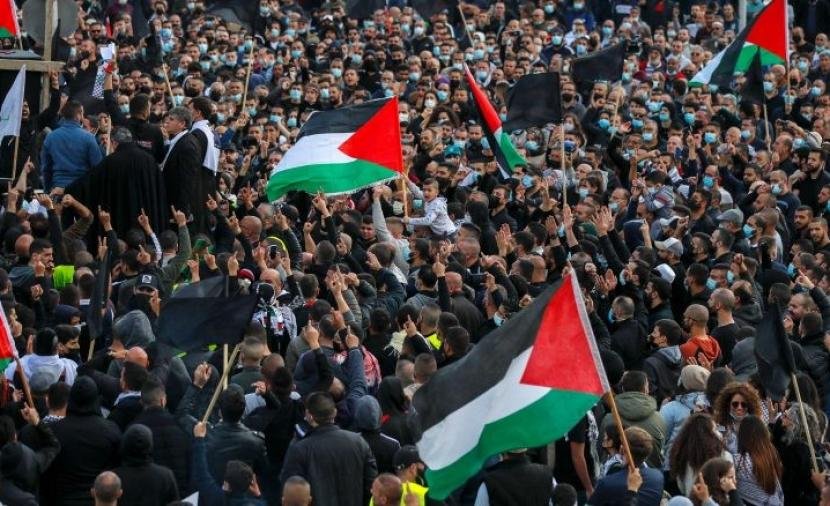
Gaza Herald – The Joint List is moving to reorganize its electoral strategy, a move that signals a reunification of Arab political weight and an attempt to unify the Palestinian street inside the occupied territories of 1948. This development comes in response to escalating policies by the far-right.
The shift occurs alongside official declarations from the Likud party, led by Benjamin Netanyahu, regarding its intention to file formal appeals to invalidate the candidacy of Arab lists. These actions are driven by early opinion polls suggesting the Arab lists could secure approximately twelve seats in the next Knesset election.
According to Wafa news agency, Likud relies on allegations accusing list participants of insulting soldiers and refusing to classify resistance movements as terrorist organizations. The party also cites claims of incitement and violations of so-called citizenship laws as grounds for legal intervention against the Arab bloc.
This early maneuvering aims to disrupt right-wing calculations and prevent Netanyahu from forming a comfortable coalition government. Analyst Antoine Shluchat stated that targeting the Joint List is inseparable from the desire to engineer the political map to serve the right-wing camp.
Shluchat explained to Wafa that attempts to strike Arab parties have become a primary tool in Israeli campaigns to incite against the Arab vote and deepen exclusion. He noted that a unified Joint List raises voting percentages, creating an obstacle that denies the ruling coalition a comfortable majority.
The Joint List was originally established in 2015 as a comprehensive alliance project to counter the electoral threshold raised by the Knesset at the time. It initially brought together four main Arab parties: the Democratic Front for Peace and Equality, the National Democratic Assembly, the Southern Islamic Movement, and the Arab Change Movement.
Despite experiencing fragmentation and restructuring during successive electoral rounds due to differing political visions, the current push for reunification is described as an urgent national and popular response. The goal is to confront existential challenges and the far-right while reasserting Arab electoral weight as an unavoidable force.
Ammounas Shuhada, a leader in the National Democratic Assembly, emphasized that the objectives of candidacy and rebuilding the list stem from national responsibility to face waves of fascism and racism against Palestinian populations. He identified unity as the only strategic option to raise street readiness.
Shuhada told Wafa that internal party unity is essential to counter displacement plans and land confiscation. He stressed the importance of engaging with daily political issues facing Palestinians with an electoral weight that cannot be ignored or bypassed.
The parties aim to regain voter trust exhausted by previous political divisions. They rely on public awareness regarding the necessity of a strong barrier within parliament to disrupt the calculations of successive governments.
Observers confirm that successful reconstruction of the alliance creates real paralysis for right-wing plans. Success would limit opportunities for the far-right to monopolize decision-making, imposing new field and political realities that redefine the nature of the conflict over representation and existence inside the country.
This report was produced in the Gaza Herald newsroom.