
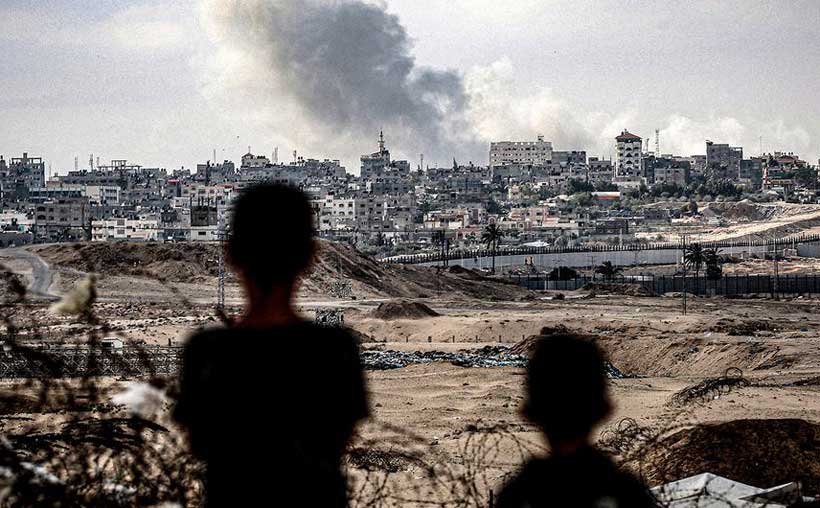
Gaza Herald — Three years after the outbreak of the genocidal war on Gaza, thousands of Palestinian families remain trapped in a painful limbo, searching for answers about relatives who vanished without a trace.
Whether lost during Israeli ground incursions, displaced from bombed shelters, targeted along demarcation zones, or detained at checkpoints, more than 11,000 Palestinians remain unaccounted for across the enclave. Suspended between holding out hope for a return and beginning the process of mourning, families face daily psychological torment made worse by official silence and the absence of verifiable records.
A Uniquely Devastating Humanitarian Crisis
According to figures from the Independent Commission for Human Rights, the total number of missing persons includes both those buried under unexcavated rubble and individuals suspected of being subjected to enforced disappearance.
The Palestinian Centre for Missing and Forcibly Disappeared estimates that between 2,500 and 3,000 people fall into the category of enforced disappearances. Since October 2023 and throughout the ceasefire announced on October 9, 2025, their fates have remained entirely unknown. The crisis is compounded by Israeli authorities withholding the names of detainees held from the Strip, while approximately 620 unidentifiable bodies returned to Gaza remain unmatched to searching families.
Nidal al-Waheedi: A Journalist Vanished on Day One
For Suhail al-Waheedi, 62, daily life inside a small shelter tent on al-Nafaq Street in Gaza City revolves around scrolling through photos of his 32-year-old son, Nidal. A journalist, Nidal disappeared on October 7, 2023, after traveling to cover events near the Erez crossing in northern Gaza. Within minutes of arriving at the site, his family lost all communication with him.
“For three years, all we have done is wait and hope for any news,” Suhail told reporters. Despite repeated appeals to international human rights agencies and the International Committee of the Red Cross (ICRC), the family has received no confirmation of whether Nidal is detained or killed. “Nidal was not just our son. He was our friend, the backbone of our family. I keep thinking about how much easier these difficult days would be if he were here.”
The Hajjaj Family: Detained and Disappeared in the North
Inside a tent at Palestine Stadium in central Gaza City, 52-year-old Mona Hajjaj and her daughters live with the double loss of her husband, Saeed, 59, and her 17-year-old son, Qasem. The two men were taken on December 26, 2023, during an Israeli military raid on a residential shelter in the Sheikh Radwan neighborhood.
“The last time we saw my father and brother was when they were stripped, handcuffed, and humiliated,” said Nisreen Hajjaj, 35. “Since then, we have known nothing about them.”
The lack of official confirmation prevents the family from moving forward legally or emotionally. Nisreen explained that her sister was forced to turn down a university scholarship because applying required submitting a formal death certificate, a step the family refuses to take while a glimmer of hope remains. “They are still part of our lives, but we do not know whether to mourn them or wait for them.”
Mohammad Abu Shaaban: Unanswered Messages and Fractured Families
In Deir al-Balah, Alaa Abu Shaaban, 48, routinely posts photos of his younger brother, Mohammad, 46, on community messaging groups set up by searching families. Mohammad disappeared in early October 2023 after choosing to remain at his home near the eastern border fence. Two months later, a brief message from Mohammad’s phone indicated he was in the Kissufim area, but heavy fighting prevented relatives from reaching him.
While released detainees reported hearing Mohammad’s name inside Israel’s Ofer prison, rights organizations have been unable to confirm his status. The three-year wait has taken a tragic toll on the family: while caring for Mohammad’s children, Alaa’s eldest nephew was killed while waiting in line for humanitarian food assistance. “Many nights, I fall asleep in tears,” Alaa shared. “It breaks my heart that his eldest son was killed while his father was gone.”
The Enduring Legacy of Uncertainty
For thousands of households across Gaza, the absence of clear administrative mechanisms, military transparency, or access for international monitors means the war’s psychological toll continues unabated. As infrastructure lies in ruins and ceasefire conditions remain fragile, families continue to wait, showing photos to released prisoners and searching through public lists, caught in an enduring ordeal where neither life nor death can be fully confirmed.

