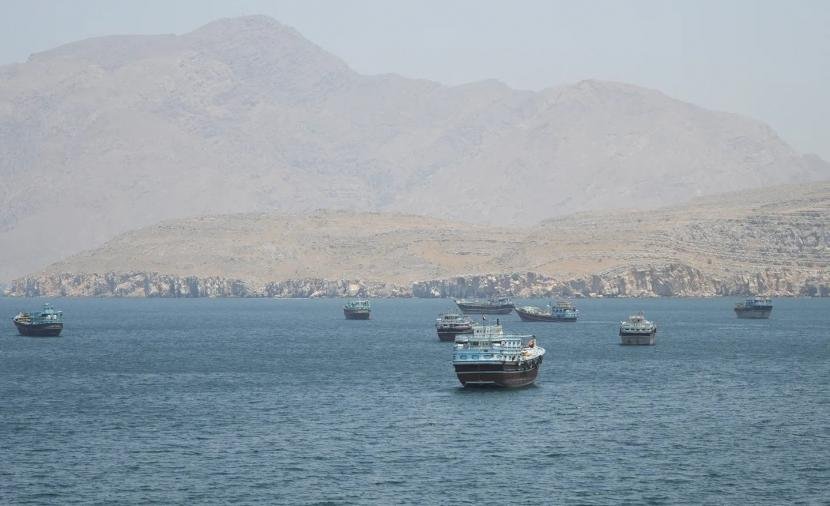
Gaza Herald – Shipping data indicates that the number of vessels transiting the Strait of Hormuz has fallen to its lowest level in over two months. The figures were released by Kpler, an analytics firm, highlighting a sharp decline following a surge in attacks on oil tankers crossing this vital waterway last week.
According to the data, only seven cargo ships passed through the strait on Tuesday, marking the lowest count since July 23. Emmanuel Belostotsky and Yoy Torikata, analysts at Kpler, noted in a memo that crude oil volumes transiting the struz dropped by 27 percent compared to the war’s peak in the previous week.
The analysts stated that flows reached at least 10.1 million barrels per day. They described this figure as a return to September averages but emphasized it remains at just 74 percent of pre-war levels. Most of the reduction occurred during ship-to-ship transfers in the Gulf of Oman, where cargoes are moved between tankers.
However, exports from the Gulf of Oman coast and the Red Sea rose to 6.7 million barrels per day. This volume is more than double pre-war levels, according to the analysts. These increased shipments helped offset the supply deficit from the Strait of Hormuz, maintaining total Middle Eastern crude exports at pre-war levels.
Data for Wednesday showed a slight increase in transit traffic, with ten ships crossing the strait. Nevertheless, this number remained significantly lower than the daily counts exceeding twenty ships recorded on Sunday and Monday. The number of vessels entering the struz exceeded those exiting it over the past two days.
The reported numbers do not include ships that cross the strait while disabling their Automatic Identification System transponders to avoid detection. The data underscores the ongoing volatility in maritime trade routes due to regional hostilities.
This report was produced in the Gaza Herald newsroom.