
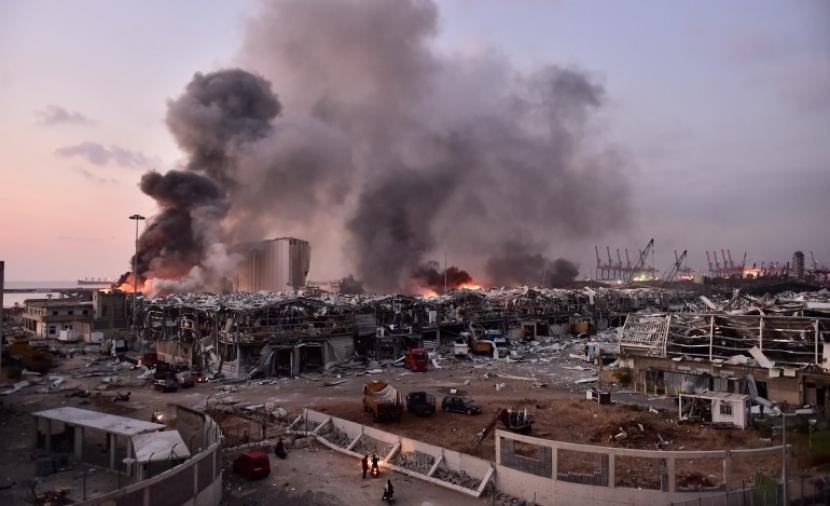
Gaza Herald – They were killed inside their homes, while waiting for flour, while praying at dawn, while sheltering in schools, while sleeping in displacement tents and while seeking treatment inside hospitals. Over three years of Israeli genocide, the geography of the Gaza Strip became a geography of massacres, as refugee camps, hospitals, schools, food distribution routes and areas designated for displaced Palestinians repeatedly became scenes of mass killing.
By October 6, 2026, Gaza’s Ministry of Health had recorded 74,245 Palestinians killed and 175,267 wounded since October 2023. Thousands more remain missing, many believed to be buried beneath the ruins of destroyed buildings. Behind those numbers are three years in which entire families disappeared, residential blocks were flattened within seconds and hospitals repeatedly received numbers of wounded far beyond their ability to treat them.
The enormous death toll cannot be separated from the scale of explosive force used in one of the world’s most densely populated territories. United Nations investigators have documented Israel’s extensive use of explosive weapons with wide-area effects in populated areas, while Amnesty International investigations identified U.S.-manufactured components associated with large bombs, including 1,000- and 2,000-pound munitions, at some strike sites. In Gaza, where extended families frequently lived together in multi-story buildings and hundreds of displaced Palestinians crowded into schools and tent encampments, the use of such powerful weapons repeatedly produced devastating consequences for civilians.
Jabalia refugee camp became one of the earliest symbols of this destructive force. On October 31, 2023, Israeli warplanes struck the densely populated camp, leaving enormous craters and collapsing surrounding residential buildings. Another major strike followed the next day. Gaza’s Health Ministry reported that the attacks across the two days killed 195 Palestinians, wounded 777 and left another 120 missing beneath the rubble. Israel acknowledged carrying out the October 31 strike and said it was targeting a Hamas commander and underground infrastructure, but the attack devastated a densely populated residential area where families lived only meters apart.
The scenes from Jabalia would be repeated across Gaza for the next three years: buildings collapsing over their inhabitants, residents digging through concrete with their hands and families standing beside enormous piles of rubble waiting for news of relatives trapped underneath. The destructive power of the bombs was only one part of the catastrophe. Gaza’s rescue services were themselves being depleted, leaving fewer vehicles, excavators and trained personnel available to reach victims after subsequent attacks.
By early 2024, mass death had extended beyond homes and refugee camps to places where starving Palestinians gathered in search of food. On February 29, thousands of Palestinians converged on humanitarian aid trucks on Al-Rashid Street in northern Gaza after months of siege and severe food shortages. More than 100 Palestinians were killed and hundreds wounded amid Israeli gunfire and chaos around the convoy. The incident became known among Palestinians as the Flour Massacre, one of the most haunting examples of how the search for food itself had become deadly.
Hospitals, which should have offered refuge to those wounded in such attacks, were themselves subjected to repeated Israeli military operations. In March 2024, Israeli forces launched a major assault on Al-Shifa Medical Complex, Gaza’s largest hospital. The operation lasted approximately two weeks. When Israeli forces withdrew, Palestinians returned to a devastated medical complex where buildings had been burned and damaged, departments destroyed and bodies recovered from the hospital grounds. Palestinian authorities later reported recovering hundreds of bodies in and around Al-Shifa, while United Nations officials documented mass graves at Gaza hospitals and called for independent investigations.
The destruction of Al-Shifa was not simply the destruction of buildings. Gaza’s largest hospital had been a central pillar of a healthcare system already overwhelmed by mass casualties. Every destroyed operating room, hospital bed, medical device and department reduced Gaza’s capacity to save the victims of the massacres that followed. As the number of wounded continued to rise, the medical system available to treat them continued to shrink.
The same pattern followed displaced Palestinians as they fled from one part of Gaza to another. On May 26, 2024, an Israeli strike hit a camp for displaced Palestinians in the Tal al-Sultan area of Rafah. At least 45 Palestinians were killed and around 250 wounded, according to Gaza health authorities cited by the United Nations. Fire tore through tents made from fabric, plastic and other highly flammable materials. Images showed tents engulfed in flames and Palestinians attempting to recover burned bodies from the camp.
Many of the people sheltering there had already been displaced from other parts of Gaza. They had fled destroyed homes and advancing Israeli military operations only to be killed inside tents. The massacre exposed one of the defining realities of displacement during the genocide: moving did not mean reaching safety.
That reality became even clearer in Al-Mawasi, west of Khan Younis, where Israel had directed displaced Palestinians and designated it as part of a humanitarian area. Hundreds of thousands of Palestinians eventually crowded into the coastal zone, many living in tents without adequate water, sanitation or medical services.
On July 13, 2024, Israeli strikes hit Al-Mawasi, killing at least 90 Palestinians and wounding around 300, according to Gaza’s Health Ministry. Israel said the operation targeted senior Hamas military commanders. For the displaced families living there, however, the attack demonstrated that even an area presented as humanitarian could become the site of mass killing.
Al-Mawasi was struck again. On September 10, heavy Israeli airstrikes hit tents sheltering displaced Palestinians, leaving enormous craters in the ground. Rescue workers and residents searched through sand and debris for people buried by the explosions. The scenes showed how little protection a canvas tent could offer against heavy aerial munitions.
Between those attacks came one of the most devastating massacres at a school shelter. Before dawn on August 10, 2024, displaced Palestinians were gathered for morning prayers inside Al-Taba’een School in Gaza City when the site was struck. The United Nations Human Rights Office reported an initial death toll of at least 93 Palestinians, including women and children, with most of those killed believed to have been inside the prayer hall.
The attack was not an isolated strike on a school. According to the UN Human Rights Office, Al-Taba’een was at least the 21st attack on a school serving as a shelter that it had recorded since July 4 alone, with at least 274 Palestinians killed in those attacks. Schools that had ceased functioning as educational institutions and had instead become overcrowded shelters for displaced families were repeatedly transformed into sites of death.
The condition of victims recovered after some of Gaza’s most destructive attacks also raised difficult forensic questions. Families and first responders have described recovering severely burned and fragmented human remains, while in other cases people known to have been present at strike sites were never recovered as intact bodies.
A 2026 Al Jazeera investigation examined cases involving Palestinians whose bodies could not be recovered after Israeli strikes and presented expert analysis concerning the possible effects of high-temperature, thermobaric or enhanced-blast munitions. The investigation included testimony describing biological residue and fragmented remains at some locations rather than intact bodies.
These reports require specialized independent forensic investigation. They should not be confused with the broader evidence already established by international investigators documenting Israel’s use of heavy explosive weapons with wide-area effects in populated areas. The precise use and frequency of thermobaric weapons, and whether they account for individual cases in which bodies effectively disappeared at strike sites, require examination of weapons remnants, soil, blast patterns and biological evidence.
What is already beyond dispute is the extreme difficulty Gaza’s families face in recovering and identifying the dead. Heavy explosions can fragment bodies, fires can severely burn remains and the collapse of multi-story concrete structures can bury people beneath thousands of tons of debris. In many cases, the problem is compounded by the absence of machinery capable of reaching them.
The scale of mass killing became stark again on March 18, 2025, when Israel resumed large-scale bombardment following a period of ceasefire. During the early hours of the morning, simultaneous Israeli airstrikes hit locations across Gaza while many families were sleeping. At least 414 Palestinians were killed overnight, including 174 children, according to figures cited by Amnesty International, while more than 550 people were hospitalized.
Homes, shelters and tents were struck across different parts of the enclave. Within hours, hospitals were once again overwhelmed with bodies and wounded Palestinians. The attack demonstrated how quickly Gaza could move from a fragile period of relative calm back into mass death, and how much more vulnerable the population had become after more than a year of destruction, displacement and the collapse of essential services.
By then, the ability to rescue Palestinians from subsequent attacks had itself been devastated. Gaza’s Civil Defense said in early 2026 that approximately 10,000 bodies were believed to remain beneath the rubble. Its director, Raed al-Dahshan, said the service had lost around 85 percent of its equipment and was operating at only a fraction of its prewar capacity. He said 142 Civil Defense personnel had been killed and hundreds more wounded.
The consequences of that destruction can be measured in the agonizing hours and days after every major strike. Heavy excavators, cranes, hydraulic cutters and specialized rescue vehicles are essential when reinforced concrete buildings collapse. Without them, rescuers and civilians have repeatedly been forced to search using simple tools and their bare hands.
For families, that can mean knowing that a child, parent or sibling is beneath the rubble but having no means to reach them. Hours become days, days become weeks and eventually the possibility of rescue becomes the task of recovering a body. As remains decompose beneath collapsed buildings, identification becomes more difficult and families are denied even the ability to bury their relatives.
The massacres of the past three years therefore cannot be understood as disconnected incidents. They formed part of a wider landscape of destruction in which the places civilians would ordinarily seek for protection repeatedly became sites of killing.
Jabalia was a refugee camp packed with families. Al-Rashid Street was where hungry Palestinians went searching for flour. Al-Shifa was Gaza’s largest hospital. Al-Taba’een was a school sheltering displaced families. Tal al-Sultan was filled with tents. Al-Mawasi had been presented as a humanitarian area.
None guaranteed safety.
The cumulative destruction also made every subsequent massacre more deadly. When buildings collapsed, there were fewer rescue vehicles available to reach the victims. When hundreds were wounded, there were fewer functioning hospitals capable of treating them. When families fled, there were fewer undamaged buildings where they could shelter. When they moved into tents, those tents offered almost no protection against bombs, fire, winter storms or extreme heat.
By October 2026, the result was a Gaza transformed physically and demographically by three years of killing, injury and destruction. At least 74,245 Palestinians had been documented as killed and 175,267 wounded, according to Gaza’s Health Ministry, while thousands more remained missing. Satellite assessments documented damage across most of Gaza’s built environment, with entire neighborhoods reduced to rubble.
Yet even those figures cannot provide a complete account of the dead.
Thousands of Palestinians believed to have been killed remain beneath collapsed buildings. Other bodies were recovered in fragments or in conditions that made identification extraordinarily difficult. Some families still do not know whether missing relatives were killed, detained or buried somewhere beneath the destroyed landscape.
This means Gaza’s final death toll cannot simply be determined when the bombardment ends. Establishing the full human cost will require excavation, DNA identification, forensic investigation and years of documentation.
Three years of genocide have left Gaza with a geography marked by massacre: homes where entire families were killed together, schools where displaced Palestinians died while seeking shelter, hospitals turned into battlefields and burial grounds, food routes where the hungry were killed while searching for flour, and tent camps where families who had already lost their homes were struck again.
The statistics record tens of thousands killed and more than a hundred thousand wounded. But beneath those statistics remain thousands of individual stories that have not yet been recovered from the rubble.
There are still bodies beneath Gaza’s destroyed buildings. There are still families waiting for graves in which to bury their relatives. There are still strike sites requiring independent forensic investigation. There are still parents who do not know where their children are and children who do not know where their parents were buried.
Three years later, Gaza is not only counting its victims.
It is still trying to find them.

