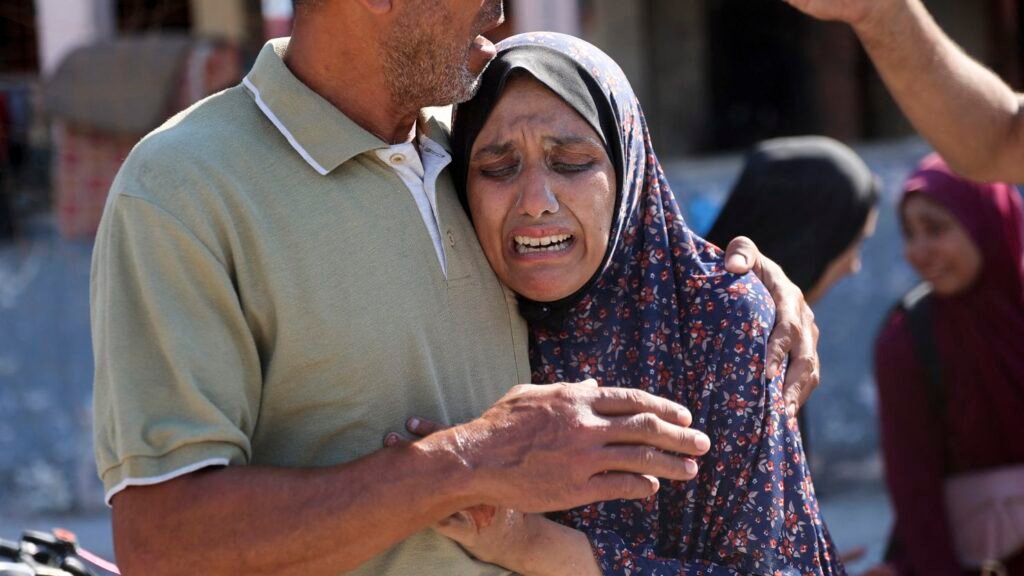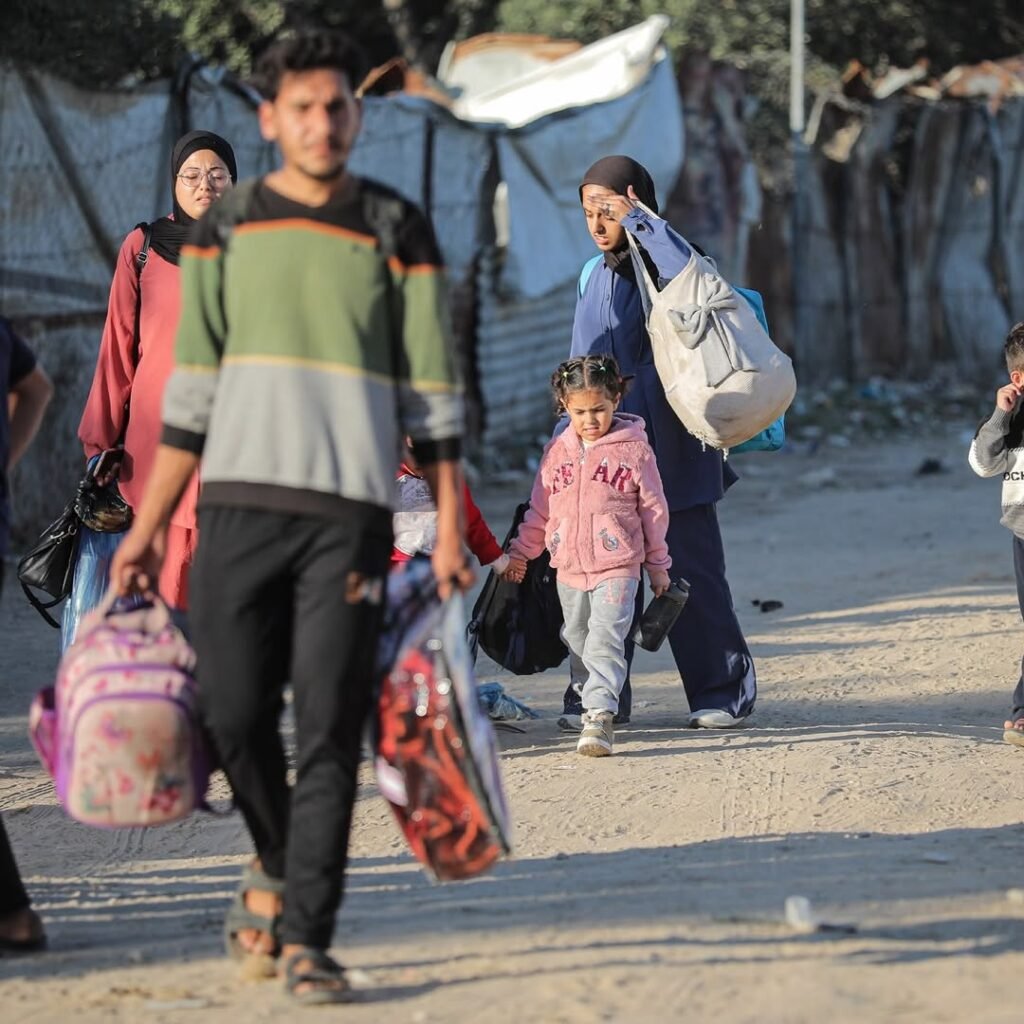
Gaza Herald — Thousands of Palestinians have been forced to flee once again as a ground operation by Israeli occupation forces in central Gaza compounds a shelter crisis already threatening hundreds of thousands of displaced families with flooding, exposure, and potentially fatal winter conditions.
With tents damaged by recent storms, humanitarian shelter supplies still restricted by Israel, and vast areas reduced to rubble, the renewed assault around Bureij and Nuseirat has left families facing another displacement with nowhere safe or adequate to go.
Israeli occupation forces launched a ground operation near Salah al-Din Road, targeting residential blocks northwest of Bureij refugee camp and northeast of Nuseirat. The advance was accompanied by live gunfire, artillery shelling, and armored movements, prompting thousands of Palestinians to abandon shelters they had struggled to secure after earlier rounds of displacement. Some families were left sleeping in streets as overcrowded displacement centers, and the wholesale destruction of housing severely limited their options.
The timing has intensified the lethality of the assault. Gaza’s displaced population is confronting another winter amid inadequate shelter, waterlogged tents, flooding, and Israeli restrictions on essential supplies. For families forced to flee the latest military operation, displacement no longer means simply finding another place to stay; it means searching for protection against both Israeli attacks and freezing rain, hypothermia, and escalating public health hazards.
Another Incursion, Another Wave of Displacement
Armored vehicles and bulldozers of Israeli occupation forces pushed around Salah al-Din Road amid heavy gunfire and drone activity, while additional movements were reported near al-Daawa Street in northern Nuseirat and the Wadi Gaza area. Ongoing military activity and reported demolitions have heightened fears that the operation will further devastate civilian life across central Gaza.
The impact of the incursion extends beyond the immediate neighborhoods targeted. Salah al-Din Road serves as one of Gaza’s main north-south corridors, linking the north and south of the Strip. Military operations along the route threaten to sever civilian movement, block ambulances, delay relief convoys, and trap families trying to reach medical care or safer ground.
For households displaced repeatedly since Israel launched its genocidal war on Gaza, the latest evacuation pressures and tank advances have dismantled whatever fragile stability they had managed to piece together. Most have already lost their homes, exhausted their savings, and moved multiple times under fire. Because housing stock is ruined and displacement sites are packed beyond capacity, fleeing an active zone rarely leads to safety.
The fresh displacement places heavier strain on humanitarian agencies struggling to deliver food, shelter, medical care, and winter relief to a population whose survival needs far exceed available supplies. As newly uprooted families crowd into already overwhelmed camps, access to shelter, sanitation, and clean water grows even more precarious.
Winter Flooding Turns Displacement Into a Life-Threatening Emergency
The renewed displacement is unfolding as winter storms have already battered makeshift shelters across Gaza. According to figures from the United Nations Office for the Coordination of Humanitarian Affairs (OCHA), rainfall between November 6 and 9 affected approximately 46,000 households, around 226,000 people, while more than 40,000 family shelters were damaged.
Floodwater has poured into tents and temporary shelters, soaking mattresses, clothing, blankets, and meager belongings. Families are struggling to shield their children from rain, cold winds, and mud using torn tarpaulins and salvaged debris.
The peril is acute for infants, young children, elderly residents, and people with chronic illnesses. Prolonged exposure to cold and dampness accelerates respiratory infections and other diseases, while lacking dry bedding and warm clothes can prove fatal. The World Health Organization has warned of grave cold-exposure hazards among displaced Palestinians, including hypothermia, after an eight-month-old infant died from the condition.
The scale of the shelter crisis leaves virtually no room for families displaced by the latest operation to find safe cover. Approximately 950,000 Palestinians are living in flood-prone areas, including around 400,000 in high-risk locations. Meanwhile, more than 150,000 weather-resistant tents remain blocked, awaiting Israeli entry clearance, choking off efforts to replace ruined shelters and prepare for harsher storms. For Palestinians fleeing central Gaza, the convergence of military assault and winter weather means escaping gunfire can drop families straight into flooding, freezing temperatures, and disease.
Ceasefire Failure and Stalled Governance Compound Winter Peril
The latest incursion exposes the widening gap between the October 2025 ceasefire agreement and the reality of ongoing Israeli attacks, territorial control, and blockade restrictions. Rather than halting hostilities and protecting civilians, the truce has failed to stop renewed military operations, gunfire, shelling, displacement, and building demolitions, leaving families unable to return to ruined homes or secure winter protection.
That failure aligns with broader paralysis in the political arrangements intended to stabilize Gaza. The Board of Peace, established under the U.S.-backed framework, has faced mounting obstacles over stalled implementation, unresolved security arrangements, and the failure to translate commitments into tangible relief on the ground. A recent assessment by the board warned that the widening gap between agreed commitments and conditions on the ground threatens the sustainability of the ceasefire, a warning underscored by the central Gaza incursion, which continues to uproot families into worsening weather while blockade restrictions keep essential relief out.