Gaza Herald- Three years of Israel’s devastating war on the Gaza Strip have exposed a fundamental contradiction at the heart of its genocidal campaign: Israel has demonstrated an overwhelming capacity to destroy Palestinian cities, displace communities, and devastate civilian infrastructure, yet it has failed to establish a lasting political order capable of determining Gaza’s future.
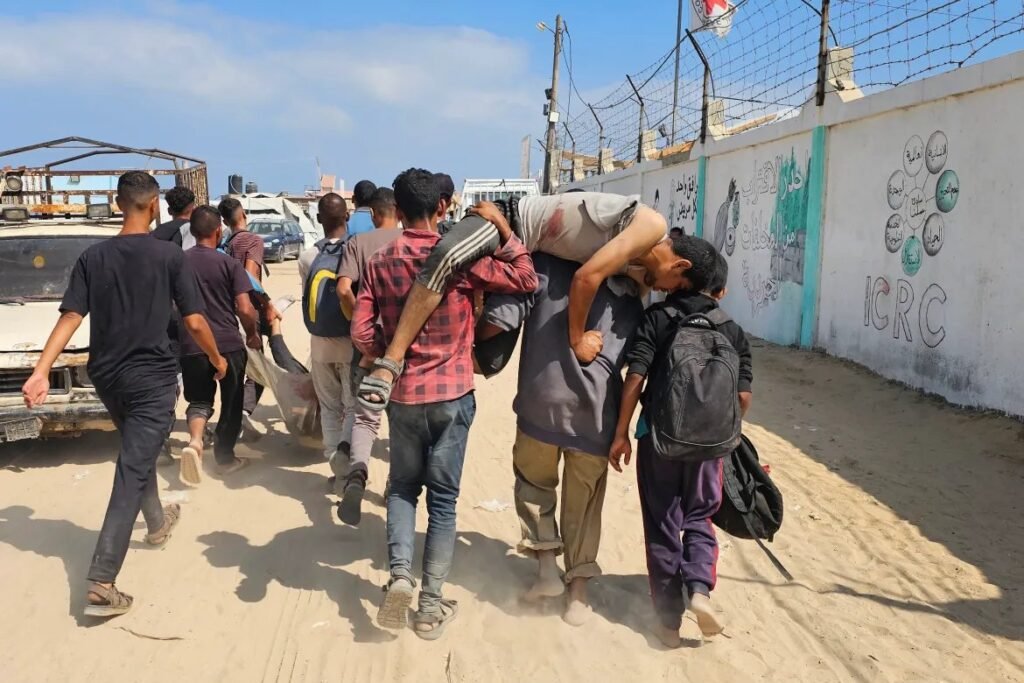
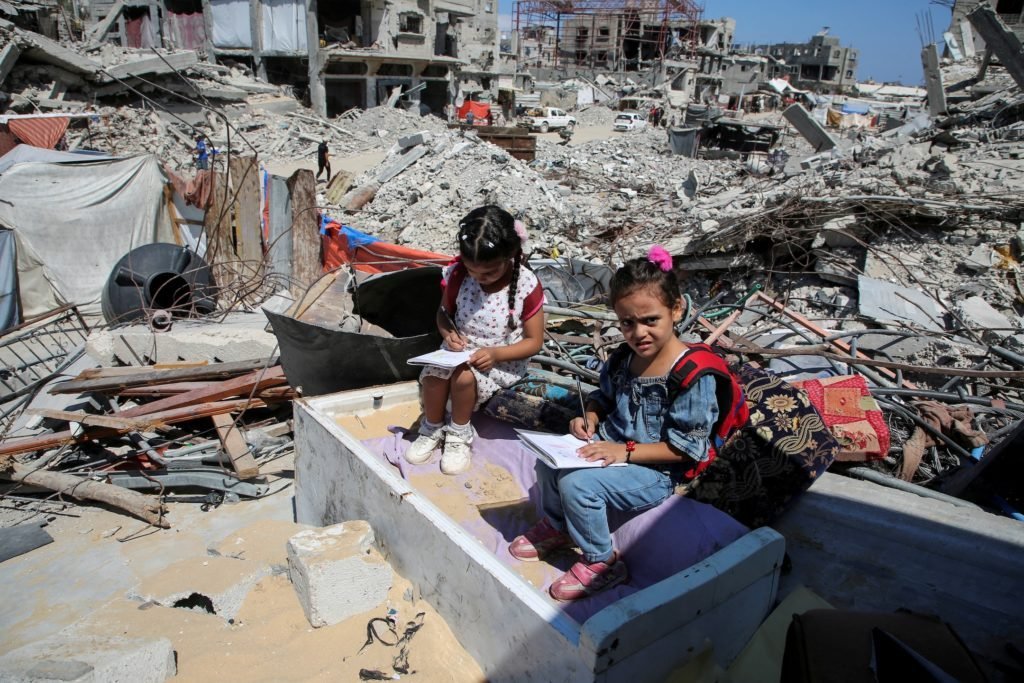
Entire neighborhoods have been reduced to rubble, hospitals and schools have been destroyed or severely damaged, and tens of thousands of Palestinians have been killed. More than two million Palestinians have endured displacement, deprivation, and the destruction of much of the infrastructure necessary for everyday life.
Yet despite the scale of devastation, the Palestinian people remain central to every unresolved question about Gaza’s future.
Israel’s military superiority has enabled it to seize territory and inflict enormous destruction. What it has not delivered is a political settlement that can replace Palestinian demands for freedom, self-determination, and a future on their own land.
The distinction is critical: military control over Gaza does not amount to political legitimacy, and the destruction of Palestinian society’s physical foundations cannot extinguish its national identity.
Three Years of Genocide Have Not Delivered Israel’s Political Objectives
When Israel launched its military campaign following the Hamas-led attacks of October 7, 2023, its leadership declared several objectives, including dismantling Hamas, securing the return of Israeli captives, preventing future attacks, and establishing a new security and political arrangement for Gaza.
Three years later, the results reveal significant limitations in Israel’s strategy.
Although Israeli forces killed senior Hamas figures, destroyed military infrastructure, and conducted extensive ground and air operations, Hamas remained a factor in negotiations concerning disarmament, governance, and Gaza’s political future.
The issue of Israeli captives further exposed the limits of military force.
While Israeli operations rescued some captives and recovered the remains of others, most were released through negotiated agreements and exchanges.
The reliance on negotiations illustrated that military pressure alone could not resolve one of Israel’s central wartime objectives.
Israel’s ability to inflict destruction has therefore not translated into the political outcome its leadership initially sought.
Occupying Territory Does Not Mean Controlling Its Political Destiny
Israel’s continuing military presence in Gaza has created another strategic dilemma.
Territorial control gives Israeli forces substantial power over movement, security, and access to essential resources. However, maintaining that control requires sustained military deployment and leaves unresolved the question of who will govern Gaza in the long term.
The central political questions remain unsettled.
Who will administer Gaza? Who will finance its reconstruction? Who will control its borders? What role will Palestinian institutions play? And, most importantly, will Palestinians have a meaningful say in determining their own future?
According to the source analysis, proposals backed by Israel and the United States, including a proposed international framework for reconstruction and transitional Palestinian governance, have yet to resolve these disputes.
The central problem is that a political system cannot gain legitimacy solely through military superiority or external sponsorship.
Any lasting arrangement must confront the reality that Palestinians are not simply a population to be administered. They are a people with political rights, national aspirations, and claims to self-determination.
Gaza’s Destruction Has Not Erased Palestinian Identity
One of the most consequential realities emerging from the war is the continued Palestinian attachment to Gaza despite widespread destruction and displacement.
Israeli military operations have transformed the territory’s physical landscape, leaving residential districts devastated and much of its civilian infrastructure severely damaged.
But the destruction of homes has not eliminated Palestinians’ claims to their land.
Proposals involving the relocation of Gaza’s population, including those presented as voluntary migration, have raised concerns about permanent displacement and the possibility of rebuilding the territory without its original inhabitants.
Such proposals do not resolve the fundamental political issue.
Palestinians remain entitled to self-determination, and displacement cannot serve as a substitute for a political settlement.
The continued Palestinian demand to remain on their land challenges the assumption that overwhelming military pressure can permanently determine the future of an occupied population.
Israel can destroy buildings, roads, and institutions, but physical destruction cannot by itself eliminate a people’s historical connection to their homeland or their political rights.
International Opposition Adds to Israel’s Political Challenges
The consequences of Israel’s military campaign have extended far beyond Gaza.
The war has intensified international scrutiny of Israeli conduct and contributed to growing criticism of its policies toward Palestinians.
The source report cites a 2026 Pew Research Center survey across 36 countries indicating that a median of 67% of respondents held unfavorable views of Israel, compared with 25% who expressed favorable views.
The reported unfavorable figures included 60% in the United States, 73% in Germany, and 69% in the United Kingdom.
These figures, if confirmed against the original survey, illustrate the diplomatic challenges Israel faces even in countries with longstanding political and security relationships with it.
The military campaign has also been accompanied by international legal proceedings.
The International Criminal Court issued arrest warrants in November 2024 for Israeli Prime Minister Benjamin Netanyahu and former Defense Minister Yoav Gallant over allegations of war crimes and crimes against humanity.
The warrants represent a significant development in international legal scrutiny, although they are not criminal convictions.
Israel has rejected accusations of unlawful conduct and maintains that its military campaign has pursued security objectives following the October 2023 attacks.
Nevertheless, the scale of civilian suffering and destruction in Gaza has made the conduct of the war a central issue in international diplomatic and legal debates.
Reconstruction Remains Hostage to Unresolved Political Questions
Despite ceasefire efforts and negotiations over Gaza’s future, reconstruction remains constrained by unresolved questions concerning security, governance, border access, and Israeli military withdrawal.
The source analysis reports that Israeli forces continued to control approximately two-thirds of Gaza in October 2026, while reconstruction efforts remained severely limited.
This territorial estimate requires independent confirmation, but the broader political dilemma is clear.
Rebuilding Gaza requires more than removing rubble and repairing damaged buildings.
It requires restoring hospitals, schools, water networks, electricity systems, housing, and the institutions necessary for Palestinian communities to function.
It also requires predictable humanitarian access, substantial international financing, and political arrangements capable of supporting reconstruction without exposing civilians to renewed cycles of destruction.
Plans for Gaza’s future cannot be assessed solely through the security priorities of Israel or the strategic interests of outside powers.
They must also address Palestinian rights, representation, and the ability of Gaza’s population to participate meaningfully in decisions affecting their lives.
Military Superiority Has Not Produced a Sustainable Peace
The central argument emerging from three years of war is that destruction and political success are not interchangeable.
Israel has demonstrated its capacity to conduct large-scale military operations, eliminate armed commanders, and impose control over extensive areas of Gaza.
But the continuation of disputes over Hamas, Israeli withdrawal, Palestinian governance, and reconstruction illustrates the limits of that approach.
Military operations may alter the balance of power on the ground, but they cannot automatically produce a legitimate government, secure public acceptance, or settle longstanding political grievances.
Nor can military force alone resolve the wider conflict over Palestinian statehood, occupation, displacement, and self-determination.
The humanitarian consequences are equally significant.
For Palestinians, the cost of the war is measured not only in destroyed infrastructure and territorial control but in lost family members, interrupted education, damaged livelihoods, and communities struggling to survive.
Any assessment of the war’s outcome must account for these human consequences alongside its military and political dimensions.
Gaza’s Future Must Include the Palestinian People
Three years after October 7, the unresolved future of Gaza illustrates a central limitation of military power.
Israel has inflicted extraordinary destruction, but it has not established a broadly accepted political settlement for the territory.
The future of Gaza remains contested because the underlying questions of Palestinian rights, political representation, security, reconstruction, and self-determination remain unresolved.
The international community now faces a choice over whether reconstruction will be treated primarily as a security and administrative exercise or as part of a wider effort to secure Palestinian rights and a sustainable political settlement.
For Palestinians, rebuilding Gaza means more than reconstructing homes and public institutions. It also means preserving communities, restoring livelihoods, and securing the ability to determine their future without forced displacement or permanent military domination.
The war has demonstrated that military power can profoundly reshape a territory. It has not demonstrated that such power can create political legitimacy or erase the national aspirations of its people.
Israel has shown that it can devastate Gaza. What remains unresolved is whether any political future imposed without meaningful Palestinian participation can endure.