Gaza Herald – Gaza’s remaining hospitals are facing a potentially deadly oxygen crisis as Israel’s continuing blockade prevents the entry of essential spare parts, maintenance supplies and fuel, leaving critically ill patients, premature babies and people dependent on life-support machines at constant risk of death.
In the intensive care unit at Al-Aqsa Martyrs Hospital in Deir al-Balah, central Gaza, medical workers are struggling to keep patients alive with a rapidly deteriorating oxygen supply system. For those connected to ventilators and other life-saving equipment, even a brief interruption in oxygen delivery could prove fatal.
Diyaa Aref, an intensive care nurse at the hospital, said medical teams are operating with barely enough resources to meet patients’ most urgent needs, forcing staff to carefully calculate oxygen consumption as supplies and production capacity continue to decline.
“Oxygen is one of the most critical elements of ICU care,” Aref said. “Patients here cannot endure an outage or wait hours for broken equipment to be repaired.”
The crisis extends far beyond a single hospital. Across Gaza, oxygen generators are breaking down, dialysis machines are falling out of service, essential medicines are running out, and backup electricity generators are becoming increasingly unreliable because of shortages of fuel, maintenance oil and replacement parts.
For medical workers, the consequences are immediate. Every mechanical failure threatens patients whose survival depends on a continuous supply of oxygen, while the Israeli restrictions on essential equipment make repairing damaged systems increasingly difficult.
22 of Gaza’s 34 Oxygen Plants Out of Service
Figures provided by Gaza’s Ministry of Health reveal the extent of the collapse. Of the 34 oxygen-production plants across the Strip, 22 are completely out of service, leaving only 12 partially operational.
The situation is even more critical for oxygen-cylinder refilling facilities. Only four of Gaza’s 30 refilling stations remain functional, severely limiting hospitals’ ability to maintain emergency oxygen reserves.
Mazen al-Araishe, director-general of engineering and maintenance at Gaza’s Ministry of Health, warned that the remaining facilities are operating under extreme pressure, often running continuously beyond their normal capacity to meet the needs of hospitals and medical centers.
He explained that frequent mechanical failures, combined with the inability to obtain spare parts and maintenance materials, have placed the remaining oxygen infrastructure at serious risk of further collapse.
At Al-Aqsa Martyrs Hospital, two of the facility’s four oxygen stations have stopped working because of shortages of maintenance oil and replacement parts. On August 15, one of the hospital’s main remaining oxygen stations broke down, threatening the supply needed by intensive care patients, premature infants, operating rooms and dialysis departments.
The breakdown exposed the extreme vulnerability of a hospital already struggling to care for patients with severely limited equipment and resources.
Premature Babies Face the Risk of Suffocation
Among those most vulnerable to oxygen shortages are premature newborns, whose underdeveloped lungs often require continuous respiratory support.
Dr. Mahmoud Hammad, a physician in the hospital’s neonatal department, warned that any interruption in oxygen delivery could have devastating consequences for infants receiving treatment in incubators.
“For premature infants whose lungs are not fully developed, oxygen is not an optional supplement—it is life itself,” Hammad said.
Medical staff have so far managed to prevent infant deaths directly attributed to oxygen-system failures, according to Hammad, but the remaining capacity leaves almost no room for additional emergencies.
He warned that a sudden increase in critically ill newborns or the breakdown of another oxygen generator could overwhelm the department and lead to preventable deaths.
The situation has forced doctors and nurses to work under extraordinary pressure, knowing that equipment failure could turn an already critical medical condition into a fatal emergency within moments.
Al-Shifa Hospital Left With Only Two Oxygen Stations
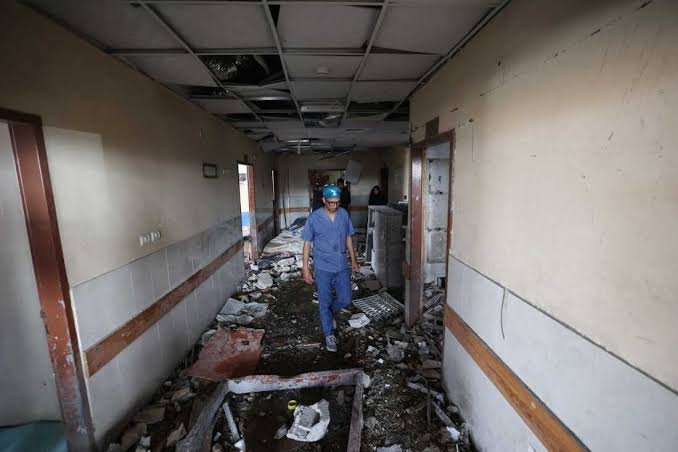
In Gaza City, the crisis has reached similarly dangerous levels at Al-Shifa Medical Complex, the largest hospital in the Gaza Strip before Israel’s military assault devastated much of its infrastructure.
Dr. Muhammad Abu Salmiya, director of the medical complex, said Al-Shifa previously operated 10 oxygen stations. Today, only two remain functional.
The destruction of oxygen-production infrastructure has left the hospital struggling to meet the needs of critically ill patients, particularly those requiring ventilators and continuous respiratory assistance.
According to Abu Salmiya, Gaza City now has only one operational oxygen-cylinder refilling station, which is forced to run around the clock to supply medical facilities despite repeated breakdowns and the deterioration of its equipment.
The World Health Organization has documented extensive destruction of medical infrastructure at Al-Shifa following Israeli military operations, including damage to systems essential for oxygen production and patient care.
Abu Salmiya warned that the consequences of another major oxygen failure could be catastrophic.
“If oxygen supplies cut out for premature babies or ICU patients on ventilators, it will result in immediate mass casualties,” he said.
With much of northern Gaza’s medical infrastructure destroyed or damaged, hospitals have limited capacity to transfer patients or obtain emergency oxygen supplies from alternative facilities.
Dialysis Patients Face Another Life-Threatening Crisis
The oxygen emergency is unfolding alongside a severe deterioration in dialysis services, leaving hundreds of Palestinians with kidney failure at risk of losing access to essential treatment.
In late July, the hemodialysis department at Al-Aqsa Martyrs Hospital, one of only four operational dialysis centers remaining in Gaza, was forced to reduce treatment sessions for approximately 240 patients after 25 of its 51 dialysis machines broke down.
The shortage of functioning machines has forced medical teams to shorten or reduce the frequency of dialysis sessions, despite the serious health risks associated with inadequate treatment.
The situation worsened on August 1 when Israeli forces bombed medical supply warehouses adjacent to Al-Aqsa Martyrs Hospital, destroying two storage facilities containing essential dialysis supplies and consumables.
The destruction dealt another blow to a healthcare system already struggling with shortages of medical equipment, medications and replacement parts.
Masoud Iki, a Palestinian kidney patient receiving treatment at the hospital, described the consequences of losing the supplies on which patients depend.
“Losing these supplies is a delayed death sentence for us,” he said.
For patients with kidney failure, regular dialysis is essential to remove toxins and excess fluid from the blood. Without adequate treatment, life-threatening complications can develop, leaving patients increasingly vulnerable as medical resources disappear.
A Healthcare System With No Safety Margin
Gaza’s oxygen crisis reflects the wider destruction of its healthcare system after three years of Israeli military attacks, repeated displacement and restrictions on essential medical supplies.
Under normal circumstances, hospitals rely on backup oxygen systems, emergency cylinders and maintenance teams to prevent interruptions in critical care. In Gaza, many of those safeguards have been destroyed, exhausted or rendered unusable.
The remaining medical facilities are operating with severely limited resources, while shortages of fuel, lubricants and spare parts threaten the equipment that has survived the war.
For healthcare workers, every breakdown creates an emergency that may be impossible to resolve. Patients cannot wait for replacement parts that are blocked from entering Gaza, and premature infants cannot survive prolonged interruptions in oxygen delivery.
As the remaining oxygen stations struggle to meet demand, Gaza’s doctors and nurses face the possibility of losing patients not because treatment is medically unavailable, but because the equipment needed to deliver it can no longer function.
For Palestinians lying in intensive care beds and newborns struggling to breathe inside incubators, the consequences of Israel’s siege are measured in every breath.
In Gaza’s devastated hospitals, the difference between life and death may now depend on whether the last functioning oxygen generator keeps running.