Gaza Herald — A catastrophic shortage of fundamental laboratory testing supplies, blood-typing reagents, and blood products across the Gaza Strip is threatening the lives of thousands of patients with chronic blood disorders.
Amid the systemic breakdown of Gaza’s healthcare infrastructure, individuals suffering from severe haemolytic anaemia, platelet dysfunctions, and paediatric blood diseases are trapped in a precarious daily struggle for survival. With diagnostic capacity collapsing and vital surgical referrals outside the Strip blocked, routine health monitoring has turned into an existential lottery.
The Human Toll: Daily Struggles in Camps and Intermediate Care
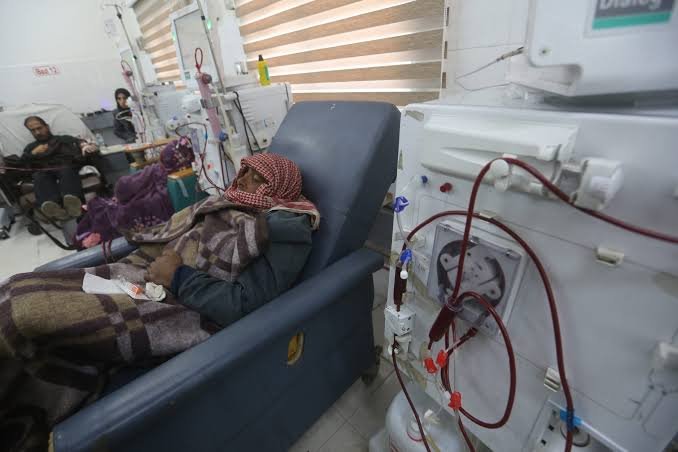
In the sprawling displacement zones of Al-Mawasi in Khan Younis, 60-year-old Rasmia Ismail, who suffers from chronic hemolytic anemia, describes a perilous routine where every acute medical crisis requires finding immediate volunteers to donate blood. Experiencing sudden bouts of incapacitating weakness and nausea, Rasmia is forced to bring her own donors directly to medical facilities, remaining hospitalized for days to receive life-sustaining transfusions. “Every day, I live with the fear that the next episode could be my last if donors cannot be found,” she warned.
Simultaneously, in the intermediate-care unit of Al-Aqsa Martyrs Hospital in Deir al-Balah, young Muath Abu Shawish remains in critical condition. Diagnosed with a severe blood disorder, the child relies on daily platelet transfusions to prevent fatal internal bleeding. Medical personnel note that while temporary transfusions maintain his basic vitals, Muath urgently requires a bone marrow transplant, a complex hematological procedure entirely unavailable within Gaza’s devastated medical network, requiring immediate evacuation abroad.
Diagnostic Services Near Complete Shutdown
Beyond the scarcity of blood units, medical laboratories across the enclave face a total operational freeze. Crucial testing materials and laboratory consumables have reached critical deficits, with shortages in sensitive diagnostic panels, such as Complete Blood Counts (CBC) and arterial blood-gas analyses, reaching up to 100 percent in key facilities.
Abdullah Washah, director general of laboratories at Al-Aqsa Martyrs Hospital, issued an urgent warning regarding the rapidly depleting stockpiles. Washah indicated that remaining diagnostic reserves would last barely 10 days to two weeks without immediate aid replenishment. The suspension of routine CBCs, electrolyte checks, and cross-matching reagents leaves clinical staff unable to track acute internal hemorrhaging, platelet declines, or systemic infections in intensive care patients and oncology patients.
Blocked Evacuations and Systemic Collapse
The crisis facing hematology patients in Gaza is compounded by strict limits on medical evacuations. Hundreds of bone marrow transplant candidates and specialized cancer patients remain unable to leave through designated border crossings. According to the UN and health authorities, delay or denial of exit permits has already resulted in preventable deaths among critically ill patients waiting for tertiary care unavailable inside the Strip. For patients like Rasmia and Muath, the intersection of depleted blood banks, absent laboratory diagnostics, and blocked medical transit represents an immediate, life-threatening emergency.