Gaza Herald- There is something deeply revealing about discussing Gaza’s reconstruction in billions of dollars while wheelchairs for its wounded children sit gathering dust in warehouses outside the Strip. This past week, senior figures involved in the UN Security Council-endorsed Board of Peace gathered on the sidelines of the United Nations General Assembly in New York to present an ambitious vision for Gaza’s future. Jared Kushner spoke about allowing Palestinians in Gaza to improve their lives. Nickolay Mladenov discussed moving from planning to implementation. The Board presented a six-month, multibillion-dollar recovery program covering dozens of projects, from infrastructure and healthcare to education and public services.
There were presentations, diplomats, financial projections, reconstruction maps, and discussions about what Gaza might look like years from now. Yet hundreds of kilometers away, more than 900 wheelchairs donated by Australian charities for Palestinians wounded in Gaza remain stranded in Jordan. That contrast should haunt every discussion about Gaza’s “recovery.” Because before asking who will rebuild Gaza, perhaps there is a simpler question: Why can a wheelchair not get in?
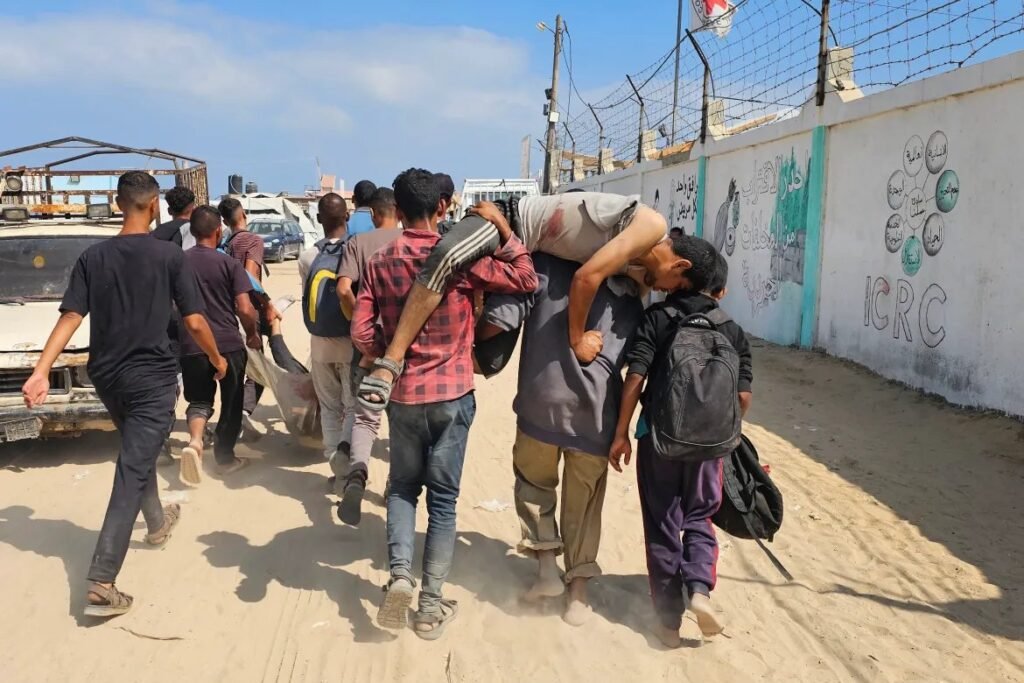
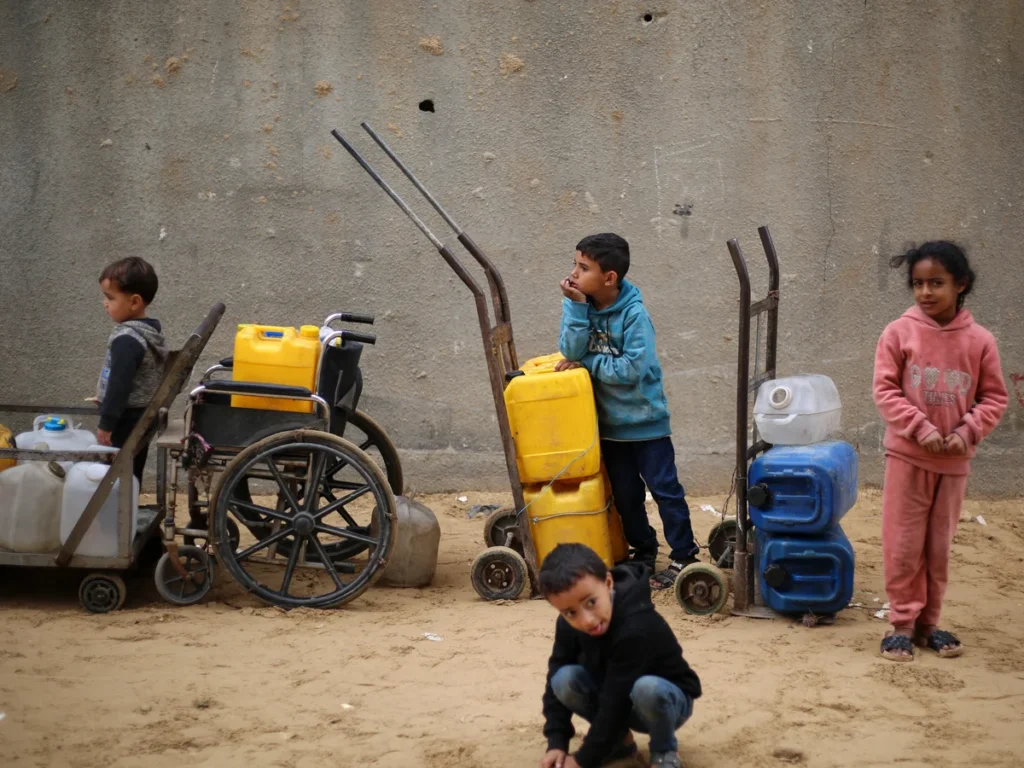
The scale of disability in Gaza is not an abstraction. A United Nations Commission of Inquiry reported this year that Gaza now has the highest concentration of child amputees in the world. UN reporting has also documented thousands of amputations and severe limb, spinal cord, and brain injuries since October 2023. These are children learning to live without legs. Children who survived explosions but will spend the rest of their lives carrying their consequences. Children who need wheelchairs, prosthetic limbs, rehabilitation, physiotherapy, accessible shelters, and medical care.
And yet more than 900 wheelchairs donated by two Australian charities have remained in Jordan rather than reaching the people for whom they were purchased. According to Australia’s ABC, two shipments from the Kids on Wheels Alliance arrived in Jordan in February 2025, while another shipment from Wheelchairs for Kids arrived in October 2025. The Jordan Hashemite Charity Organization sought approval to include the first shipments in a convoy to Gaza. It says the request was rejected, with Israeli authorities stating that medical equipment and medicines were not approved for that convoy. The application subsequently remained pending.
Israel, for its part, says thousands of wheelchairs have been approved for entry into Gaza without quantitative restrictions. But those particular wheelchairs remain outside. For a Palestinian child who cannot walk, the distinction between “approved in principle” and sitting in a warehouse in Jordan is meaningless. The wheelchair is either beside the child or it is not.
This is where the grand language surrounding Gaza’s reconstruction collides with reality. The Board of Peace has proposed a $2.45 billion six-month recovery program encompassing 66 projects, while estimating that rebuilding Gaza’s physical infrastructure will require tens of billions more over the coming decade. Those numbers may be necessary. Gaza has suffered destruction on a scale that will require enormous resources to repair. But reconstruction cannot simply become an architectural exercise conducted in conference rooms.
A society is not reconstructed because someone produces a rendering of a new neighborhood. Recovery begins when a wounded person receives treatment. It begins when a child can drink clean water. It begins when a hospital receives medical equipment. And for an amputee, it can begin with something as basic as a wheelchair. If the international machinery established to oversee Gaza’s transition can mobilize governments, diplomats, investors, development institutions, and billions of dollars, then it should be able to confront the obstacles preventing essential assistive equipment from reaching disabled Palestinians. Otherwise, “reconstruction” risks becoming a word describing Gaza’s future while Palestinians remain trapped in the suffering of its present.
The stranded wheelchairs expose a larger problem with the international conversation surrounding Gaza. Palestinians are constantly being asked to wait. Wait for negotiations. Wait for crossings to open. Wait for reconstruction. Wait for political arrangements. Wait for international mechanisms. Wait for somebody, somewhere, to approve the objects required to make ordinary human existence possible.
For a diplomat, waiting can mean another meeting. For a child who has lost a leg, waiting means dependency. It means being carried to a toilet. It means being unable to move independently through a displacement camp. It means watching other children move while remaining trapped in a tent. It means surviving the weapon that injured you, only to encounter another form of confinement afterward.
That is why a wheelchair is not a minor humanitarian item in Gaza. It is mobility. It is independence. It is dignity. And when hundreds of wheelchairs are prevented from reaching people who desperately need them, the issue is no longer simply logistical. It becomes a measure of whether the international system is capable of translating its declarations about Palestinian dignity into something tangible.
The contradiction became even sharper during the same UN General Assembly week. Australian Foreign Minister Penny Wong called for safe and unhindered humanitarian access to Gaza, including medical supplies and medical care. Her message contained a sentence that should be written above every conference room where Gaza’s reconstruction is discussed: “Aid that cannot get through cannot save lives.”
That principle is almost painfully obvious. Yet Gaza has spent years demonstrating how frequently the obvious must be repeated when Palestinian lives are involved. Humanitarian organizations have repeatedly documented restrictions affecting essential supplies. UNRWA’s 2026 humanitarian appeal specifically stated that the entry of various assistive devices, including wheelchairs, remained blocked, worsening the marginalization and isolation of people with disabilities.
The wheelchair controversy is therefore not merely about one shipment. It represents a much larger question about who controls Palestinian access to the basic instruments of survival and recovery. The Board of Peace did not create Gaza’s humanitarian catastrophe. But if it claims a central role in Gaza’s recovery, it inherits a responsibility to confront the conditions preventing that recovery.
The UN Security Council resolution that welcomed the Board’s establishment also stressed the importance of fully resuming humanitarian assistance into Gaza. That cannot be treated as secondary to the grander political questions. Humanitarian access is not something that should come after reconstruction. It is the first stage of reconstruction.
If the Board can negotiate governance structures, security arrangements, international financing, reconstruction projects, and Gaza’s political transition, then access for wheelchairs, crutches, prosthetics, medicines, and rehabilitation equipment cannot be dismissed as a logistical footnote. These are precisely the things by which Palestinians will experience “peace” in their daily lives — not through PowerPoint slides in New York, but through whether a wounded child can move.
There is an uncomfortable symbolism in hundreds of wheelchairs sitting in boxes while powerful officials discuss Gaza’s future. The people who need them have already survived the destruction. Some survived with one leg. Some survived with neither. Some survived with spinal injuries that will shape every remaining day of their lives. They should not now have to survive bureaucracy as well.
The Board of Peace says it wants to move Gaza from war toward recovery. Then there is an immediate and measurable place to start: use its political weight to ensure that wheelchairs, crutches, prosthetics, medical equipment, and other essential humanitarian supplies reach the Palestinians who need them without obstruction.
No new master plan is required. No multibillion-dollar fund needs to be established first. No futuristic vision of Gaza needs to be unveiled.
There are more than 900 wheelchairs waiting in Jordan.
Get them to Gaza.