
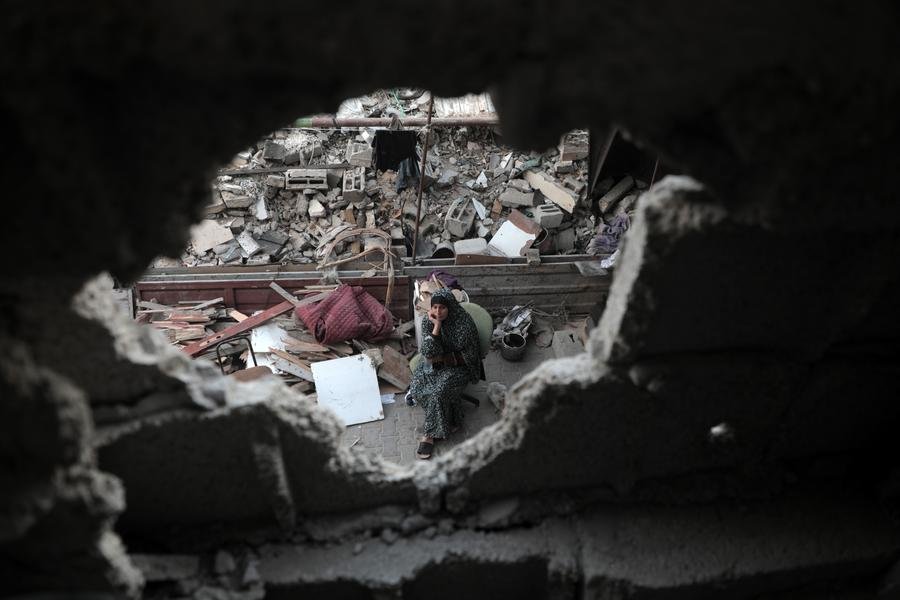
Gaza Herald — Across the besieged Gaza Strip, tens of thousands of displaced Palestinian families are wading through flooded encampments, clutching soaked blankets and damaged shelters as winter rains compound the relentless violence of Israeli occupation forces.
Confronted with images of submerged tents alongside renewed deadly strikes on hospitals and civilians, a rapidly expanding international mobilization under the banner #StopTheGenocide is working to convert fleeting digital outrage into sustained political, economic, and street-level pressure capable of breaking the siege and halting ongoing Israeli aggression.
Rather than allowing solidarity to remain confined to online trends, Palestinian, Arab, and international organizers are coordinating global demonstrations across major cities and capitals to confront the widening gap between diplomatic ceasefire announcements and the lethal reality on the ground. At the core of the campaign is an urgent insistence that Gaza cannot be normalized as a permanent humanitarian catastrophe while over two million Palestinians endure bombardment, forced displacement, and deliberate restrictions on survival supplies.
Flooded Encampments and Hospital Strikes Expose a Hollow Ceasefire
The urgency driving this global mobilization is rooted in the simultaneous convergence of winter devastation and unabated Israeli military assaults despite the nominal ceasefire agreement. Heavy rains and storms sweeping across the territory have inundated fragile displacement camps, flooding approximately 70,000 tents sheltering more than 300,000 displaced Palestinians, according to Gaza’s Government Media Office.
With mattresses, winter clothing, and meager belongings ruined, and drainage infrastructure destroyed, children, women, and elderly residents are left exposed to freezing temperatures and contaminated floodwaters while Israeli border restrictions block the entry of durable tents, tarpaulins, and heating equipment.
That enforced humanitarian collapse has unfolded alongside direct attacks by Israeli occupation forces on protected medical facilities and ordinary civilian life. Digital mobilization surged sharply following Thursday’s Israeli airstrike on the surgical department of Nasser Medical Complex in Khan Younis, southern Gaza, which killed six Palestinians, including a physician, patients, and family companions, and wounded 27 others.
The bombing dealt another crippling blow to a healthcare system already pushed to the brink by acute shortages of fuel, medicines, and surgical equipment.
Public fury intensified further after Israeli occupation forces struck a vehicle carrying a groom in Deir al-Balah in central Gaza, killing driver Nashat Awwad while the groom narrowly escaped. For campaigners worldwide, the strike underscored how Israeli state violence continues to intrude upon the most intimate milestones of Palestinian life, turning even a wedding procession into a scene of grief and terror.
Together, these assaults have fueled sharp criticism of international mediators and the so-called Peace Council, with activists arguing that diplomatic frameworks lacking enforcement mechanisms fail to protect civilians or halt violations.
Global Days of Rage: Moving From Hashtags to Street-Level Pressure
Determined to move beyond temporary online visibility, campaign organizers have launched Global Days of Rage from November 13 to 15, calling on solidarity movements worldwide to translate digital engagement into physical mass participation. Marches, rallies, and sit-ins are being organized across international capitals and urban centers to place Gaza back at the forefront of public and political agendas.
Organizers emphasize that digital platforms have played a vital role in documenting Israeli war crimes, amplifying Palestinian testimonies, and challenging the normalization of Gaza’s suffering in international discourse.
However, they stress that awareness without leverage cannot stop bombs or open sealed border crossings. By linking online mobilization with coordinated street protests, the campaign aims to build an enduring framework of civic advocacy involving trade unions, human rights organizations, student movements, and political parties.
Broadening the Coalition to Enforce Concrete Demands
Palestinian institutions and national forces have issued urgent appeals to expand the mobilization far beyond traditional solidarity circles into mainstream civic and religious life.
Gaza’s Government Media Office called upon Arab and Muslim communities, international solidarity networks, and people of conscience worldwide to fill public squares and pressure governments to secure the immediate entry of emergency relief, medical equipment, and winter shelter materials.
Echoing this call, the Follow-up Committee of National and Islamic Forces and Palestinian resistance factions urged mass participation to expose ongoing Israeli attacks and demand an immediate halt to arms shipments to Israel. Simultaneously, Hamas appealed to political parties, labor unions, and human rights groups to organize widespread demonstrations, while calling on religious leaders, Islamic scholars, mosque preachers, and churches to dedicate sermons, prayers, and public gatherings to supporting Gaza’s besieged population.
Crucially, the campaign’s demands go well beyond symbolic expressions of sympathy. Organizers are pressing for tangible political and material outcomes: an immediate end to all Israeli military aggression, the unconditional reopening of border crossings, the unrestricted entry of winter shelter supplies and medical aid, and a comprehensive embargo on military support to Israel. Campaigners argue that governments cannot credibly claim concern over Gaza’s humanitarian crisis while continuing to supply weapons and diplomatic cover that sustain it.
As Global Days of Rage bring thousands into streets and public squares, organizers face the critical test of sustaining momentum long after a single weekend of protests concludes. For displaced families sleeping in flooded tents and patients fighting for survival inside damaged hospital wards, international solidarity cannot be measured by trending hashtags, only by whether sustained global pressure forces an end to the siege, restores humanitarian access, and halts the destruction of Palestinian life.

