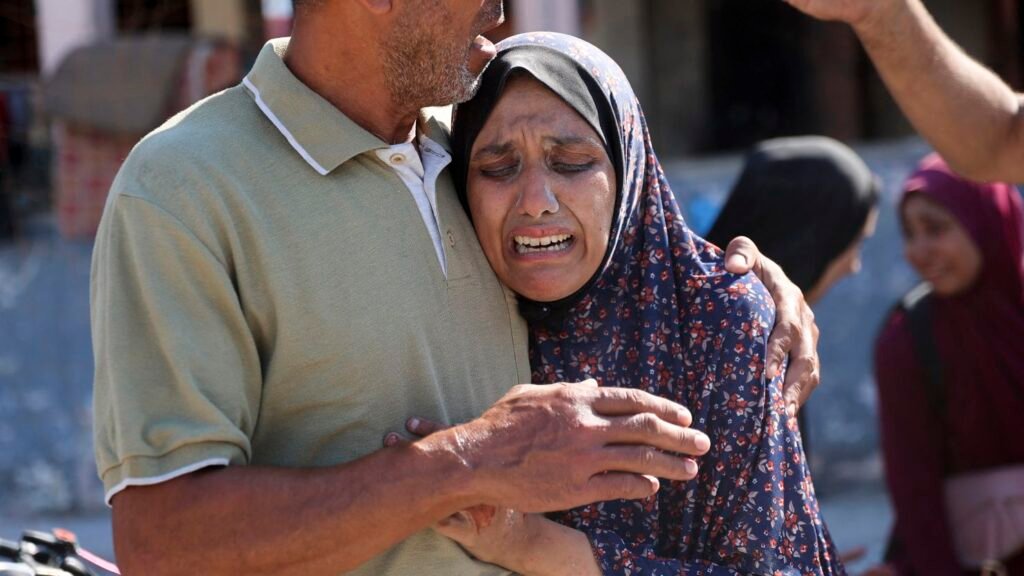
Gaza Herald — In Gaza’s displacement camps, a needle and thread have become tools of survival. Palestinian families sit beside deteriorating tents, stitching torn fabric and patching holes left by months of exposure to heat, rain, wind and repeated displacement.
These tents were never meant to become permanent homes. Yet for hundreds of thousands of Palestinians whose houses have been destroyed or rendered uninhabitable, fragile canvas shelters have become the places where families sleep, cook, raise children and struggle to preserve some measure of privacy and dignity.
With shelter materials in critically short supply and Israeli restrictions continuing to limit the entry of essential construction and repair materials, families are forced to repeatedly mend what little protection they have left.
When Survival Means Repairing What Is Falling Apart
The scale of Gaza’s shelter crisis is enormous. According to a Shelter Cluster assessment, around 1.98 million Palestinians, 94% of Gaza’s population—need shelter or basic household assistance.
Nearly two-thirds of households are living in tents or makeshift shelters, while more than half of the tents and makeshift structures assessed were in poor or very poor condition. More than 100,000 households were living in shelters whose deteriorating floors, walls or frames posed serious risks to their health, safety or dignity.
For displaced families, a tear in a tent is therefore more than an inconvenience. Rain can soak mattresses and blankets, damaged fabric can leave children exposed to cold and wind, and broken frames can make already fragile shelters unsafe.
Families respond with whatever they can find. Torn canvas is stitched together, plastic sheets are stretched over openings and ageing materials are reused again and again because replacements remain scarce.
OCHA has reported that restrictions continue to severely limit the entry of critical shelter supplies, including tents, tarpaulins, timber, ropes, tools and other materials classified by Israel as “dual-use.” Humanitarian agencies warn that supplies are entering far below the scale required.
A Tent Was Never Meant to Become a Home
Behind every repaired tent is a family that once had walls, doors, bedrooms and a kitchen.
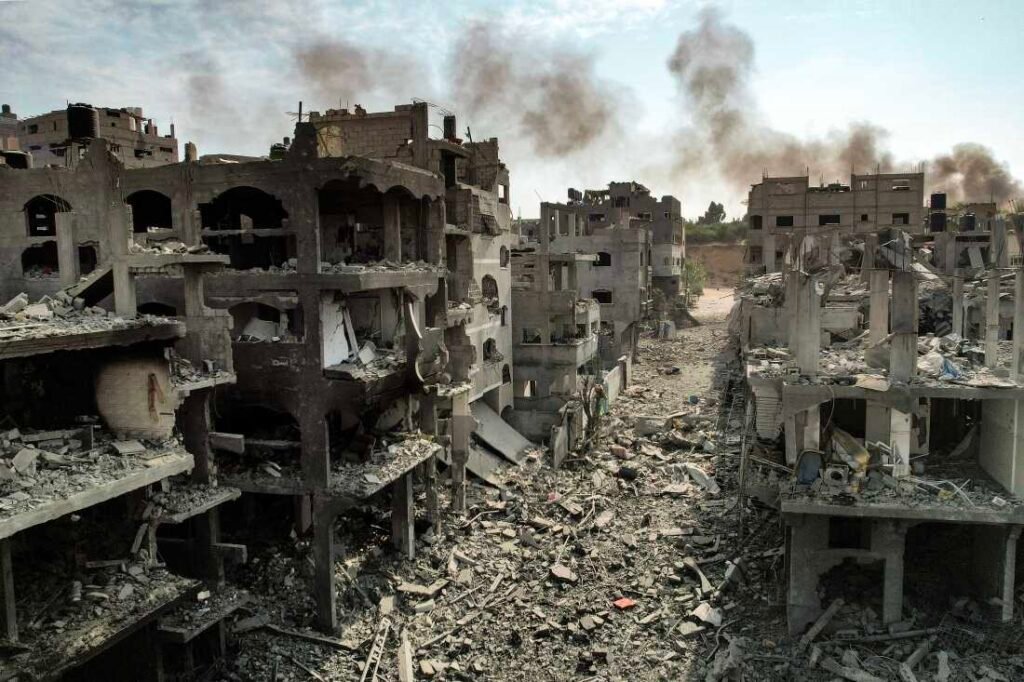
For many Palestinians, those homes now lie in ruins. Reconstruction has barely begun, leaving displaced families trapped between deteriorating tents and damaged buildings that may themselves be unsafe.
The consequences have become deadly. In September, a war-damaged building sheltering displaced Palestinians in Gaza City collapsed, killing 21 people. The tragedy highlighted the desperate choices confronting families who have nowhere safe to live.
Temporary shelter has gradually become prolonged displacement, while tents designed for emergencies deteriorate under months of exposure to Gaza’s weather.
The Shelter Cluster found that more than half of families living in tents had already been using the same tent for over a year. Many households also lack basic items needed for ordinary life, including adequate bedding, cooking equipment, fuel and protection from extreme temperatures.
Stitching Together What Remains
The humanitarian crisis can be seen not only in casualty figures or destroyed buildings, but in these smaller scenes of daily survival: a mother repairing a torn shelter, a father reinforcing a collapsing frame, or children sleeping beneath canvas that has been patched repeatedly.
A needle and thread cannot rebuild Gaza. They cannot restore a destroyed home, replace a lost livelihood or undo years of forced displacement.
They can only hold together, for another night, the last fragile shelter a family has left.
For Gaza’s displaced families, every stitch tells the same story: they are not rebuilding their homes, they are struggling to keep what remains from falling apart.