Gaza Herald — Thousands of Palestinians in the Gaza Strip face the prospect of missing the Hajj pilgrimage for a fourth consecutive season, as restrictions on travel through border crossings continue to prevent residents from reaching Saudi Arabia. According to local pilgrimage organizers, more than 400 Palestinians on Hajj waiting lists have died without fulfilling their long-awaited journey to Mecca.
With preparations underway for the 1448 AH/2027 Hajj season, Palestinian pilgrims and travel operators are calling for urgent international intervention to secure safe travel arrangements for Gaza residents.
At Nasser Medical Complex in Khan Younis, dozens of Palestinians dressed in white ihram garments gathered in a symbolic demonstration, reciting the traditional pilgrimage declaration, “Labbayk Allahumma Labbayk” — “Here I am, O Allah, here I am.”
The gathering, organized by the Association of Hajj and Umrah Companies in Gaza, highlighted the growing frustration of Palestinians who have waited years to perform one of Islam’s five pillars.
Rather than preparing for the journey to Mecca, participants stood in a hospital courtyard to demand access to the holy sites and the restoration of their freedom of movement.
More Than 10,000 Palestinians Reportedly Denied Hajj Over Four Seasons
Muhammad Abdul Khaliq Al-Astal, head of the Association of Hajj and Umrah Companies in Gaza, said more than 10,000 Palestinians have been unable to perform Hajj during the four pilgrimage seasons from 2024 through 2027, including those expected to miss the upcoming season if travel restrictions remain in place.
According to Al-Astal, approximately 2,700 registered pilgrims had completed the required selection procedures and obtained the necessary travel documentation but were unable to depart because of border closures.
He warned that continued restrictions could prevent thousands more Palestinians from fulfilling the religious obligation in 2027.
Al-Astal called on international human rights organizations, the Palestinian Authority, Egypt, and Saudi Arabia to intervene and establish arrangements allowing Gaza’s pilgrims to travel safely.
He also reported that more than 400 Palestinians registered on Hajj waiting lists had died before being able to perform the pilgrimage.
For many families, the deaths represent the loss of a deeply personal aspiration that had been delayed for years.
Rafah Crossing Restrictions Leave Pilgrims Unable to Travel
The ability of Gaza residents to travel abroad has been severely restricted since Israel’s military offensive began in October 2023.
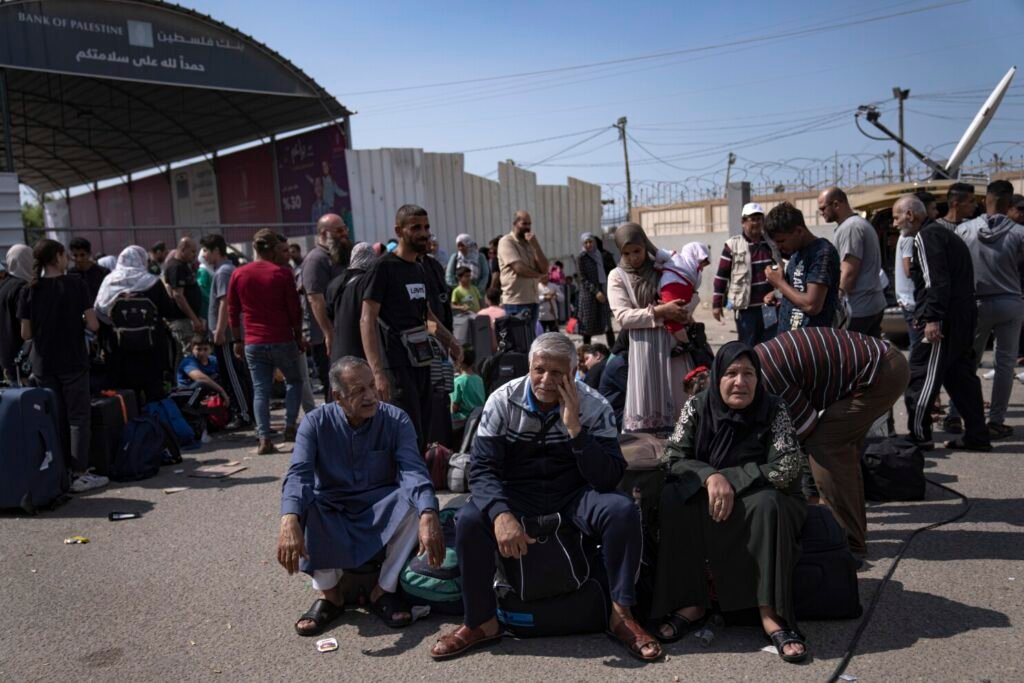
The Rafah crossing, which connects Gaza with Egypt, has long served as a principal route for Palestinians traveling outside the territory, including those undertaking religious pilgrimages.
Israeli forces took control of the Palestinian side of the crossing in May 2024, further disrupting civilian movement.
Although limited crossing operations subsequently resumed, including arrangements for medical evacuations, ordinary travel has remained heavily restricted.
For prospective pilgrims, the absence of reliable departure arrangements has made it difficult to complete the journey to Saudi Arabia, even after obtaining the necessary approvals.
Participants in the Khan Younis gathering emphasized that their demand was not for special treatment but for the opportunity to exercise their religious freedom and return safely to their homes.
Among those taking part were Muhammad Shubeir and Hajj company owner Imad Al-Bayouk, who highlighted the hardship facing families already affected by displacement, bereavement, and the destruction of their homes.
A Religious Obligation Beyond the Reach of Gaza’s Residents
Hajj is one of the five pillars of Islam and is obligatory once in a lifetime for Muslims who are physically and financially able to undertake the pilgrimage.
For many Palestinians, the journey requires years of saving and preparation.
Gaza’s prolonged travel restrictions have left prospective pilgrims uncertain whether they will ever be able to reach Mecca.
The reported deaths of more than 400 people on waiting lists have added urgency to calls for a solution, particularly for elderly applicants who may have limited opportunities to travel in future years.
Pilgrimage organizers say the disruption has affected not only individual worshippers but also the agencies responsible for coordinating registration, transportation, accommodation, and travel arrangements.
Without dependable access to border crossings, these preparations cannot proceed normally.
Appeals to International and Regional Leaders
Al-Astal appealed to United Nations Secretary-General António Guterres, international mediators, and regional governments to prioritize arrangements for Gaza’s prospective pilgrims ahead of the 2027 Hajj season.
He urged the relevant authorities to facilitate safe passage and ensure that registered pilgrims can complete the journey without further delays.
Organizers stressed that freedom of movement for religious purposes should be protected and that Gaza’s residents should not be excluded from the pilgrimage because of continuing restrictions.
The demonstration at Nasser Medical Complex offered a visible expression of that demand.
Dressed in the garments traditionally worn during Hajj, participants repeated the words that pilgrims recite as they approach the holy sites.
For Gaza’s prospective pilgrims, however, the declaration echoed through a hospital courtyard in Khan Younis rather than the sacred sites of Mecca.
As preparations for the next pilgrimage season continue, thousands remain uncertain whether they will finally be able to undertake a journey they have spent years waiting to make.