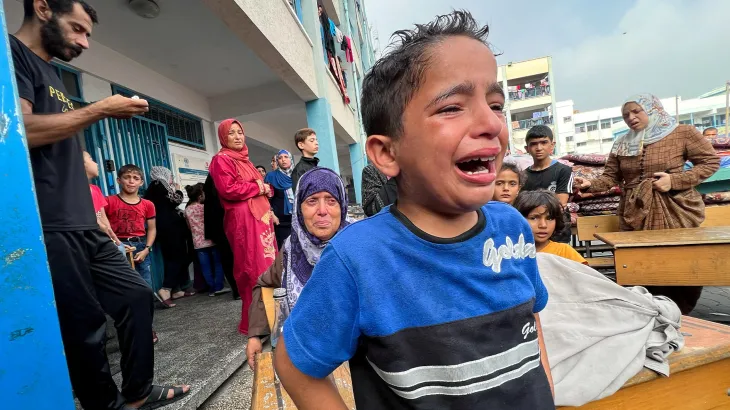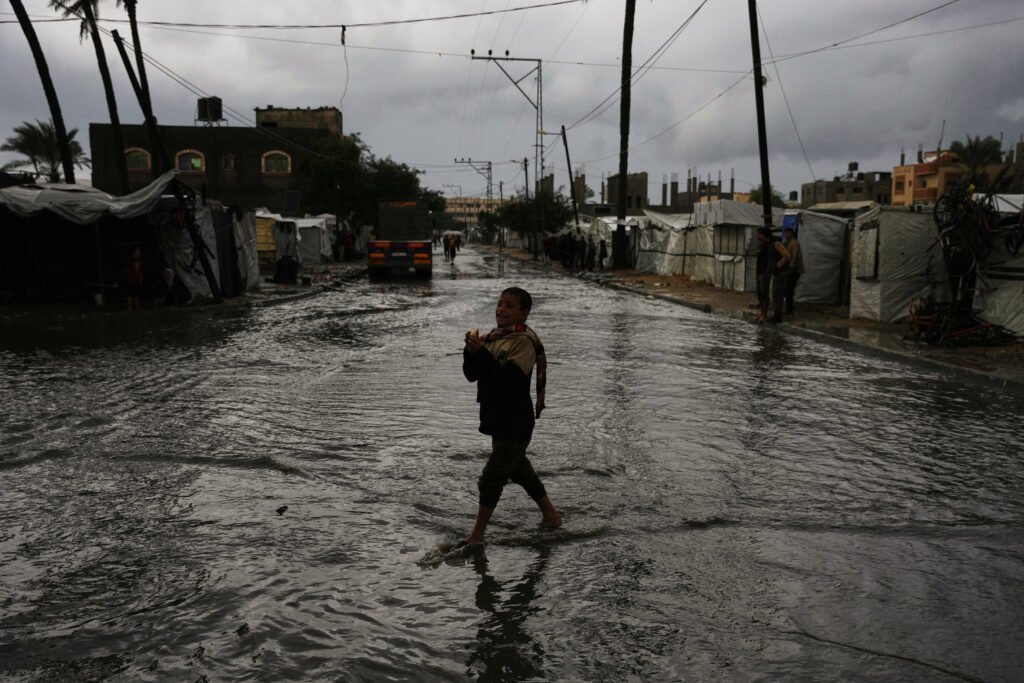
Gaza Herald — Gaza’s humanitarian crisis deepened on Saturday as the first major winter storm flooded approximately 70,000 tents sheltering displaced Palestinian families within just 12 hours, while heavy rainfall and powerful winds triggered building collapses and left residents injured, according to Gaza’s Government Media Office.
The office said the storm caused an estimated $3 million in initial direct losses, as floodwaters swept through displacement camps, destroyed essential belongings, and exposed thousands of families to dangerous weather conditions.
Dozens of walls collapsed across the Gaza Strip amid intense rainfall and strong winds, resulting in injuries of varying severity, including serious cases, the office reported.
Authorities also warned that numerous buildings previously damaged by Israeli bombardment face an increased risk of collapse, placing families sheltering inside or near them in immediate danger.
70,000 Tents Flooded as Winter Storm Sweeps Across Gaza
According to the Government Media Office, approximately 70,000 displacement tents were inundated during the first 12 hours of the weather system.
The flooding affected multiple areas of the Gaza Strip, including the vicinity of Gaza City’s port, Jabalia and Beit Lahiya in the north, western Deir al-Balah, and areas north of the Nuseirat refugee camp in central Gaza.
Rainwater poured into makeshift shelters, soaking mattresses, blankets, clothing, and the few belongings displaced families had managed to preserve.
Many of the affected tents are made from worn fabric and plastic sheeting that provide little protection against heavy rain, strong winds, or falling temperatures.
For families already displaced by Israel’s military offensive, the storm has brought another emergency, leaving them struggling to find dry shelter as winter conditions intensify.
Building Collapses Leave Palestinians Injured and Trapped
The severe weather has also increased the danger posed by residential buildings weakened by previous Israeli attacks.
In northern Gaza, two Palestinians were injured when a wall of a previously bombarded building collapsed during heavy rainfall.
In the Nuseirat refugee camp, Civil Defense crews evacuated residents from a residential building after part of its structure collapsed. No casualties were reported in that incident.
Meanwhile, in Gaza City’s Zaytoun neighborhood, the roof of a house collapsed, trapping a person beneath the rubble.
Civil Defense teams were working to reach and rescue the trapped individual, according to the initial report.
The Government Media Office warned that dozens of cracked and structurally weakened buildings remain at risk of collapse as rainfall continues to penetrate damaged walls, roofs, and foundations.
With widespread housing destruction and a severe shortage of safe accommodation, some displaced families have been forced to shelter in damaged buildings despite the danger.
Civil Defense Overwhelmed by Emergency Calls
Gaza’s Civil Defense reported receiving more than 1,500 distress calls from residents and displacement centers affected by flooding since the storm began.
The agency said entire displacement camps had been submerged, leaving emergency crews struggling to respond to the growing number of requests for assistance.
Civil Defense officials warned that severe shortages of rescue equipment, heavy machinery, water pumps, and fuel have sharply limited their ability to evacuate residents, remove floodwaters, and secure damaged structures.
The destruction of roads, drainage networks, and other essential infrastructure has further complicated emergency operations.
Rescue teams said they could not manage the scale of the disaster with the resources currently available, renewing calls for urgent access to specialized equipment and emergency supplies.
Floodwater and Sewage Contamination Raise Health Concerns
Beyond the immediate threat of flooding and building collapses, the storm has heightened concerns about public health conditions in overcrowded displacement camps.
In some areas, accumulated rainwater has mixed with sewage because of damaged drainage and wastewater networks.
The resulting contamination raises the risk of waterborne illnesses and other infections, particularly among children, older adults, and people with existing medical conditions.
Families living in flooded tents also face prolonged exposure to damp conditions and cold temperatures, with limited access to dry bedding, adequate clothing, heating, and safe sanitation facilities.
The widespread destruction of Gaza’s infrastructure has left communities increasingly vulnerable to winter storms, while municipal and emergency services lack the equipment needed to respond effectively.
Calls for Urgent International Intervention
Gaza’s Government Media Office held Israel responsible for worsening the humanitarian emergency through continued restrictions on crossings and the entry of essential shelter and reconstruction materials.
It called for urgent international intervention to provide emergency housing, replacement tents, heavy machinery, water pumps, fuel, and other supplies needed to protect displaced families.
Authorities warned that additional storms could bring further flooding, structural collapses, and injuries unless immediate measures are taken to strengthen emergency response capabilities and provide safer accommodation.
As winter begins in Gaza, thousands of Palestinian families face the threat of losing what little shelter remains to them, while others are forced to seek refuge in damaged buildings that may no longer be structurally safe.