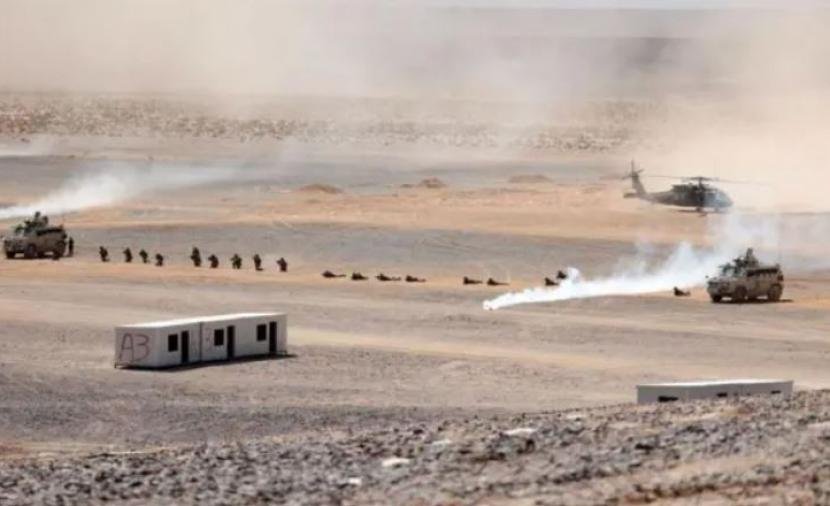
Gaza Herald – The Wall Street Journal reported on Thursday that Iranian authorities obtained satellite imagery of a United States military installation in Jordan from Chinese sources prior to and following a missile strike. The attack, launched by Tehran on July 17 against the Al-Shaheed Muwaffaq Salti Airbase, resulted in the deaths of three American soldiers.
US officials who provided information to the newspaper requested anonymity and did not identify the specific Chinese entities involved. They also stopped short of asserting direct responsibility by the Chinese government for the intelligence transfer. However, these concerns were raised with their Chinese counterparts during diplomatic discussions.
The issue is expected to resurface when President Donald Trump hosts Chinese President Xi Jinping at the White House on September 24. During this meeting, the provision of such strategic data will likely be a central point of contention between the two administrations.
According to the report, Chinese officials demanded evidence regarding the transfer of satellite images when US representatives first raised the matter. They explicitly denied acknowledging any involvement by Chinese companies in supplying Tehran with the visual data used to plan the operation.
This incident follows broader tensions where Washington has accused Beijing of supporting Iranian military capabilities. In May, the US imposed sanctions on three Chinese-based satellite companies, alleging they contributed to backing Iranian military operations. These measures reflect ongoing efforts to curb the flow of dual-use technology to Tehran.
Prior to the attack, President Trump had warned Beijing against selling weapons to Iran. The warning came amidst heightened regional instability and increased scrutiny of international supply chains linked to hostile actors in the Middle East.
China remains one of Iran’s most significant economic partners, purchasing a substantial portion of its oil exports. This trade relationship provides Tehran with crucial financial stability and diplomatic support on the global stage, complicating Western attempts to isolate the Islamic Republic economically.
The revelation highlights the complex web of international alliances and intelligence sharing that characterizes current geopolitical dynamics. It underscores how non-state actors and third-party nations can influence regional conflicts through indirect means such as commercial or state-sponsored data provision.
The exact extent of Chinese corporate involvement remains unclear, as Beijing continues to deny direct complicity. Nevertheless, the availability of high-resolution imagery suggests a level of cooperation that goes beyond mere commercial transactions, raising serious security concerns for US forces stationed in the region.
This report was produced in the Gaza Herald newsroom.