Gaza Herald- At first glance, some markets across the Gaza Strip appear to be showing signs of recovery. Food products line portions of store shelves, certain commodities have returned to circulation, and images of stocked shops can create the impression that the worst of the hunger crisis may be receding.
But beneath that appearance lies a far more troubling reality.
In Gaza, the question is no longer simply whether food exists. It is whether families can afford to buy it.
The distinction has become critical. The presence of flour, legumes, or other basic commodities in a store does not necessarily translate into food security for the families standing outside it. For millions of Palestinians living amid economic collapse, a stocked shelf can remain effectively out of reach.
When Food Exists but Families Cannot Afford It
Across the devastated Gaza Strip, the collapse of purchasing power has emerged as a crisis in its own right.
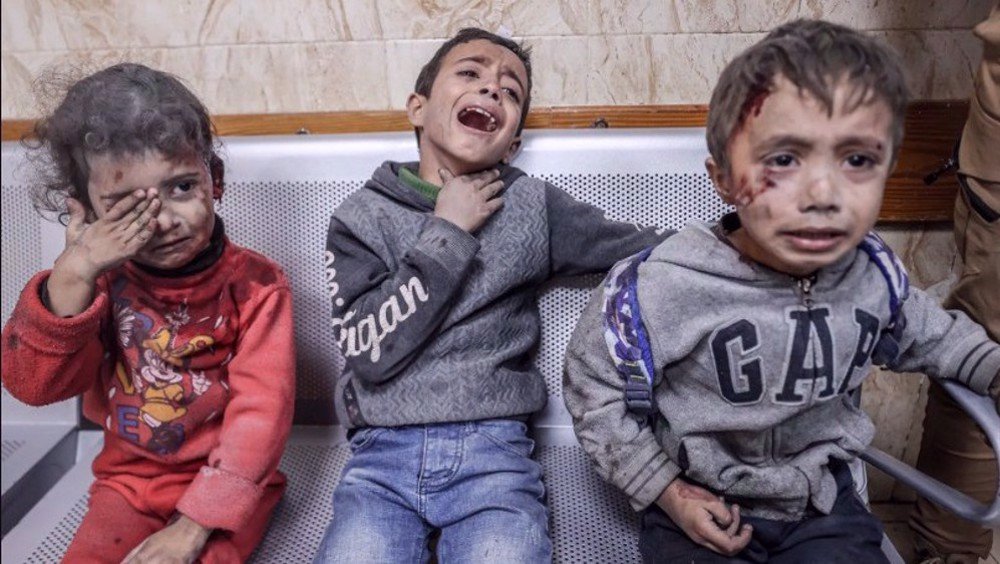
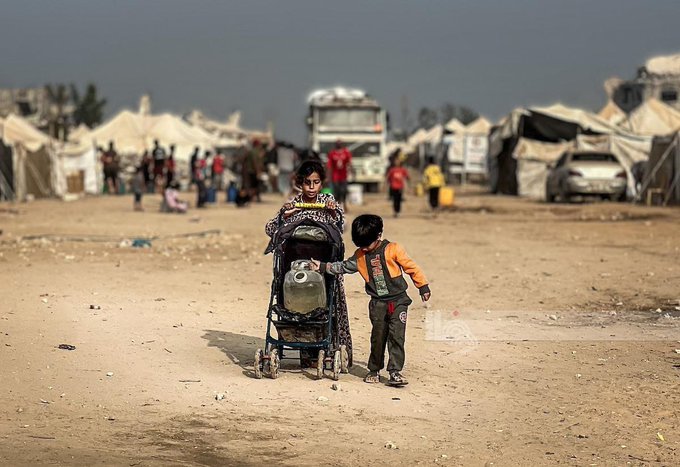
Most families have lost their primary sources of income, while the local economy has been left severely weakened. As household earnings disappear and cash becomes increasingly scarce, families face an impossible equation: food may be visible in the marketplace, but the money needed to purchase it is not.
Field data cited in the report indicate that more than 90 percent of the population cannot meet its basic needs through market purchases. As a result, the overwhelming majority of households have become heavily dependent on humanitarian assistance for daily survival.
This creates a crucial distinction between market availability and actual access to food.
A bag of flour sitting on a shelf may technically mean that flour is available. For a family without sufficient income or cash, however, that same bag remains inaccessible.
A Supply Chain Under Pressure
The problem is further complicated by restrictions and delays affecting the movement of humanitarian and commercial supplies into the Strip.
As the flow of trucks remains constrained and agreed quantities are delayed at crossings, the limited availability of commodities can translate into prices far beyond what ordinary families can afford.
The result is a market that may appear more active from the outside while remaining largely inaccessible to those who have lost their purchasing power.
For households struggling to obtain even basic staples, a product’s presence in the market does not necessarily represent an improvement in living conditions.
Aid Is Arriving, But Is It Meeting the Need?
Another layer of the crisis is emerging within the humanitarian aid system itself.
Families report an imbalance in the contents of aid baskets, with certain products appearing repeatedly while other essential foods remain severely scarce. Protein-rich foods, vegetables, and fresh produce, critical components of a balanced diet, remain difficult to obtain.
This raises broader questions about the effectiveness of humanitarian supply chains operating inside Gaza.
Organizations, including the World Food Programme, face the enormous challenge of delivering assistance under severe logistical constraints. But the question is increasingly not simply how much aid enters the Strip, but whether the composition and distribution of that aid correspond to the nutritional needs of the population.
Repeatedly supplying the same standardized commodities may help address immediate caloric needs, but it does not necessarily provide families with the diverse and nutritious diet required for healthy growth and long-term well-being.
A Fragile Improvement
Some recent international assessments have pointed to a relative and temporary improvement in certain humanitarian indicators following increased truck flows.
Yet the improvement remains highly vulnerable.
United Nations figures cited in the report indicate that approximately 1.4 million people, roughly two-thirds of Gaza’s population, remain on the brink of acute food insecurity.
That means even a temporary increase in supplies cannot, by itself, be interpreted as a durable resolution to the crisis.
Any renewed disruption or reduction in incoming trucks could rapidly reverse whatever limited gains have been recorded.
The danger is therefore not only hunger itself but also the fragility of any improvement.
The Measure That Matters
The most revealing image of Gaza’s food crisis may not be an empty shelf. It may be a full shelf but remains unaffordable.
Food security cannot be measured solely by the number of trucks crossing a border, the quantity of goods displayed in shops, or photographs showing apparently active markets.
The more meaningful measure is whether a family can reliably afford a sufficient, nutritious and healthy meal every day.
In Gaza, that ability remains severely compromised by economic collapse, lost incomes, limited cash circulation and dependence on humanitarian assistance.
The crowded appearance of some markets can therefore conceal a deeper reality: an economy where food may be visible, yet inaccessible; where shelves can be stocked while household tables remain empty; and where the shadow of hunger continues to hang over millions of Palestinians.
What looks like recovery from a distance may, for many families, simply be the illusion of abundance in a place where purchasing power has disappeared.