Gaza Herald _Adidas is facing mounting criticism for featuring a former Israeli soldier in an amputee-focused campaign at a time when the United Nations says Gaza has the world’s highest per-capita rate of child amputees, drawing accusations that the sportswear giant is ignoring one of the most devastating consequences of Israel’s war on Palestinians.
The German sportswear company selected Shalev Biton, a former Israeli soldier who lost a leg after being seriously wounded while serving during Israel’s genocidal war on Gaza, to promote its “Single Shoe Service” in Israel. The initiative allows amputees and people with limb differences to purchase a single shoe for half the price of a pair.
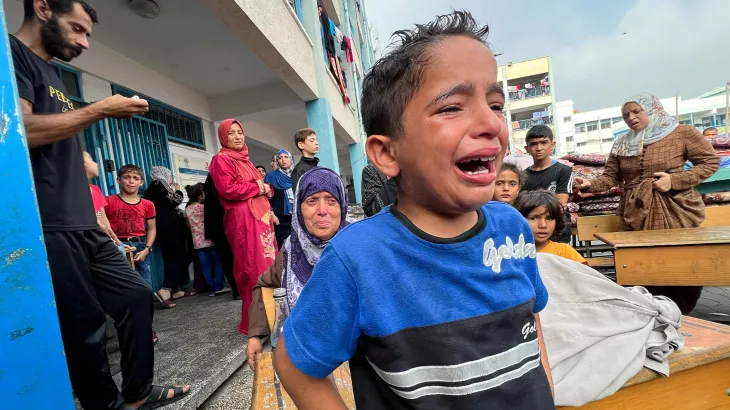
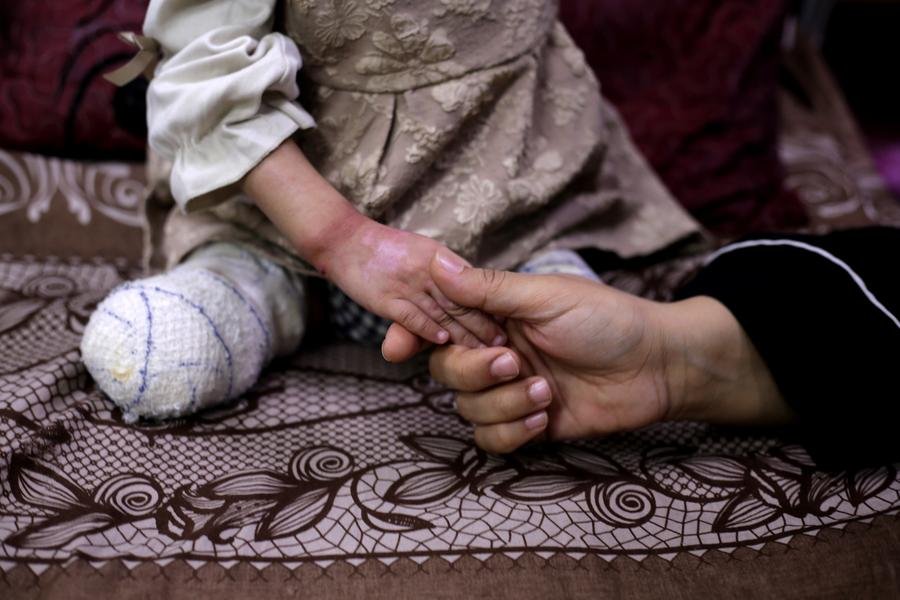
The choice has generated anger because of the stark contrast with Gaza, where Israeli military attacks have left thousands of Palestinians with life-changing injuries. The UN has described Gaza as having the highest number of child amputees per capita anywhere in the world, making limb loss one of the most devastating symbols of the humanitarian catastrophe facing Palestinian children.
For Palestinian children who have lost limbs, the trauma extends far beyond the initial injury. Gaza’s devastated healthcare system has struggled to provide prosthetic limbs, rehabilitation, physiotherapy and long-term treatment, while children require new prosthetics as they grow. Many have therefore been left facing permanent disabilities under extraordinarily difficult conditions.
Against this backdrop, critics accuse Adidas of applying a striking double standard: using the personal experience of a former Israeli soldier to promote disability inclusion while giving no comparable visibility in the campaign to Palestinian amputees living through what the UN has identified as an unprecedented child amputation crisis.
The controversy has also revived criticism of Adidas over its treatment of Palestinian representation. In 2024, the company removed Palestinian-American model Bella Hadid from promotional material for its SL72 sneaker campaign following controversy over the shoe’s connection to the 1972 Munich Olympics. Adidas subsequently apologised to Hadid and other partners, saying connections drawn between the campaign and the Munich attack were unintended.
Critics now point to the contrast between the two cases. A Palestinian-American model faced removal from a campaign because of associations with an attack that occurred decades before she was born, while a former Israeli soldier who served during a war on Gaza is being featured in a campaign centered on amputation at a time when Palestinian children in Gaza are experiencing the world’s highest per-capita rate of amputations.
The backlash has prompted boycott calls and broader questions about whose suffering global brands choose to recognize. For critics, the controversy is not about denying Biton representation as an amputee but about Adidas centering his experience while the extraordinary scale of Palestinian limb loss remains largely absent from the company’s message.
In Gaza, the issue is not an advertising concept. Thousands of Palestinians are living with permanent injuries amid a shattered healthcare system, and Palestinian children are experiencing an amputation crisis the UN says has no per-capita parallel anywhere in the world.