Gaza Herald – An analysis by the Palestinian Center for Political Studies examines the escalation of Israeli targeted killings in Gaza alongside ongoing U.S.-led efforts to advance the second phase of the proposed 15-point roadmap, warning that the battlefield is increasingly shaping what happens at the negotiating table.
The analysis notes that the timing of the escalation does not, by itself, prove a direct causal link to the U.S. diplomatic push. But it argues that the parallel developments raise serious questions about whether Israel is using military pressure and targeted killings to influence the political process and reshape the balance of power in Gaza.
Hamas agreed in late July to the U.S. 15-point roadmap, which includes provisions addressing weapons, an Israeli withdrawal, and the establishment of an independent Palestinian technocratic administration in Gaza.
Israel, however, has tied any withdrawal to the “real” and prior disarmament of Hamas, while the U.S.-Egyptian framework envisions a parallel process linking disarmament, withdrawal and reconstruction.
A meeting involving U.S. and international officials, Hamas representatives, Egypt and Qatar took place in Alamein on August 16. The talks came as Israeli strikes continued across Gaza, with the wave of targeted attacks intensifying afterward.
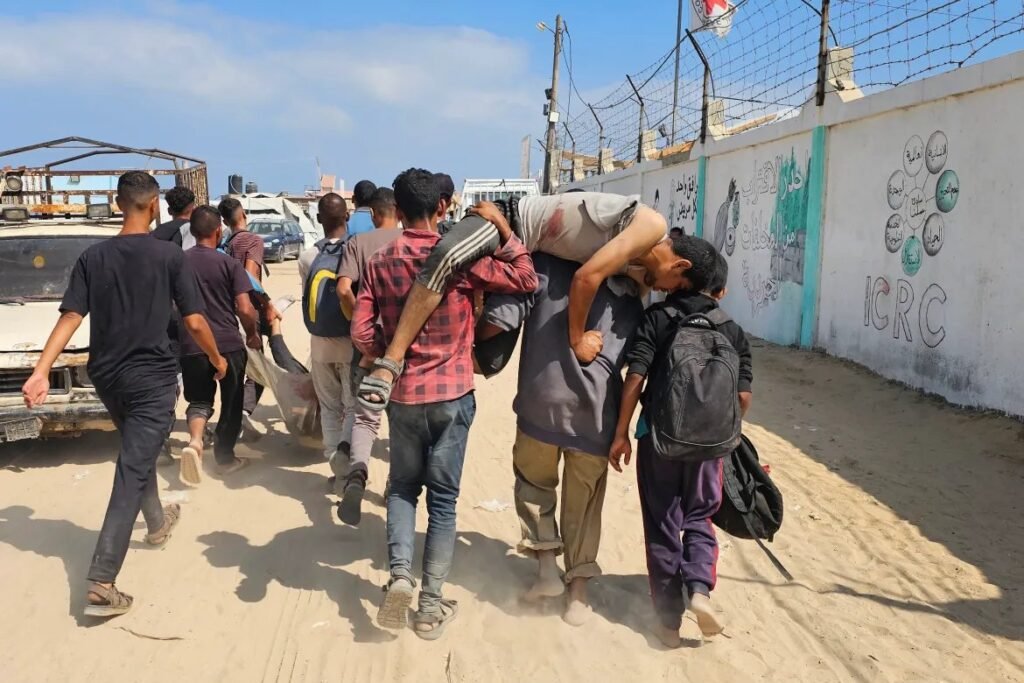
The analysis documents a series of Israeli strikes targeting Palestinians connected to Gaza’s security and military structures, including senior police and security personnel.
On August 19, Israeli strikes on Gaza City killed 10 Palestinians, including people inside a municipal police headquarters, while another strike targeted a Qassam Brigades figure in Nuseirat, according to the Israeli military.
Israel later announced the killing of Ismail Abu Ful in Al-Maghazi, accusing him of producing explosives and anti-armor missiles.
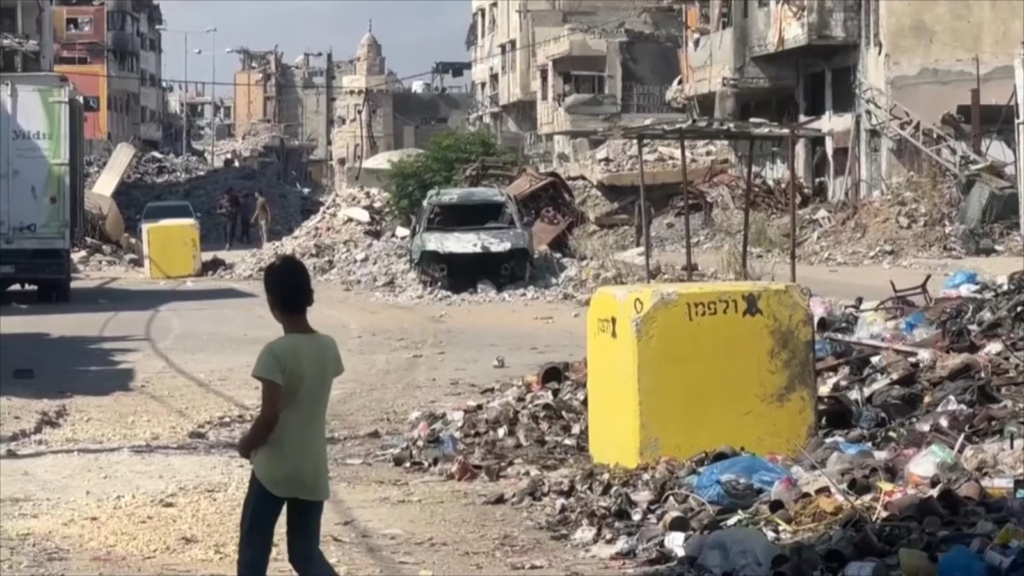
Palestinian officials and Hamas have disputed Israel’s characterization of several targets, arguing that attacks on police facilities and other institutions amount to attacks on Gaza’s civilian infrastructure.
The analysis identifies three possible functions of the escalation: creating political and media space for Israeli military operations while diplomatic attention remains focused on negotiations; weakening Palestinian security and leadership structures; and turning the cessation of targeted killings into a bargaining chip rather than treating it as a core requirement of the ceasefire.
In this reading, the assassinations are not simply military operations. They can also become a tool for creating facts on the ground before the political terms of Gaza’s future are settled.
The analysis expects targeted killings and negotiations to continue in parallel in the short term, particularly as disagreements remain over the sequence of disarmament and Israeli withdrawal.
A second possibility is increased U.S. pressure on Israel to halt the killings if Washington concludes that continued attacks threaten its political roadmap for Gaza.
The most dangerous scenario would be the collapse of negotiations, potentially triggering renewed large-scale fighting and the breakdown of the ceasefire.
The analysis does not claim that the timing of the assassinations proves a coordinated U.S.-Israeli decision to escalate. Instead, it highlights a deeper struggle over who will shape Gaza’s post-war reality.
Israel is seeking to preserve military pressure and targeted killings as instruments of influence, while Washington is pushing toward a new political framework for Gaza.
Ultimately, the future of Gaza will not be decided only in diplomatic rooms in Cairo or Washington. It will also be shaped by what Israel imposes on the ground, and by how much political leverage Palestinians retain amid the ongoing Israeli attacks.