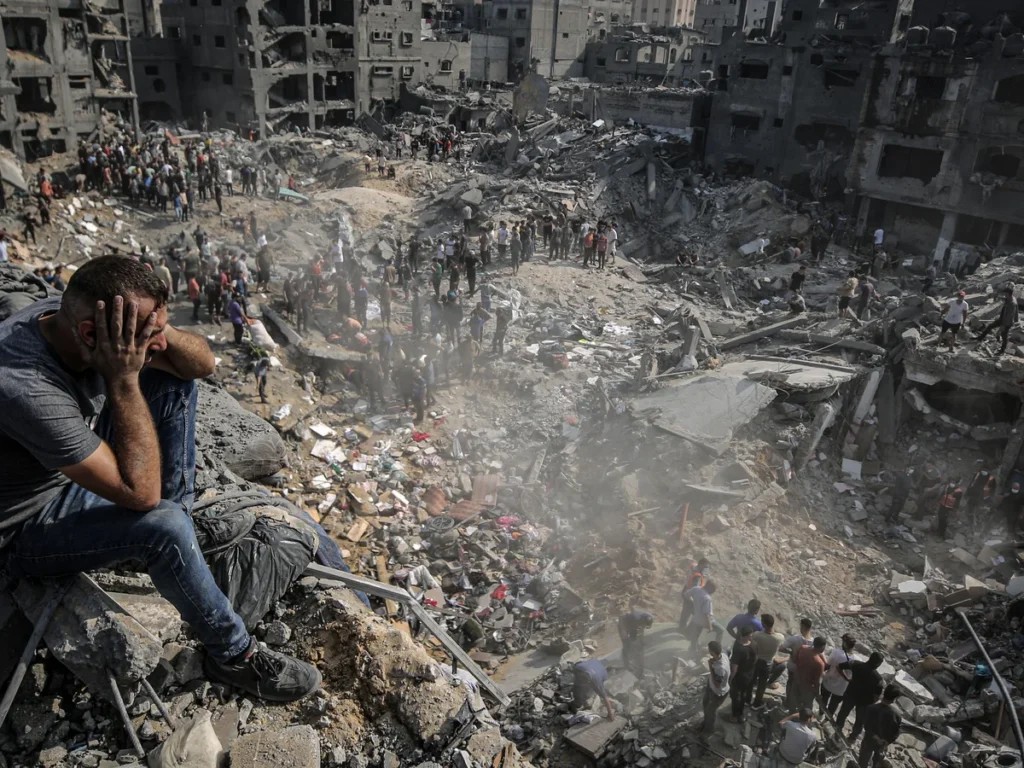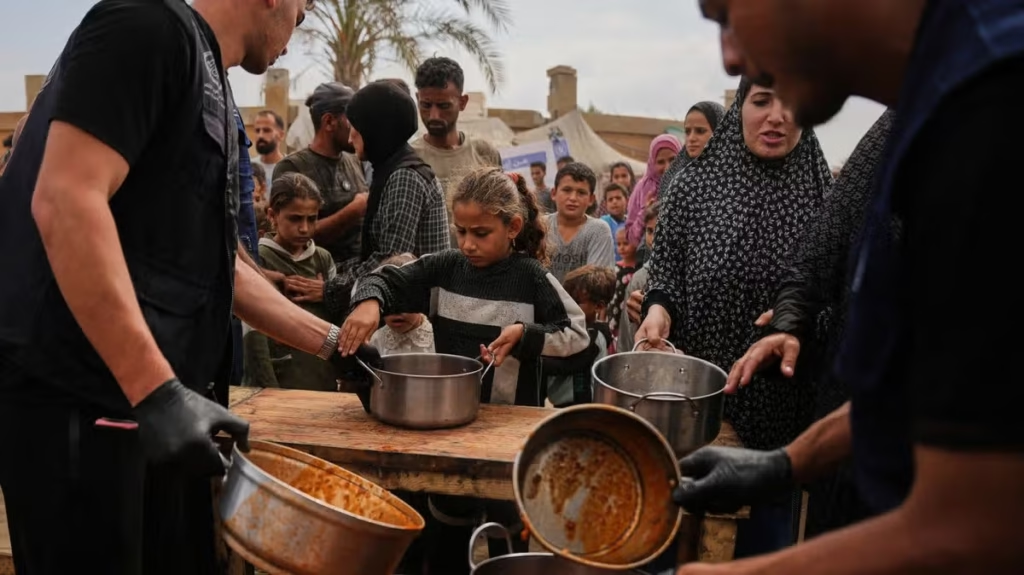
Gaza Herald-The ceasefire that took effect in Gaza on October 10, 2025, has failed to bring meaningful economic recovery to Palestinian households, which have regained just 26.3% of their prewar real consumption levels, according to a study published by the Arab Center for Research and Policy Studies on November 12, 2026.
Titled “After the Ceasefire in Gaza: Have Households Regained Their Purchasing Power and Consumption Levels?”, the study examines the devastating impact of Israel’s war and ongoing restrictions on Gaza’s economy, highlighting the enormous gap between falling prices and actual improvements in living standards.
The research was conducted by Saif al-Din Youssef Ouda, head of the Modeling and Forecasting Department at the Palestine Monetary Authority and a part-time assistant professor of economics at the Islamic University of Gaza, as part of the center’s Economic Studies Unit.
It covers the period from October 2025 through June 2026, comparing economic conditions with the prewar period of January through September 2023.
Brief Price Relief Fails to Last
Gaza’s Consumer Price Index (CPI) fell sharply from 683.3 points in the third quarter of 2025 to 251.8 points in the fourth quarter, a decline of approximately 63% immediately following the ceasefire.
The figures, drawn from the Palestinian Central Bureau of Statistics, initially suggested that the easing of hostilities could provide some relief to households devastated by soaring prices.
However, the improvement proved short-lived.
The CPI rose by 3.2% in the first quarter of 2026 and another 12.7% in the second quarter, reaching 292.8 points—approximately 178% above the prewar average of 105.3 points.
As a result, the remaining purchasing power of the Israeli shekel initially recovered from 15.4% to 41.8% following the ceasefire, before slipping to 40.5% and then 36%.
In practical terms, 100 shekels now buy only about 36% of what the same amount could purchase before the war.
Household Consumption Remains Devastated
The study found that average real household consumption during the post-ceasefire period reached only 26.3% of its third-quarter 2023 level, compared with 15.9% during the preceding wartime period.
Although this represents a modest improvement, Palestinian families remain far from regaining their previous standard of living.
Ouda estimated the cumulative consumption shortfall between the fourth quarter of 2023 and the second quarter of 2026 at approximately $6.3 billion in constant 2015 prices.
Of that amount, roughly $1.56 billion was lost during the three quarters following the ceasefire alone.
These estimates assume that consumption would otherwise have remained at its third-quarter 2023 level.
The researcher identified several factors behind the continuing collapse in household consumption, including restrictions on goods entering Gaza, a shift in spending toward essential needs such as food, shelter, and transportation, and families’ efforts to preserve whatever savings they have left amid uncertainty about the future.
Nearly $1 Billion in Household Spending Eroded by High Prices
The study also revealed the enormous financial burden imposed on Gaza’s families by persistently inflated prices.
After adjusting for exchange-rate effects, households spent approximately $1.57 billion on consumption during the post-ceasefire period.
The same goods and services would have cost just $573.6 million at prewar prices.
This represents an estimated $995.2 million in additional spending caused by higher prices, equivalent to 63.4% of total nominal consumption expenditure.
Put simply, an item that cost $1 before the war now requires approximately $2.70 to purchase.
The findings illustrate how Gaza’s economic crisis continues to drain household resources, even as families struggle to secure basic necessities.
Cash Assistance Loses More Than 60% of Its Purchasing Power
The study examined the effectiveness of humanitarian cash assistance as prices continued to rise.
Multipurpose cash assistance was set at 1,250 shekels per household, with approximately 974.8 million shekels distributed by the end of April 2026, according to reports from the United Nations Office for the Coordination of Humanitarian Affairs (OCHA).
However, the real value of this assistance, measured at prewar prices, fell from approximately 523 shekels in the fourth quarter of 2025 to 506.6 shekels in the first quarter of 2026 and 449.6 shekels in the second quarter.
Its average real value was approximately 493 shekels, equivalent to just 39.4% of its former purchasing power.
The study also examined the cost of the Minimum Expenditure Basket, which the World Food Programme estimated at 1,989 shekels in November 2025, down from 11,984 shekels in July of that year.
Despite the dramatic decline, the November figure remained approximately 16% above the prewar reference level of 1,717 shekels recorded in 2022.
At that cost, the 1,250-shekel cash transfer covered approximately 62.8% of the minimum expenditure basket, slightly above the recommended benchmark of 60%.
However, the study noted that the latest published update to the basket’s cost dated back to November 2025, limiting the ability to assess whether current assistance remains adequate.
Israeli Restrictions Keep Prices High
The study linked renewed price pressures to continuing restrictions on Gaza’s crossings and the limited entry of humanitarian and commercial goods.
According to World Food Programme data, the average number of humanitarian and commercial trucks entering Gaza each day fell from approximately 250 in December 2025 to just 130 in March 2026.
OCHA figures also showed that the number of aid pallets entering Gaza declined from 58,600 in January to 41,800 in June.
The study further highlighted restrictions on security coordination permits for commercial imports, which it said were granted to a very limited group of traders and businesses—no more than 15 companies.
Combined with so-called coordination payments, these restrictions increased the cost of bringing goods into Gaza and contributed to persistently high market prices.
Study Calls for Unrestricted Trade and Stronger Humanitarian Support
The study urged mediators and guarantors to intensify pressure to ensure implementation of the ceasefire agreement and U.S. President Donald Trump’s plan.
It recommended expanding the number of traders permitted to import commercial goods and restarting factories, farms, and other productive facilities capable of operating in Gaza.
The researcher also called for regular reassessments of the Minimum Expenditure Basket and the value of humanitarian cash assistance, rather than maintaining transfers at a fixed 1,250 shekels despite changing market conditions.
Additional recommendations included increasing assistance coverage or providing supplementary support to the most vulnerable households, developing indicators to measure aid effectiveness, and combining cash transfers with direct deliveries of essential goods when those products are unavailable in local markets.
The study underscores a central reality of Gaza’s economic crisis: a ceasefire alone has not restored Palestinian families’ ability to afford the necessities of daily life.
With consumption still at barely one-quarter of prewar levels, purchasing power severely weakened, and restrictions continuing to disrupt the flow of goods, Gaza’s households remain trapped in a prolonged struggle for economic survival.