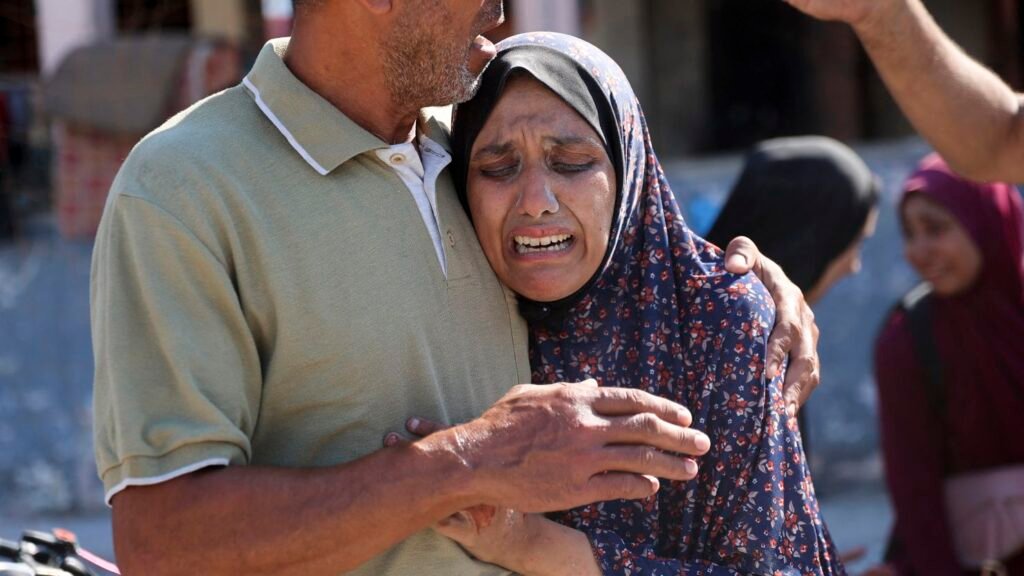
Gaza Herald _In one of Gaza’s displacement camps, women gather around a row of washing machines, carrying piles of clothes that, until recently, they had washed by hand while struggling with severe water shortages and the difficulty of securing even enough water for basic household needs.
The scene offers a glimpse into the everyday reality that years of war and displacement have imposed on Palestinian families.
For these displaced women, the washing machine is no longer simply a way to save time and physical effort. It has become a lifeline that eases a burden they have carried for years, after being forced to wash their children’s and families’ clothes by hand amid overlapping crises of water shortages, power cuts and economic hardship.
At the Musab bin Umair displacement camps south of Gaza City, a project has been launched to provide washing-machine services to displaced families, seeking to ease one of the most exhausting daily tasks facing women.
The project serves residents of nine camps, home to around 1,300 families. Six washing machines are available, with each camp assigned a specific day according to an organized schedule.
“I Don’t Worry About Laundry Anymore”
Amna Abu Zur is one of the women benefiting from the project. For her, laundry had become far more than a routine household chore. It was a constant source of anxiety, especially with a large family and the endless need to wash clothes.
“I stopped worrying about laundry,” she told the Palestinian newspaper Filastin. “Whenever I need to change clothes or wash for myself and my family, I can put all that worry and anxiety behind me because there is a washing machine that makes things easier.”
Having access to both water and a washing machine has transformed her daily life.
“My whole feeling has changed, especially because I developed skin problems from constantly handling laundry detergents,” she said. “Before, I was always worried about washing clothes for the children and the elderly. Now they can change clothes whenever they need to because water is available and there is a washing machine.”
Three Years of Handwashing
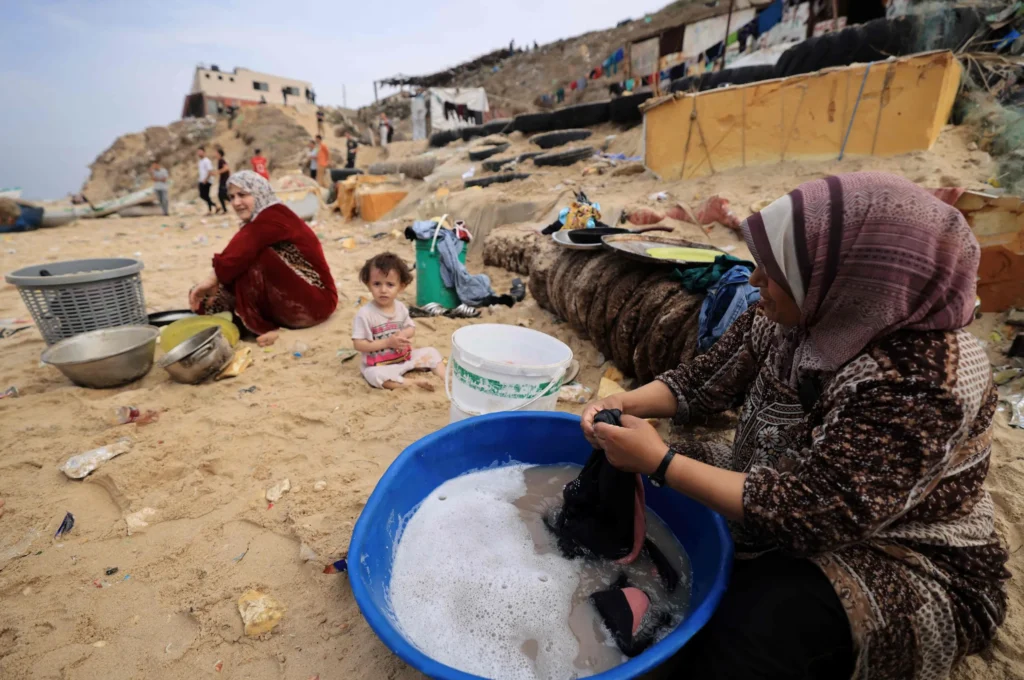
Randa Abu Aisha, who lives in the Musab bin Umair camps, says the project came after three years of difficult conditions in which women were forced to wash clothes by hand and carry water, often without the basic necessities of normal life.
“The washing-machine project is truly the first project of its kind that we have received after three years of suffering through the war,” Randa said.
Before the war, she had access to the necessities her family needed. But years of washing clothes by hand during the war brought severe physical strain, including skin problems and nerve pain.
The burden became even greater in winter, when transporting water was particularly difficult. During the summer, the need for laundry increased as temperatures rose and families had to change clothes more frequently.
From Hesitation to High Demand
When the project first began, some residents were hesitant to use the machines, particularly because electricity and water supplies remained unreliable.
That hesitation quickly disappeared once women experienced how much time and physical effort the machines could save.
“At first, people were hesitant,” Randa said. “But once they saw the washing machines, demand became huge. A woman would bring one load just to try it. After she experienced the relief, she realized the machine had saved her from carrying water and doing all that hard work.”
As temperatures climbed, families needed to wash clothes more frequently. For some households, one load was no longer enough, and women began washing two or even three loads within a short period.
A Low-Cost Service for Displaced Families
The project operates according to an organized system. Workers receive the clothes and register beneficiaries in the order they arrive before processing each load according to its assigned turn.
With demand so high, workers sometimes have to postpone part of a family’s laundry until the following day.
The project also offers the service at a significantly lower cost than washing the same amount of clothing outside the camp.
Munir Hammouda, from the administration of the Musab bin Umair camps, says a six-kilogram load costs four shekels to wash through the project, while the same amount can cost around 12 shekels elsewhere.
“We have a schedule for the six washing machines, with one camp assigned each day,” Hammouda said. “This project is a service for families and a way of helping them. We process between 50 and 70 loads a day.”
“We help people wash six kilograms for four shekels,” he added. “People have responded very positively to it. This is the first project of its kind to operate this way in Gaza.”
Hammouda says the years of war have left women carrying a continuous burden after being forced to wash clothes manually. The physical strain has affected their health, with some experiencing skin and nerve problems.
Even the Washing Machines Need Water
Providing washing machines alone was not enough. Gaza’s water crisis remains a major obstacle, particularly inside displacement camps.
To keep the project operating, organizers added a water tank with a capacity of approximately 10,000 liters, along with a water pump donated by supporters to provide the machines with the water they need.
In displacement camps worn down by years of war and forced displacement, a washing machine may seem like an ordinary household appliance.
For women who have spent years washing clothes by hand, however, it represents much more.
It offers them a small piece of the normal life that war has taken away.
Among piles of clothes and the steady sound of washing machines, women are trying to reclaim something as simple as time and rest after years in which war has consumed their energy.
The project does not end displacement or solve Gaza’s water crisis. But it removes one daily burden that has followed these women for years, and gives them a small space to breathe in the middle of an extraordinarily difficult reality.