
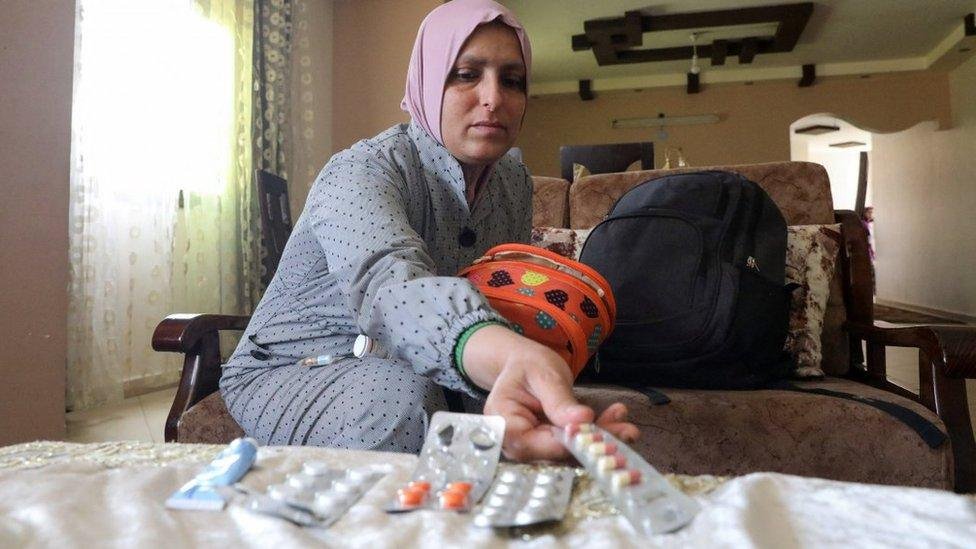
Gaza Herald – Cancer patients across the Gaza Strip are facing a rapidly worsening medical crisis as the destruction of specialized healthcare facilities, severe shortages of medicines and diagnostic supplies, and restrictions on medical travel leave thousands without access to essential treatment.
Palestinian doctors report that cancer deaths in Gaza are now occurring at two to three times the rate recorded before Israel’s genocide, as patients are left waiting for treatment that is no longer adequately available inside the Strip.
The bombardment of Gaza’s Turkish-Palestinian Friendship Hospital by Israeli airstrikes, the Strip’s only specialized cancer treatment facility, has eliminated a crucial source of chemotherapy and advanced oncology care. The loss of the facility has left an estimated 17,000 cancer patients without a local option for specialized treatment.
Gaza’s remaining hospitals are operating amid widespread destruction and severe shortages of medical supplies. Doctors say essential medicines and diagnostic materials needed for cancer care remain critically limited, while the loss of specialized medical staff has further weakened the Strip’s capacity to diagnose and treat cancer.
At Al-Shifa Hospital, doctors have reported three to five cancer deaths per day among patients unable to receive the chemotherapy they require, compared with roughly one to two deaths per day before the Israeli genocide.
The crisis is compounded by restrictions on Palestinians seeking medical treatment outside Gaza. Palestinian health officials say around 20,000 patients are registered for treatment abroad but remain unable to leave, including approximately 5,000 cancer patients. Meanwhile, only a fraction of those requiring medical evacuation have been able to cross through Rafah for treatment.
For patients whose cancer requires specialised surgery, chemotherapy, radiotherapy or advanced diagnostics, prolonged delays can mean the difference between effective treatment and a rapidly deteriorating condition.
The collapse of Gaza’s cancer-care system also threatens patients who have yet to receive a diagnosis. With diagnostic services severely disrupted and many hospitals damaged or destroyed, cancers that could potentially be treated when detected early may go unnoticed until they reach advanced stages.
Palestinian doctors have additionally raised concerns about the possible long-term health consequences of exposure to toxic substances associated with the extensive use of explosive weapons across Gaza. Any potential increase in cancer incidence linked to such exposure requires further investigation, but the destruction of healthcare capacity has already created an environment in which diagnosis and treatment are increasingly difficult.
Israel maintains that medical evacuations require coordination with receiving countries and security screening, while Palestinian officials continue to argue that the number of patients permitted to leave remains far below the scale of the medical emergency.
For Gaza’s cancer patients, the crisis is no longer simply a shortage of hospital beds or medicines. It is a struggle for access to treatment itself, as the destruction of specialized facilities and restrictions on movement leave thousands of Palestinians waiting while their illnesses progress.
In Gaza, where years of Israeli war and siege have devastated the healthcare system, the denial or delay of life-saving cancer treatment is adding another deadly dimension to the humanitarian catastrophe facing the Palestinian population.

