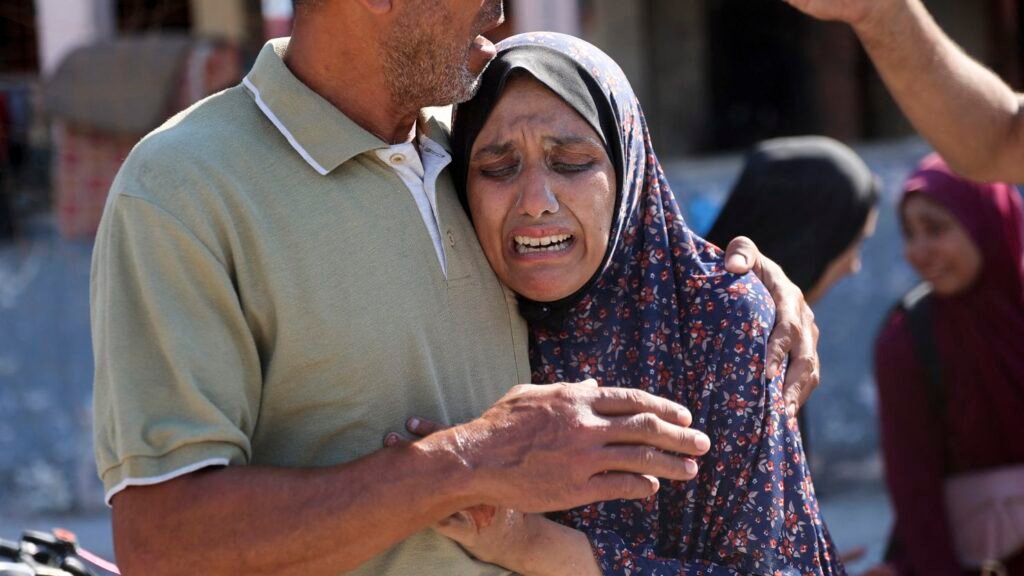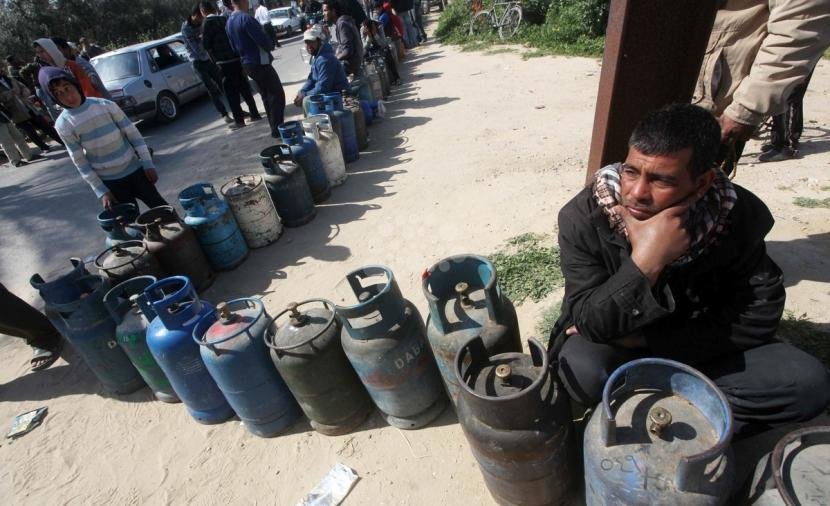
Gaza Herald — Gaza’s General Petroleum Authority has announced a new round of cooking gas distribution covering 65,140 households across the Strip, as Palestinian families continue to struggle with severe fuel shortages, soaring prices, and the dangers of cooking over open fires in overcrowded displacement camps.
The authority published the third distribution list for the twelfth allocation cycle, dated November 17, 2026, detailing the households eligible to receive cooking gas across Gaza’s governorates.
According to the announcement, 65,140 households are included in the latest distribution list, with 64,565 allocated to the eight-kilogram category and 575 to the twelve-kilogram category.
Residents were urged to use the authority’s online verification service to check their application status and determine whether their households are included in the latest allocation.
The announcement follows the entry of just four trucks carrying cooking gas into Gaza on Sunday, highlighting the continuing shortage of a basic necessity for families struggling to prepare food.
Four Gas Trucks Enter Gaza Amid Severe Shortages
The General Petroleum Authority said four trucks loaded with cooking gas entered the Gaza Strip for distribution to residents.
However, the limited deliveries come against the backdrop of a prolonged fuel crisis that has disrupted daily life across the territory.
Since the beginning of Israel’s war on Gaza, restrictions on border crossings and the entry of essential supplies have severely limited the availability of cooking gas.
For many Palestinian families, securing enough fuel to prepare a meal has become a daily struggle.
The shortages have been particularly devastating for displaced households living in tents, damaged buildings, and overcrowded shelters, where access to safe cooking facilities is already extremely limited.
Although the latest distribution announcement covers tens of thousands of households, it does not establish that all beneficiaries have received their allocations or that sufficient gas is available to meet the needs of Gaza’s population.
Families Forced to Cook With Firewood
With cooking gas increasingly scarce and prices rising sharply, thousands of families have been forced to abandon conventional stoves and turn to firewood and makeshift cooking methods.
In displacement camps, families often prepare meals over open flames using whatever combustible materials they can find.
These alternatives expose residents to serious health and safety risks, particularly when fires are lit inside or near tents and crowded shelters.
Smoke from burning wood and other materials can worsen respiratory problems, especially among children, older people, and those with existing health conditions.
Open flames also increase the risk of accidental fires in displacement camps, where tents and temporary shelters are frequently built from highly flammable materials.
The dangers are compounded by Gaza’s severely damaged emergency response infrastructure, which has left some communities with limited access to firefighting and rescue services.
A Basic Necessity Beyond the Reach of Many Families
The cooking gas shortage has added another layer of hardship to Gaza’s humanitarian crisis.
For families already struggling with displacement, unemployment, and the destruction of their homes, the lack of affordable cooking fuel makes even the simplest daily tasks increasingly difficult.
Parents must find ways to prepare food for their children while facing shortages of both fuel and essential supplies.
The sharp increase in cooking gas prices has placed additional pressure on households whose financial resources have been depleted by the war.
Meanwhile, the reliance on firewood and primitive cooking methods creates further risks for families already living in unsafe and overcrowded conditions.
Distribution Offers Limited Relief as Crisis Persists
The latest allocation list represents an effort to distribute available cooking gas among registered households, but it also underscores the scale of unmet needs across Gaza.
With only four trucks reported to have entered on Sunday, the announcement does not indicate that the territory’s prolonged cooking gas shortage is close to being resolved.
Restoring reliable access to cooking fuel will require sustained deliveries in quantities sufficient to meet household needs, alongside the removal of restrictions obstructing the entry of essential supplies.