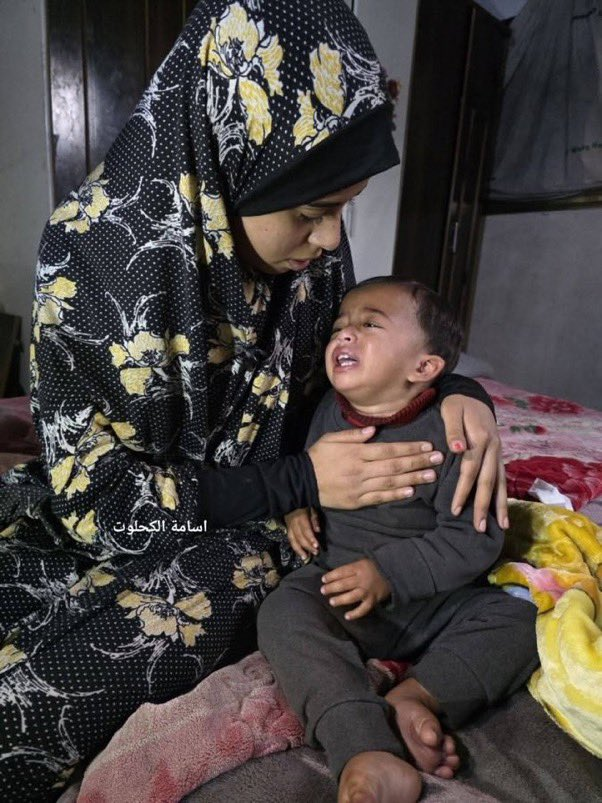
Gaza Herald _Soft cries echo through the pediatric wards of Al-Tahrir Hospital at Nasser Medical Complex in Khan Yunis, where dozens of frail infants lie in hospital beds showing visible signs of severe illness and malnutrition. Thin limbs, pale faces, and exhausted eyes reflect the harsh reality confronting children whose health has been undermined by months of deprivation. As mothers struggle to comfort their babies and search for nourishment, the hospital is grappling with a worsening crisis: the depletion of infant formula for babies in stages one and two, placing many newborns and young children at immediate risk.
The shortage comes amid Israel’s ongoing restrictions on crossings and the continued blockade on Gaza, conditions that have sharply reduced the flow of medical and nutritional supplies into the territory. The consequences have been particularly severe for infants suffering from illness and malnutrition who rely on specialized formula and therapeutic nutrition to survive.
Among the children affected is Diana Deeb Kahil, a young girl battling complex heart complications in addition to severe malnutrition. Sitting beside her hospital bed, her mother, Haneen Kahil, watches helplessly as her daughter’s condition remains fragile. She explains that Diana urgently requires specialized treatment and transfer outside Gaza for medical care that is unavailable inside the Strip. Although a medical referral has already been issued, the continued closure of crossings has prevented her daughter from traveling.
According to her mother, Diana needs highly specialized surgical procedures that Gaza’s healthcare system is currently unable to provide. Before any surgery can take place, however, she must first receive proper nutritional rehabilitation and continuous medical care. Yet the worsening shortage of resources has made even these basic requirements difficult to secure.
Haneen says her daughter’s condition continues to deteriorate as malnutrition deepens and medical services remain overstretched. Economic hardship has further compounded the family’s struggle, leaving them unable to meet many of their child’s essential needs while they wait for an opportunity that could ultimately save her life.
Nearby, seven-month-old Mohammed Ahed Al-Masri is fighting a similar battle. Since birth, he has suffered from serious intestinal disorders and has undergone three surgeries that failed to resolve his condition. His mother, Manar Al-Masri, says doctors approved medical referrals for treatment outside Gaza, but like many other patients, her son remains trapped by the closure of crossings.
Over recent months, Mohammed has experienced significant weight loss. Despite being seven months old, he now weighs only four kilograms after previously reaching six kilograms before his health worsened. His mother says recurring complications, frequent fevers, and severe nutritional deficiencies have weakened his body dramatically. The combined impact of war, food shortages, and limited access to medical care has left him increasingly vulnerable as he waits for treatment that remains out of reach.
Dr. Israa Al-Najjar, head of the Therapeutic Nutrition Department at Nasser Medical Complex, warns that malnutrition has become one of the most alarming consequences of the ongoing war in Gaza. She stresses that the disappearance of infant formula poses a direct threat to the health and survival of many babies, particularly those already suffering from severe nutritional deficiencies.
Al-Najjar explains that infants experiencing acute malnutrition urgently require appropriate milk and nutritional support. Providing formula, she says, is not simply a humanitarian concern but a fundamental right for every child. Many of the infants currently receiving treatment were born to mothers who themselves endured hunger, displacement, injury, and prolonged hardship, factors that have significantly affected their ability to breastfeed.
She notes that the shortage of formula has already begun affecting children’s growth and development while increasing the likelihood of serious complications, especially among those with chronic illnesses or existing medical conditions. Formula designed for infants from birth to one year of age has been unavailable at the medical complex for an extended period, creating major challenges for nutrition clinics and healthcare workers attempting to manage growing numbers of vulnerable cases.
The doctor warns that if supplies are not restored soon, the health emergency among Gaza’s infants will continue to escalate. Recent estimates from UNICEF indicate that one in every five children in Gaza is suffering from acute malnutrition, a statistic that underscores the scale of the unfolding humanitarian catastrophe.
As mothers anxiously watch over their children and medical staff struggle to compensate for dwindling resources, the absence of infant formula has become a powerful symbol of Gaza’s deepening crisis. What should be a basic necessity for every child has become increasingly difficult to obtain, leaving hundreds of infants locked in a daily struggle against hunger, illness, and uncertainty while they wait for desperately needed supplies to reach the territory.