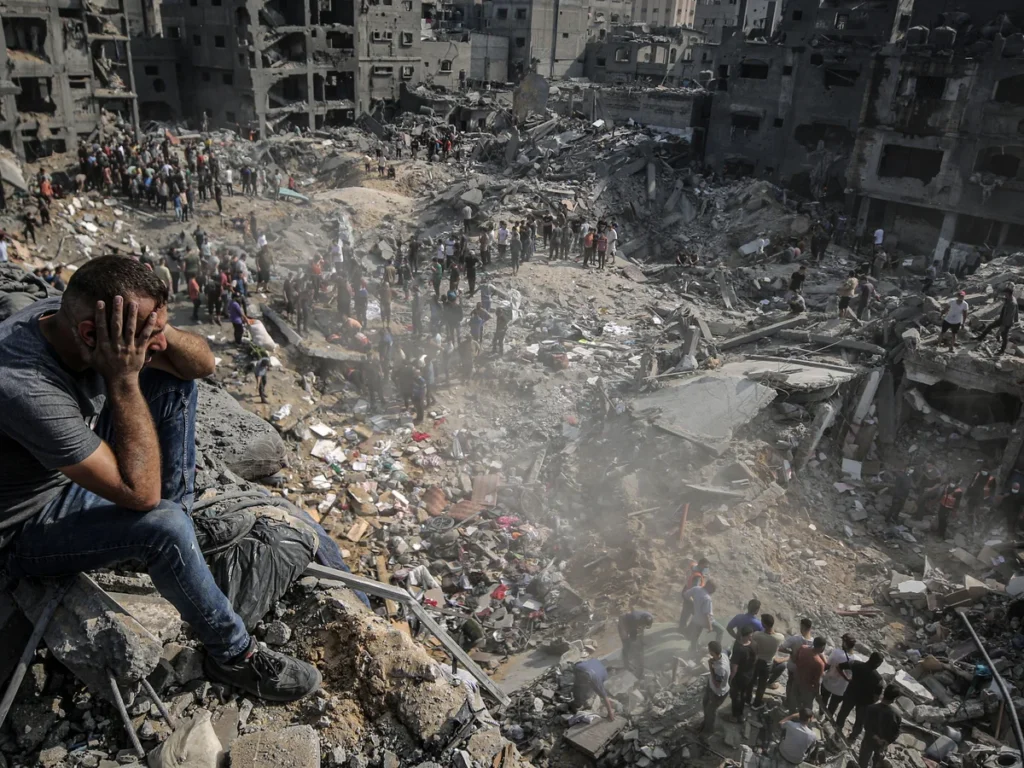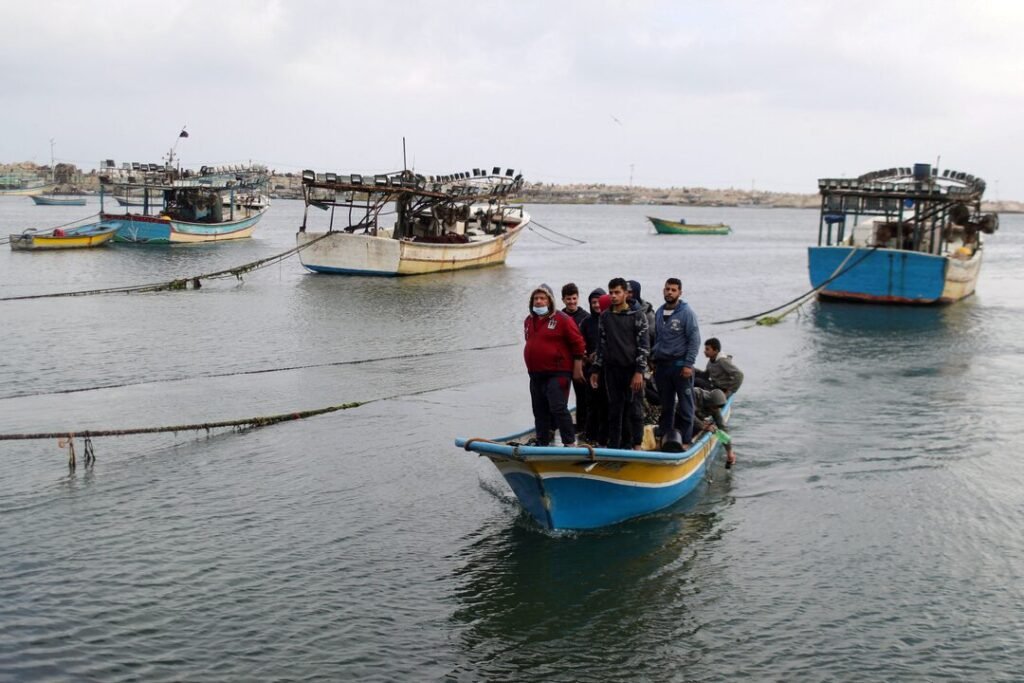
Gaza Herald – For decades, Gaza’s coastline was one of the few places where Palestinians could escape the pressure of life in the besieged territory. Today, after years of genocide and widespread destruction, even the sea has become part of the humanitarian crisis.
With sewage systems collapsing and critical wastewater infrastructure damaged or out of service, vast quantities of untreated sewage are flowing directly into Gaza’s coastal waters every day.
Yet for hundreds of thousands of displaced Palestinians sheltering in overcrowded tents under extreme summer heat, the contaminated shoreline remains one of the only places where they can seek temporary relief.
They are effectively being forced to choose between the unbearable heat of displacement camps and the health risks posed by polluted seawater.
A sea people turns to because they have nowhere else to go
Along Gaza’s coastline, thousands of displacement tents now stand near the beach. Families do not come to the shore for recreation as they once did. They come because the heat inside their tents has become unbearable.
Displaced resident Asaad Al-Najjar says the coastline has changed dramatically. Instead of waking to the familiar smell of the sea, residents now wake to the stench of wastewater.
Ahmed Siam, who erected his tent near the beach after losing his home, says the sea is no longer safe, but there is nowhere else for his family to go.
For Jihad Mohammad, the shoreline has become the population’s last remaining outlet, despite the pollution.
For mothers like Nadia Al-Naji, entering the water is no longer a matter of leisure. It is a desperate attempt to give her four children a few moments of physical and psychological relief.
Gaza’s wastewater system has collapsed
The environmental crisis is directly linked to the destruction of Gaza’s water and sanitation infrastructure.
Gaza City Municipality estimates that around 24,000 cubic meters of untreated sewage and wastewater are discharged into the city’s sea every day through five main outlets.
Municipal spokesman Hosni Muhanna has warned that the continued discharge poses serious environmental and public-health risks, including contamination of groundwater and the spread of insects and rodents in displacement areas.
Across Gaza, the scale is even greater.
Estimates indicate that more than 130,000 cubic meters of untreated wastewater reach the sea every day after five major treatment plants were forced out of service due to fuel shortages, power disruptions, and extensive war damage.
Around 220,000 meters of sewage networks have reportedly been destroyed, while eight pumping stations have been completely or partially knocked out of operation.
As a result, sewage is not only reaching the sea. It is also spilling into streets and displacement camps, bringing contamination directly into places where families are already struggling to survive.
Disease is spreading through overcrowded camps
The environmental collapse is translating into a growing public-health emergency.
Health authorities have recorded approximately 9,300 cases of chickenpox in just two weeks, while more than 18,000 new cases of infectious skin diseases, including scabies, lice and impetigo, were reported in a single week.
Health officials attribute the spread to overcrowding, extreme heat, inadequate water supplies and the collapse of sanitation services.
Around 1.7 million displaced Palestinians are living across more than 1,600 shelters, many of them lacking adequate access to clean water, hygiene facilities and medical care.
Doctors warn that the official figures may represent only part of the crisis.
Pediatric specialist Dr. Sharif Matar says the actual number of infections is likely significantly higher because many displaced Palestinians receive treatment inside makeshift camps without being formally registered.
Medical relief director Dr. Bassam Zakout has also warned that thousands of children born during the war have missed essential vaccination programs amid restrictions on the entry of medicines and medical supplies.
Dermatology specialist Dr. Raed Abu Suraya says Gaza is experiencing an unprecedented increase in skin diseases compared with previous years, warning that transmission could accelerate if current living conditions continue.
Inside the tents, illness becomes a family crisis
For displaced families, the statistics translate into nights of pain and sleeplessness.
Hamdallah Salem Qannan says every member of his family has suffered from rashes, itching and fever. Because their tent is too small to isolate anyone who becomes sick, infections quickly spread from one family member to another.
For Mahmoud Fayez Al-Masri, the hardest moments come at night, when his child’s itching and inflammation become so severe that sleep becomes almost impossible.
These are the consequences of a humanitarian crisis that extends far beyond destroyed buildings and damaged roads.
An environmental disaster unfolding alongside a humanitarian catastrophe
Experts say Gaza’s crisis can no longer be described simply as temporary environmental damage. It has become a compound emergency threatening public health, marine ecosystems and groundwater at the same time.
They are calling for the immediate restoration of wastewater treatment and pumping stations, reliable supplies of fuel and electricity, the entry of maintenance equipment and spare parts, and a comprehensive environmental assessment of contamination affecting Gaza’s coastline and underground water resources.
But for the Palestinians living along Gaza’s shore, the crisis is painfully simple.
The sea that once offered a rare escape from the pressures of life in Gaza has become polluted and dangerous.
Yet hundreds of thousands still go there, not because it is safe, but because after the destruction of their homes and the collapse of essential services, they have nowhere else to go.
For Gaza’s displaced families, even the sea has become a reminder of how far the genocide has reached: when every refuge is destroyed, survival itself becomes a choice between one danger and another.