
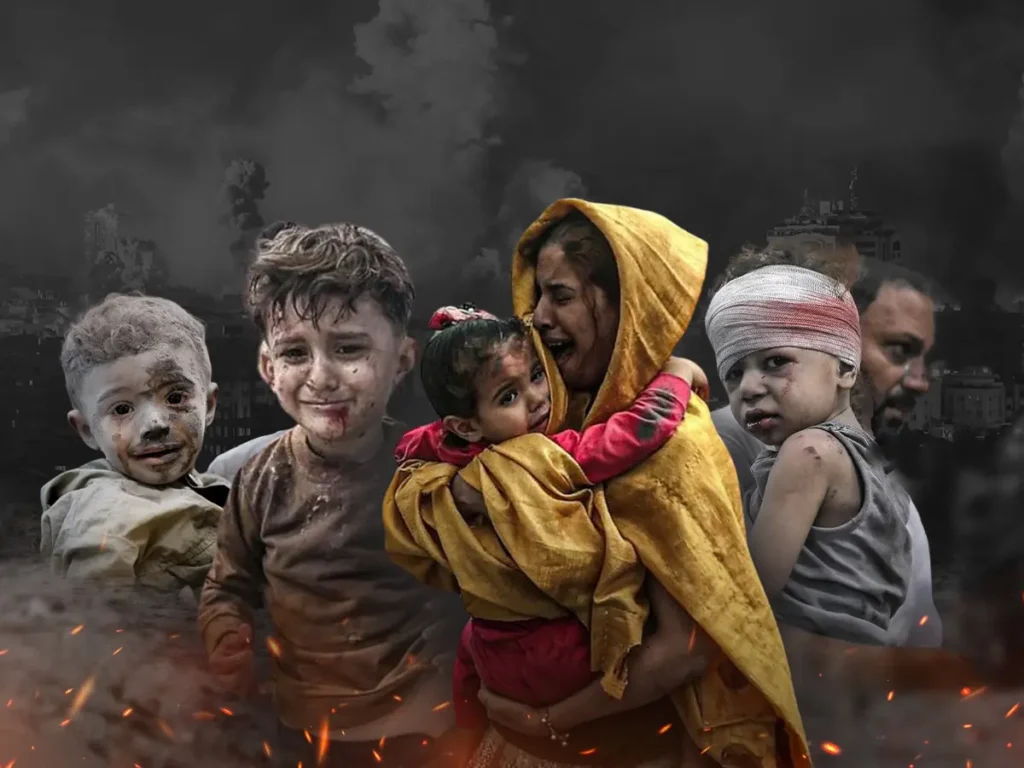
Gaza Herald – As summer begins, thousands of families across Gaza are confronting a growing challenge: keeping their children occupied in a territory where parks, playgrounds, and safe recreational spaces have all but disappeared.
For many parents, the end of the school year brings not relief but anxiety. With few public facilities available and soaring living costs limiting alternatives, children are left with little to do beyond remaining inside crowded homes, shelters, or displacement camps.
No Space to Play, No Escape
Umm Khaled, a mother of four from the Nuseirat refugee camp, says the hardest part of summer is her inability to provide any meaningful outlet for her children.
“The children wake up every morning with nothing to do,” she explains. “There are no places to play, no organized activities, and even a simple outing has become too expensive. Every day I watch long hours pass while they remain inside the house or around the camp.”
She says children who already spend much of their time standing in water lines or searching for food from charity kitchens deserve the chance to enjoy a normal childhood.
Abu Imad, a father of five, shares similar concerns. According to him, most children now spend their days confined to tents or overcrowded living spaces, a situation that is increasingly affecting their mental health and behavior.
“A child needs movement, play, friends, and open spaces,” he says. “The current reality deprives our children of the most basic rights. We see growing tension, boredom, and irritability, but we have no real solutions.”
Even the Sea Is Out of Reach
Although Gaza’s coastline has long served as a natural refuge for families, reaching the beach is no longer affordable for many.
Umm Salem, who lives in Al-Maghazi refugee camp in central Gaza, says even a modest family trip to the sea has become financially impossible.
“Transportation alone places a huge burden on the family, especially when you have several children,” she says. “Sometimes the kids ask to go to the beach, but we have to say no because we simply can’t afford it, and safe transportation is not always available.”
Another father, Samer, says most families are struggling just to meet basic needs.
“When a family’s income barely covers food and essentials, any recreational trip becomes a luxury,” he says. “Children are the ones paying the price.”
Growing Psychological Pressures
Social specialists warn that prolonged periods of inactivity and isolation can have serious consequences for children, particularly in environments already marked by war.
They caution that extended boredom can increase anxiety, loneliness, behavioral problems, and a loss of motivation to learn or engage socially. Experts stress that organized activities, educational programs, and safe spaces for play are essential components of healthy child development and psychological well-being.
Alarming Findings from International Organizations
Recent assessments by the United Nations paint a troubling picture of childhood in Gaza.
A child-focused assessment published by UNICEF in May 2026 found that young children lack the safe and stimulating environments necessary for healthy development. Older children, meanwhile, continue to face prolonged disruptions in education and reduced opportunities for social and emotional growth.
The organization reported that most children in Gaza remain affected by repeated displacement and limited access to basic services, while educational and child-friendly spaces remain urgently needed to help them recover and regain a sense of normalcy.
UNICEF has also estimated that around 800,000 children in Gaza continue to live under harsh displacement conditions, identifying “Back-to-Learning” programs and safe spaces as among the territory’s most urgent humanitarian needs.
Meanwhile, UNRWA reports that it has delivered hundreds of thousands of psychosocial support sessions for children and displaced Palestinians, highlighting the growing mental health needs among young Palestinians living through prolonged crisis.
A Childhood on Hold
Caught between economic hardship, displacement, and the disappearance of recreational opportunities, Gaza’s children face another summer without many of the experiences normally associated with childhood.
Parents and community organizations continue to call for greater support, urging the creation of safe spaces, educational activities, and recreational programs that would allow children not only to play and learn, but also to reclaim a small part of the childhood many feel has been lost.

