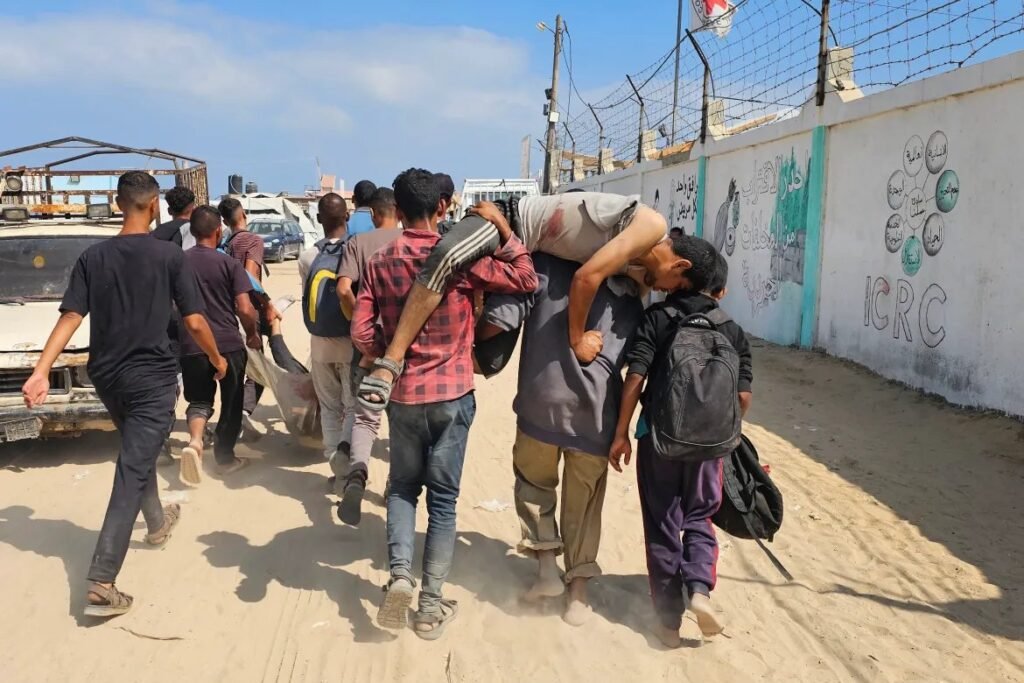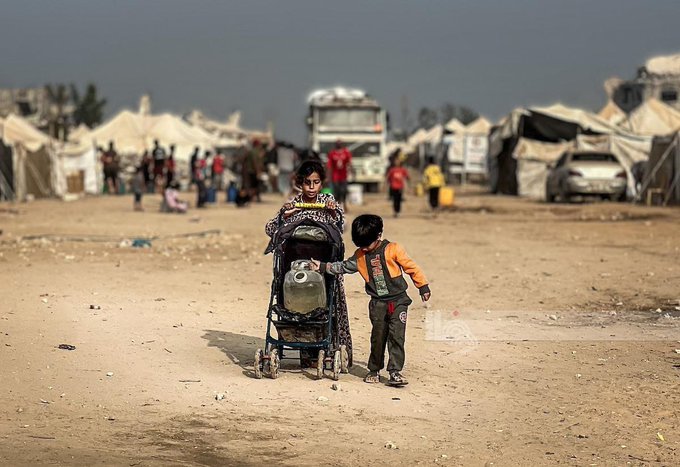
Gaza Herald_ For much of the Muslim world, Eid al-Adha was marked by joy, prayer, and family reunions. In Gaza, it arrived with the sound of explosions, the anguish of loss, and the continuing struggle to survive. For many Palestinian families, the holiday became yet another reminder that the war had not ended.
The contrast was stark. While children elsewhere received gifts and new clothes, many children in Gaza spent Eid under bombardment, in overcrowded shelters, or grieving loved ones lost during the war.
Scenes From a Territory Still Under Fire
Images and testimonies emerging from Gaza during the holiday painted a picture far removed from the notion that the war has ended.
One widely shared account described a mother named Hidayah who had taken her daughters shopping for Eid clothing. While the children entered a store, she remained outside. Moments later, a strike hit the area. The girls reportedly rushed outside only to find their mother fatally wounded.
In another widely circulated video, a man was seen carrying the body of a young girl from the rubble of a destroyed building. Overwhelmed with grief, he cried out that it was the first day of Eid, highlighting the painful contrast between a holiday meant for celebration and the devastation surrounding him.
Elsewhere, footage showed fires consuming tents housing displaced families. For many Palestinians who had already lost their homes, even temporary shelters no longer appeared safe from the dangers of war.
The Debate Over the Ceasefire
For residents living through these events, arguments about whether a ceasefire technically exists may feel detached from daily reality.
Reports from international organizations indicate that civilians continue to be killed despite diplomatic efforts and declarations aimed at reducing hostilities. Casualties reported during the Eid holiday included women and children, reinforcing concerns that violence remains an ongoing feature of life in Gaza.
Critics argue that the language of ceasefire has increasingly diverged from conditions on the ground. While political leaders continue to reference agreements intended to halt fighting, many Palestinians see little evidence of lasting security or stability.
The Politics of Peace
Questions have also emerged about the effectiveness of international initiatives presented as pathways toward peace.
Some political figures have pointed to diplomatic frameworks and ceasefire arrangements as evidence of progress. Yet critics contend that such declarations ring hollow when civilians continue to die and large parts of Gaza remain devastated.
The gap between political rhetoric and lived reality has fueled skepticism among Palestinians and human rights advocates who argue that declarations of peace mean little if violence persists.
International Responses Under Scrutiny
Governments across the world have largely responded through statements of concern, calls for restraint, and appeals for diplomacy. Human rights organizations, however, argue that expressions of concern alone have done little to alter conditions on the ground.
Critics maintain that the absence of meaningful accountability has allowed the conflict to continue with devastating consequences for civilians.
At the same time, many observers have expressed frustration over what they see as insufficient action from regional and international actors despite mounting humanitarian concerns.
Beyond Gaza
For many analysts, Gaza’s significance extends beyond its borders.
They argue that the conflict has become a test case for broader questions about civilian protection, international law, accountability, and the limits of military force. Concerns raised in Gaza regarding attacks on civilian infrastructure, displacement, and humanitarian access are increasingly echoed in discussions about conflicts elsewhere in the region.
Particular attention has focused on healthcare systems. Hospitals, medical workers, and emergency services have faced extraordinary pressures throughout the war, prompting repeated warnings from international organizations about the long-term consequences for civilian populations.
Why Gaza Remains Central
Supporters of greater international action argue that Gaza represents more than a single humanitarian emergency. In their view, it has become a defining issue that shapes debates about regional stability, diplomacy, and international norms.
As discussions continue about Lebanon, Iran, Syria, and the broader Middle East, Gaza remains at the center of many of those conversations.
For Palestinians living through the conflict, however, the issue is not primarily geopolitical. It is about survival, safety, and the hope that future holidays will no longer be marked by loss.
That reality, many argue, explains why Gaza continues to command attention far beyond its borders.