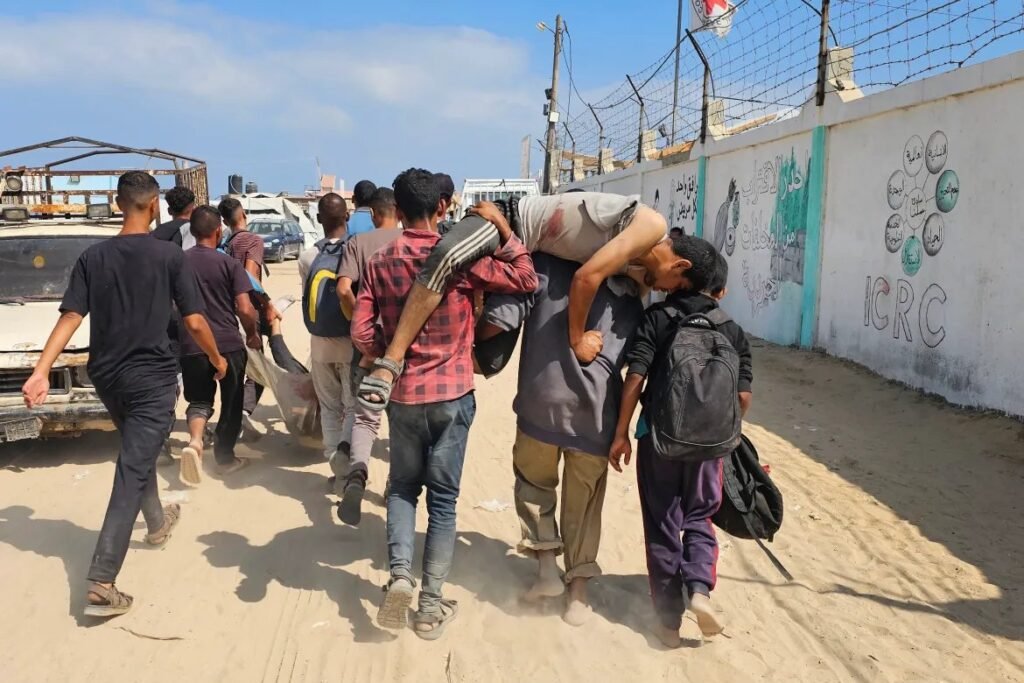
Gaza Herald_Seven months after a ceasefire agreement was announced to halt Israel’s devastating war on Gaza, Palestinians across the besieged enclave say the truce has become little more than a cover for continued military assaults, displacement, and destruction.
According to Gaza’s Health Ministry, at least 880 Palestinians have been killed since the ceasefire officially took effect, bringing the overall death toll from Israel’s assault on Gaza to more than 72,700 Palestinians, alongside massive destruction across the territory.
Political analysts and human rights observers increasingly believe Israeli Prime Minister Benjamin Netanyahu is deliberately obstructing the full implementation of the ceasefire in order to preserve his fragile political coalition ahead of Israel’s expected elections later this year.
Ceasefire in Name Only
Human rights officials argue that while the ceasefire technically remains in place, Israel continues carrying out military operations, airstrikes, forced displacement campaigns, and restrictions on humanitarian aid across Gaza.
Mai El-Sheikh of the United Nations Human Rights Office in Palestine warned that Israel has effectively transformed the ceasefire into a framework allowing ongoing violations against Palestinian civilians.
She said severe restrictions on food, medicine, and humanitarian supplies are contributing to what many aid organizations describe as a deliberately manufactured humanitarian catastrophe designed to pressure and destabilize Gaza’s displaced population.
Despite repeated international calls for unrestricted humanitarian access, Palestinians in Gaza continue facing worsening hunger, collapsing healthcare services, and a near-total breakdown of basic infrastructure.
Systematic Destruction Across Gaza
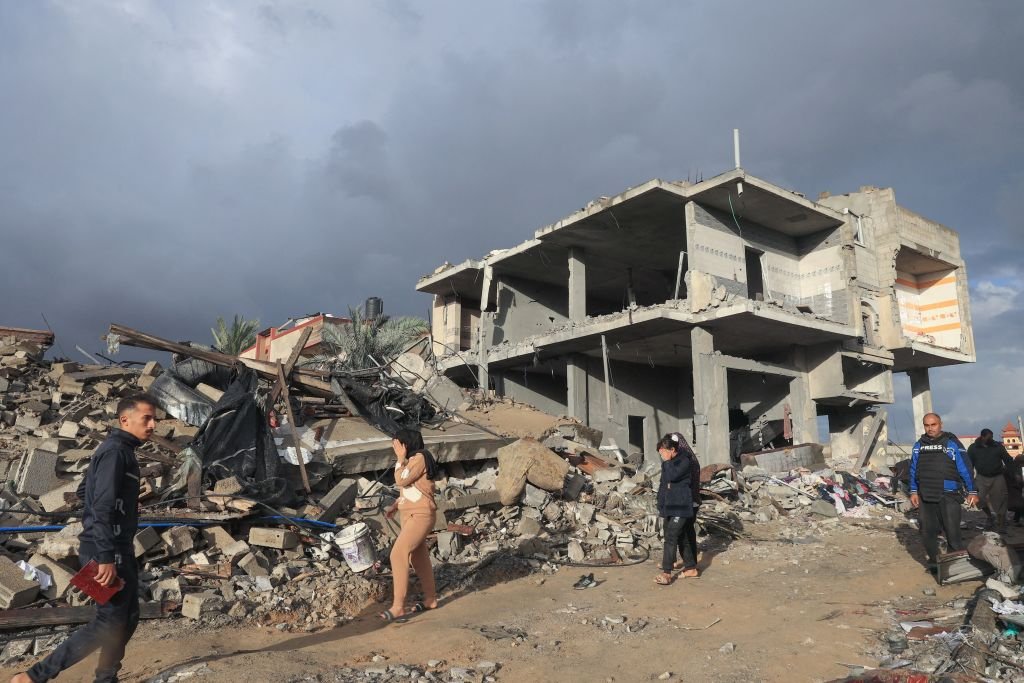
At the same time, Israel has intensified widespread demolition campaigns throughout Gaza, particularly in areas already devastated by months of bombardment.
Human rights groups documented repeated incidents in which Israeli forces ordered residents to evacuate neighborhoods before leveling entire residential blocks in refugee camps including Nuseirat Refugee Camp, Bureij Refugee Camp, and Al-Maghazi Refugee Camp.
Large areas east of Deir al-Balah have also reportedly undergone extensive destruction under ongoing Israeli military control.
Rights monitors argue these demolitions lack legitimate military justification and instead appear aimed at rendering Gaza increasingly uninhabitable for Palestinians.
With nearly 90 percent of Gaza’s infrastructure either damaged or destroyed, humanitarian organizations warn that so-called evacuation warnings do not absolve Israel of responsibility for civilian suffering and forced displacement.
For many Palestinians, these warnings represent another mechanism of psychological pressure forcing families to repeatedly flee with nowhere safe left to go.
Netanyahu’s Political Calculations
Analysts specializing in Israeli politics say Netanyahu faces mounting domestic pressure after failing to achieve Israel’s declared objective of eliminating Hamas.
At the same time, Israel continues facing regional tensions involving Hezbollah in southern Lebanon and broader regional confrontations involving Iran.
According to political observers, Netanyahu’s government increasingly relies on far-right coalition partners who oppose meaningful concessions or a permanent end to military operations in Gaza.
Mohannad Mustafa, a researcher focused on Israeli affairs, said Netanyahu continues obstructing humanitarian access, reconstruction efforts, and governance arrangements in Gaza because his broader objective remains maintaining long-term Israeli military control over the Strip.
Palestinian political analyst Eyad al-Qarra said Israel has repeatedly used demands for the disarmament of Palestinian factions as a political excuse to avoid fulfilling ceasefire obligations.
According to al-Qarra, even if Palestinian groups surrendered all weapons, Israel would likely introduce new conditions to prolong military operations and maintain pressure on Gaza.
Fears of a Broader Offensive
Although the ceasefire remains fragile, many Palestinians fear its total collapse could lead to an even larger Israeli military offensive against Gaza.
Meanwhile, international mechanisms intended to oversee and enforce the ceasefire have shown little ability to hold Israel accountable.
The controversial US-backed “Board of Peace,” established to supervise Gaza’s administration and reconstruction process, has faced growing criticism for failing to enforce ceasefire commitments or stop continued Israeli attacks.
Observers say divisions within the board and the absence of strong international pressure have left Gaza increasingly vulnerable.
US researcher Kenneth Katzman argued that growing regional tensions and Washington’s focus on Iran have created a diplomatic vacuum that Israel is now exploiting to intensify operations in Gaza without meaningful consequences.
At the United Nations Security Council, former Bulgarian official Nikolay Mladenov warned that without a serious reconstruction process and genuine political commitment, Gaza risks remaining trapped in permanent devastation, instability, and humanitarian collapse.
For Palestinians living under bombardment, however, the reality remains unchanged: a ceasefire that exists on paper while war, displacement, and destruction continue every day across Gaza.