Gaza Herald — Gaza City officials have issued urgent warnings of a looming environmental and humanitarian catastrophe in the Sheikh Radwan neighborhood, where massive amounts of untreated sewage are rapidly filling a large rainwater basin after Israel’s devastating assault destroyed much of the territory’s sanitation infrastructure.
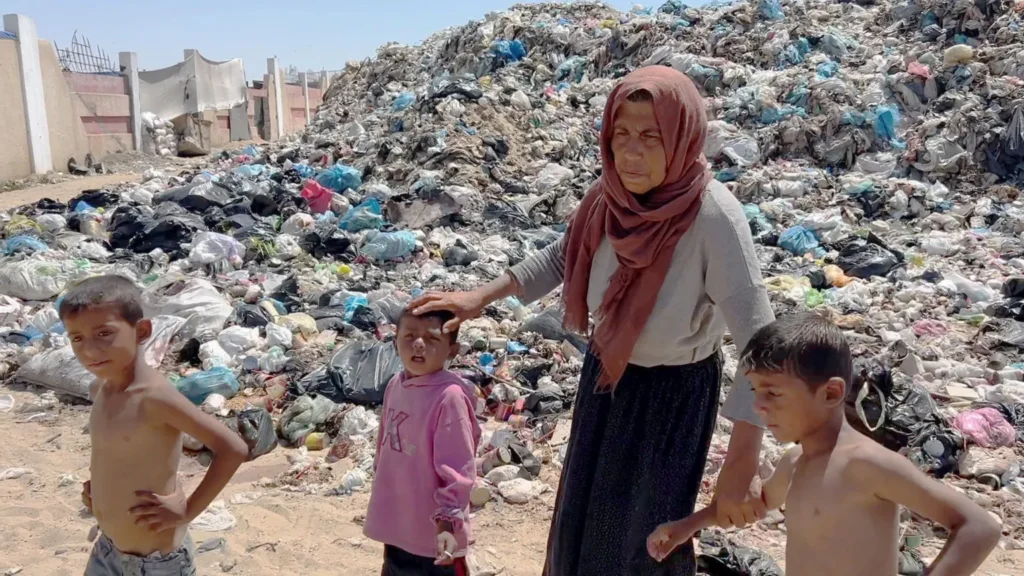
Municipal spokesperson Hosni Mhanna said the Sheikh Radwan pond, which stretches across more than 80 dunams and reaches a depth of nearly seven and a half meters, has already filled with around three and a half meters of sewage and contaminated wastewater.
Israeli Destruction Leaves Infrastructure Collapsing
According to Gaza Municipality officials, the crisis is directly linked to the widespread destruction caused by Israeli attacks on sewage pipelines, pumping stations, and wastewater networks throughout Gaza during the war.
The damage has triggered a continuous flow of untreated sewage into the basin while municipal crews remain unable to contain the disaster because of severe shortages of fuel, spare parts, oils, and critical equipment imposed under Israel’s ongoing siege.
Mhanna said pumps and sewage facilities inside the basin have completely stopped operating after fuel supplies ran out and essential maintenance materials became unavailable. As a result, wastewater levels have risen dangerously in recent days.
Displaced Families Living Beside Contaminated Waters
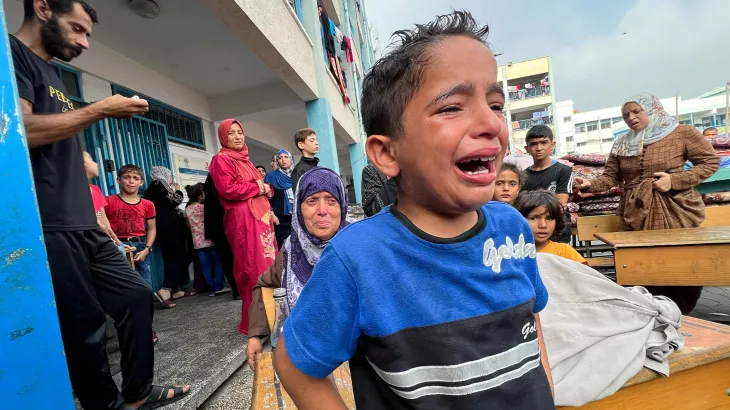
The growing crisis now threatens thousands of Palestinians living near the basin, including displaced families forced to shelter around the pond after Israeli bombardments destroyed their homes.
Officials warned that the worsening sewage accumulation could unleash devastating health consequences across the densely populated area. Untreated wastewater threatens to spread foul odors, insects, rodents, and infectious diseases at a time when Gaza’s healthcare system has already been pushed to collapse under months of war and blockade.
Threat to Gaza’s Water Supply
Municipal authorities also warned that sewage leakage into Gaza’s underground water reservoir could contaminate already scarce drinking water resources, deepening the territory’s chronic water crisis and placing countless civilians at risk.
If water levels continue to rise, officials fear sewage could soon flood nearby streets and residential neighborhoods, creating what they described as a large-scale humanitarian and environmental disaster.
Concerns are also mounting over the possibility that damaged homes and buildings surrounding the basin could collapse because the soil has become saturated with contaminated wastewater.
The area surrounding Sheikh Radwan was heavily targeted during Israeli attacks on Gaza, leaving many structures severely weakened and vulnerable to collapse.
Urgent Appeals for Fuel and Equipment
Gaza Municipality renewed urgent appeals for the immediate entry of fuel, spare parts, generator equipment, and operational supplies needed to restart sewage pumping stations and prevent the disaster from spiraling further out of control.
Officials stressed that municipalities urgently require stable and continuous fuel deliveries to keep sewage facilities functioning around the clock.
Municipal authorities warned that unless Gaza’s critical infrastructure is restored and fuel supplies are allowed into the territory without restriction, the enclave could soon face one of the worst environmental and public health catastrophes since the start of Israel’s assault on Gaza.