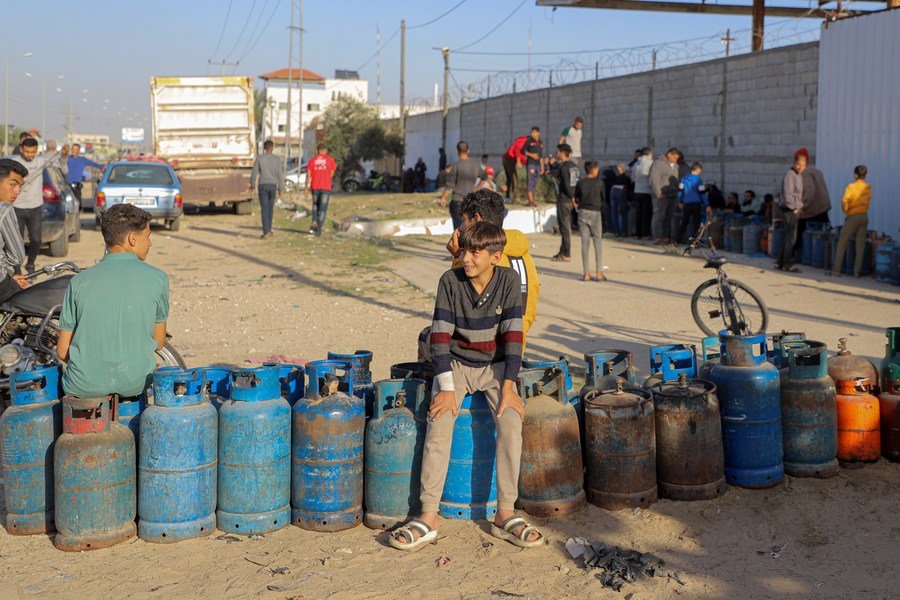
Gaza Herald – A significant drop in the flow of food and commercial goods into the Gaza Strip has been reported, coinciding with escalating regional tensions linked to the Israeli-U.S. escalation against Iran.
Data from the United Nations shows that the number of aid trucks entering Gaza daily has fallen to around 60 since the escalation began, compared to approximately 95 trucks per day before the crisis.
The ceasefire agreement in Gaza, which took effect on October 10, 2025, was based on a proposal advanced by Donald Trump aimed at ending the war. However, violations of the agreement have continued, with Gaza’s Ministry of Health reporting 972 Palestinians killed and 2,235 injured since its implementation.
The agreement followed a two-year genocide that began on October 7, 2023, resulting in more than 72,000 killed and around 172,000 injuries, alongside widespread destruction affecting roughly 90% of Gaza’s civilian infrastructure, according to UN estimates.
Hamas has accused Israeli authorities of failing to meet their obligations under the agreement, particularly regarding the opening of crossings and the entry of food, medical supplies, and shelter materials. These restrictions have deepened the humanitarian crisis affecting approximately 1.9 million displaced civilians out of Gaza’s 2.4 million population.
The restrictions were mainly imposed on essential goods, including construction materials, debris removal equipment, and certain medical supplies. International organizations noted that the crisis is not only about the reduced number of aid trucks but also the limited types of goods permitted entry.
Officials also expressed frustration over stalled diplomatic efforts to increase aid flows, as the humanitarian situation in Gaza has become increasingly tied to broader regional military developments. Despite prior progress in boosting aid deliveries, the escalation has caused supply levels to drop sharply, by as much as 80% at certain points.
Additional restrictions imposed on land crossings during the heightened tensions have further slowed aid delivery, at times halting truck movement entirely. The broader military escalation has also disrupted shipping routes and regional logistics, compounding the difficulty of delivering essential supplies to Gaza.