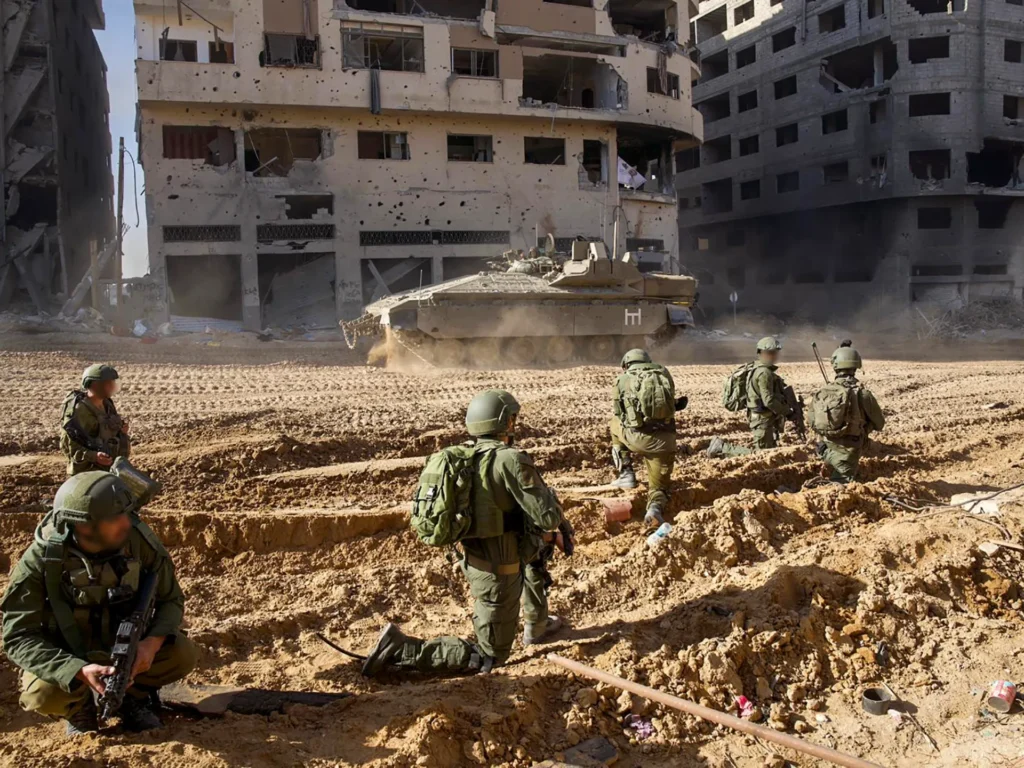
Gaza Herald – A report by Euro-Med Human Rights Monitor has raised serious concerns over a recurring pattern of looting carried out by Israeli occupation forces during military attacks in both the Gaza Strip and Southern Lebanon.
According to testimonies documented by the organization, Israeli soldiers looted civilian homes after gaining control of residential areas, taking money, gold, and personal belongings. The report states that these actions go beyond destruction and forced displacement, potentially constituting violations of international humanitarian law and amounting to war crimes.
Witness accounts describe soldiers storming homes, confining residents to a single room, and leaving after valuables had disappeared. In one testimony from Ain Qana in southern Lebanon, a woman reported that gold jewelry was missing after Israeli occupation forces searched her home. Other accounts include the disappearance of items such as electronics, furniture, and musical instruments.
The findings are consistent with reporting by Haaretz, which documented cases of Israeli soldiers transporting looted civilian property in military vehicles. The visibility of such incidents, including some reportedly shared on social media, suggests what the report describes as a broader climate of impunity.
Euro-Med Monitor argues that the recurrence of these incidents across multiple regions, including Gaza, the occupied West Bank, and southern Lebanon, indicates that they may not be isolated acts but part of a wider tolerated practice during military attacks.
Under international law, the looting of civilian property during armed war is strictly prohibited. The Fourth Geneva Convention explicitly bans pillage, while the Rome Statute of the International Criminal Court classifies such acts as war crimes.
The organization called for an independent international investigation to collect evidence and determine individual responsibility, urging the International Criminal Court to examine the violations. It also emphasized the need for accountability through both international and national legal mechanisms, warning that continued inaction risks reinforcing impunity and leaving civilians exposed to further violations.