
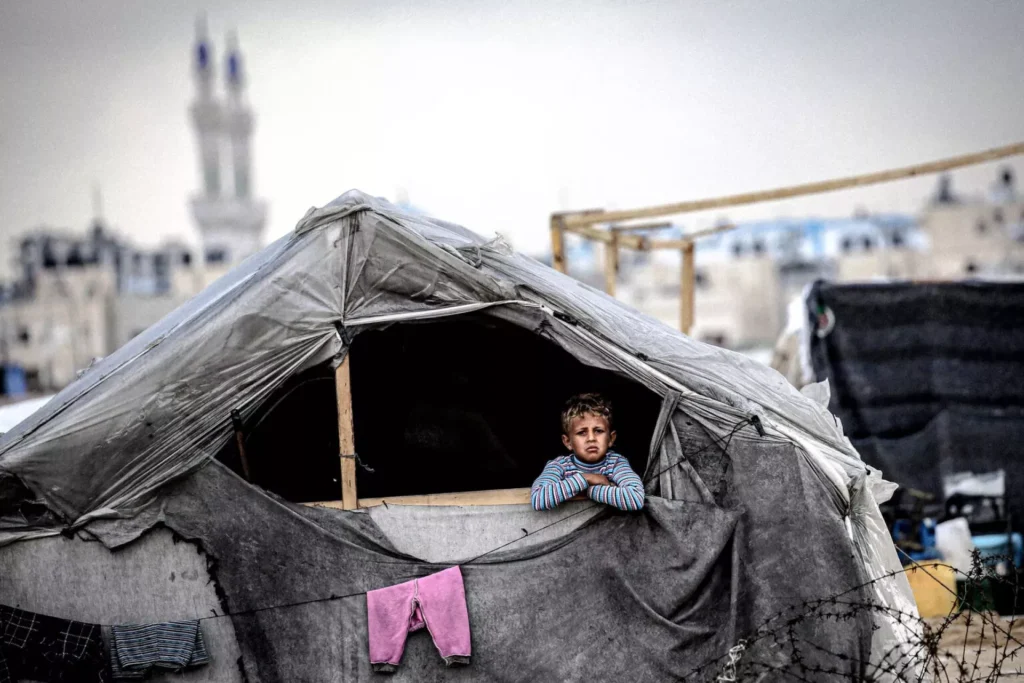
Gaza Herald – In a territory already defined by devastation, a quieter crisis is unfolding among its youngest survivors. Across the Gaza Strip, an increasing number of children are losing their ability to speak, not only due to physical injuries, but as a direct psychological response to prolonged exposure to war.
According to humanitarian estimates, nearly 1.1 million children now require urgent mental health and psychosocial support, as trauma manifests in ways that are often invisible but deeply debilitating.
Silence After Shock
At Hamad Hospital in Gaza City, doctors report a noticeable rise in cases of sudden speech loss among children. Some arrive with clear physical causes, such as head trauma, neurological damage, or blast-related injuries. Others show no visible wounds, yet are unable to produce words or even basic sounds.
Medical professionals describe conditions such as selective mutism and functional voice loss, where speech disappears entirely following extreme psychological distress.
For many, the pattern is strikingly similar: a child exposed to a violent incident, an Israeli air strike, the collapse of a building, or the loss of a loved one, suddenly stops speaking.
A Psychological Shutdown
Child psychotherapist Katrin Glatz Brubakk, who has worked in Gaza with Médecins Sans Frontières, describes the phenomenon as a form of “silent suffering.”
“These are children exposed to overwhelming trauma,” she explains. “At some point, the brain shifts into survival mode, and speech simply shuts down.”
This response, often referred to as a “freeze state,” occurs when the nervous system becomes overwhelmed. Rather than fight or flee, the body immobilizes itself, a defense mechanism against extreme threat.
While the child may appear withdrawn or unresponsive, internally, the brain remains on high alert. Over time, this prolonged stress disrupts development, affecting learning, emotional regulation, and social interaction.
Experts warn that the consequences extend far beyond temporary speech loss. When children stop communicating and engaging with their surroundings, critical stages of cognitive and emotional development are interrupted.
Brubakk refers to these as “cognitive war injuries”, long-term impairments caused not by visible wounds but by sustained psychological strain.
In Gaza, the scale of this trauma is unprecedented. Unlike other war zones, specialists point to the total absence of safe spaces, combined with the collapse of healthcare systems and limited access to psychological care.
“There is no real sense of safety,” Brubakk notes. “Even during ceasefires, people are still at risk. That constant uncertainty deepens the trauma.”
Fragile Paths to Recovery
Recovery from trauma-induced mutism is possible, but slow and resource-intensive. It often requires consistent therapeutic intervention, something increasingly difficult to provide amid damaged infrastructure and shortages of medical supplies.
Simple methods, however, can offer a starting point. Therapists use play-based techniques, such as blowing soap bubbles, to help children regulate breathing, reduce anxiety, and gradually re-engage with their environment.
These small, incremental steps, a whisper, a glance, a moment of curiosity, mark the beginning of recovery.
A Generation at Risk
The growing number of children losing their voices reflects a broader humanitarian emergency, one that is not always visible in casualty figures or images of destruction.
In Gaza, the wounds of the Israeli war are not only measured in physical injuries but also in silence, in the absence of words from a generation struggling to process what it has endured.
For many of these children, regaining their voice will depend not only on medical care but also on something far more fragile: the return of safety, stability, and time to heal.

