
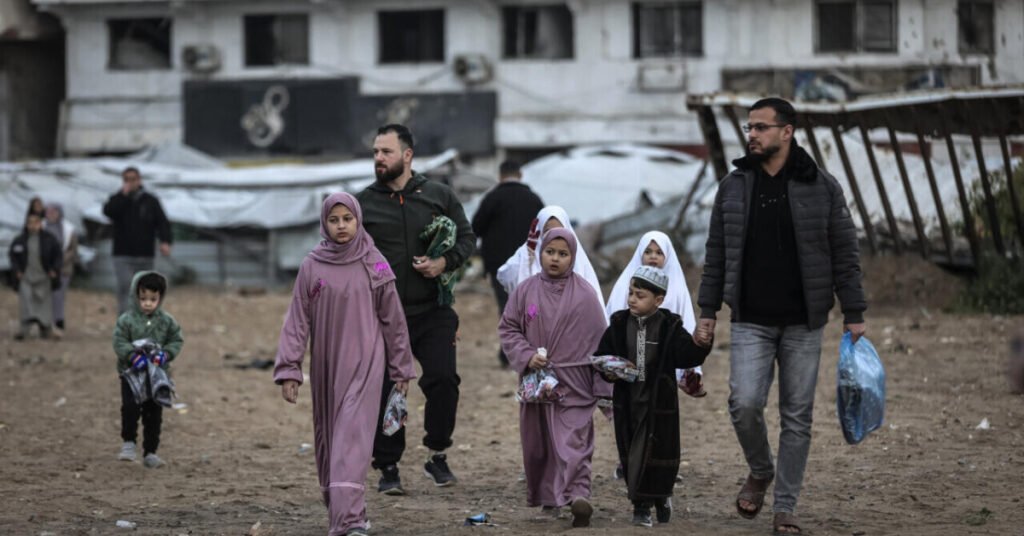
Gaza Herald- In Gaza, the arrival of Eid has done little to lift the weight of war, displacement, and economic collapse, as Palestinians struggle to mark the holiday under devastating humanitarian conditions.
Across the Strip, markets appear crowded and outwardly lively, yet for many residents, the festive atmosphere masks a deepening crisis. Prices of basic goods, including food and children’s items, have surged amid ongoing restrictions on the entry of supplies, leaving families unable to afford even the most essential items.
Khaled Deeb, 62, walked through Gaza City’s central Remal market ahead of Eid, observing the bustling streets but unable to participate in the preparations. “From the outside, the Eid atmosphere looks vibrant,” he said. “But financially, things are extremely bad. People have lost everything.”
Now living in a partially destroyed home, Deeb said he can no longer afford fruit or vegetables—items once central to holiday meals. Before the war, he owned a supermarket and used to spend generously on gifts, clothing, and sweets for his family during Eid. “None of that exists anymore,” he said.
For many families, Eid comes amid widespread displacement. Large numbers of residents are living in makeshift shelters or tents, often without reliable access to food, clean water, or basic services.
Shireen Shreim, a mother of three, described the emotional toll of the ongoing crisis. “Our joy in Eid is incomplete,” she said. “After years of war, we are now facing a reality where even the most basic necessities are unavailable.”
Shreim and her family live in a heavily damaged apartment, where they have improvised repairs using tarpaulins and wood. Despite their situation, she noted that others face even harsher conditions. “People are living in nylon tents in the streets without any humane shelter,” she said. “How can they celebrate Eid?”
The broader humanitarian situation continues to deteriorate, with widespread destruction of homes and infrastructure, and limited access to essential goods. For many in Gaza, the holiday serves as a stark reminder of loss—of homes, livelihoods, and loved ones—rather than a time of celebration.
As the conflict persists and prospects for reconstruction remain uncertain, Eid in Gaza reflects resilience amid hardship, but also the profound impact of a crisis that has reshaped daily life across the territory.

