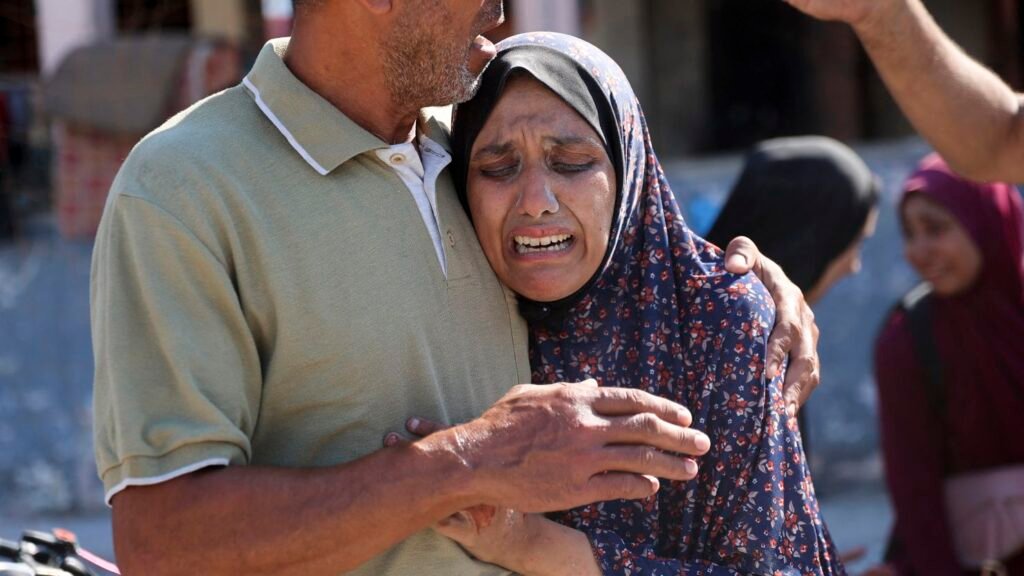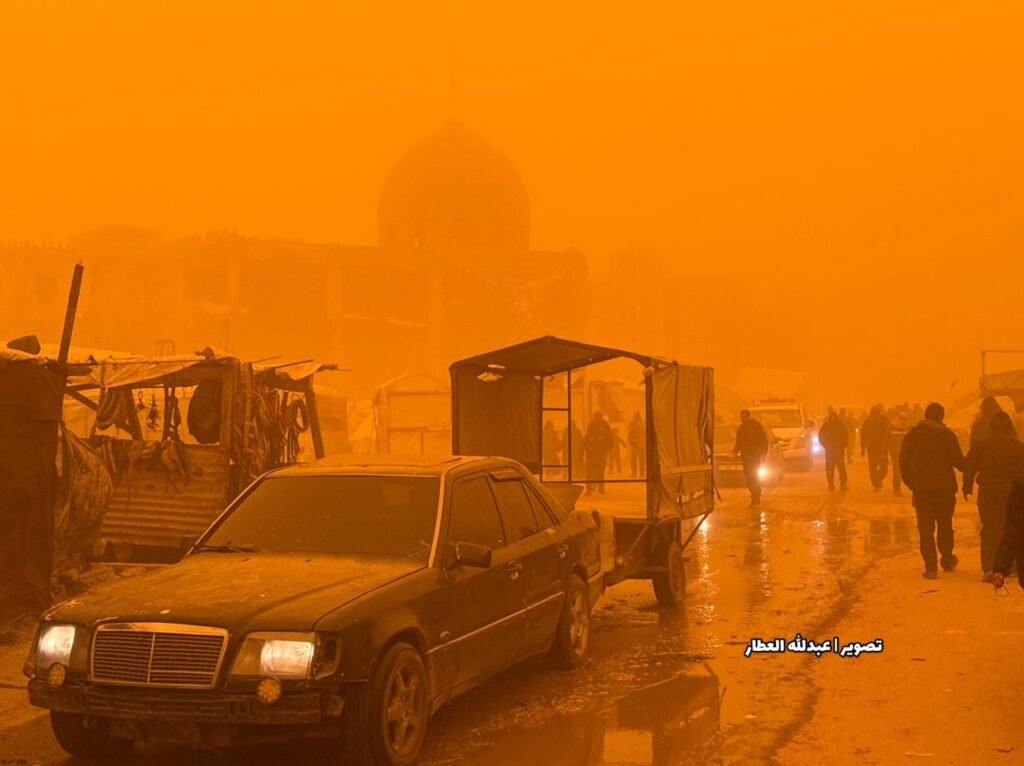
Gaza Herald- A powerful sandstorm sweeping across the Gaza Strip has intensified the hardships faced by hundreds of thousands of displaced Palestinians living in fragile tents that offer little protection from harsh weather conditions.
The Gaza Civil Defense Directorate urged residents on Saturday to take safety precautions as a dust-laden air mass and strong winds spread across the area. In a statement, the agency advised people to avoid leaving homes, shelters, or tents unless absolutely necessary, especially those suffering from respiratory illnesses, due to the high concentration of dust in the air.
Authorities recommended wearing cloth masks or covering the nose with a damp piece of fabric when going outside and avoiding direct exposure of the eyes to dust, particularly for those with eye allergies. Residents were also advised to drink plenty of water and fluids during the evening hours to reduce the health effects of the dusty conditions.
 The Civil Defense stressed the importance of securing tents and makeshift shelters to prevent them from being blown away by strong winds, particularly for displaced families living along the coastline.
The severe sandstorm, which hit Gaza on Saturday, brought thick dust and active winds that directly impacted displacement camps. The conditions pose increased health and humanitarian risks, especially for people with chronic or respiratory illnesses.
Weather officials said the atmosphere is expected to remain dusty and partly to mostly cloudy during the day, with little change in temperatures. Winds are forecast to range from moderate to strong, while the sea is expected to remain relatively calm.
During the evening and nighttime hours, a low-pressure system accompanied by a cold air mass is expected to affect the region, bringing cooler temperatures and scattered rain showers across many areas, sometimes accompanied by thunderstorms.
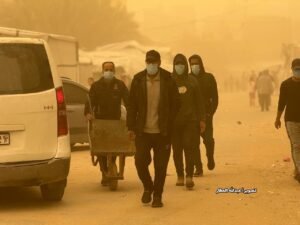 These weather conditions come as hundreds of thousands of displaced Palestinians continue to live in worn-out tents that provide minimal protection from extreme weather, whether in winter storms or summer heat.
Since last December, Gaza has been hit by several storms that damaged, flooded, or blew away tens of thousands of displacement tents. Some already-damaged buildings—previously struck during Israeli bombardment—have also collapsed, causing casualties.
Despite a ceasefire agreement, the humanitarian crisis in Gaza persists. Aid agencies report that insufficient quantities of shelter materials, such as tents, mobile homes, and construction supplies needed to repair infrastructure and water and sewage networks, have been allowed into the enclave, leaving displaced families increasingly vulnerable with every severe weather event.