Gaza Herald_ Israel has effectively frozen the implementation of the second phase of the Gaza ceasefire agreement, using the escalation with Iran as political cover while tightening its grip over the besieged Palestinian territory.
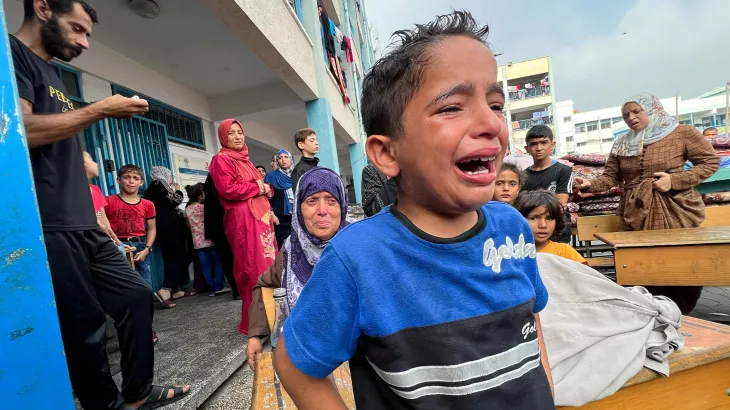
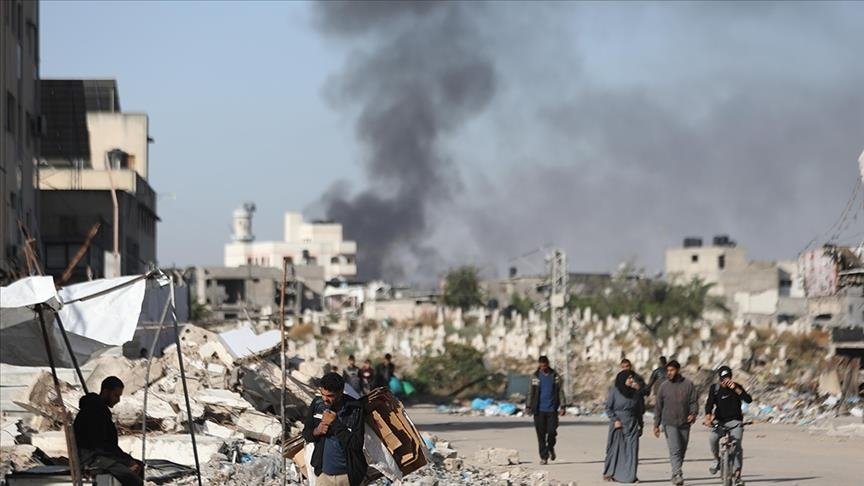
Despite the ceasefire that formally came into effect in October last year, Israeli forces have continued their attacks on Gaza for months. The assault has included daily artillery shelling, aerial bombardments, home demolitions, and targeted killings of Palestinian figures.
According to medical sources in Gaza, the death toll from Israel’s assault on the Strip since October 2023 has climbed to 72,134 Palestinians, while 171,828 others have been wounded, the Palestinian news agency WAFA reported on Tuesday.
The same sources noted that at least 649 Palestinians have been killed since the ceasefire took effect, while 1,730 others have been injured. Rescue teams have also recovered 756 bodies from under rubble and previously inaccessible areas during that period.
Meanwhile, Israel has continued to restrict humanitarian assistance to the Gaza Strip. The Rafah crossing with Egypt has remained closed since 1 March, with Israeli authorities citing “security” reasons, while access through the Kerem Abu Salem crossing has been tightly limited, further worsening the humanitarian crisis inside the enclave.
While these actions constitute direct violations of the ceasefire, Israel has also worked to delay the broader political framework tied to the Gaza agreement. Key elements of the proposed governance and stabilization plan remain stalled.
The civilian administration intended to assume responsibility for governing Gaza, but has so far been unable to enter the territory, despite receiving approval from both Hamas and the Palestinian Authority.
At the same time, uncertainty surrounds the future of the International Stabilisation Force (ISF) proposed in former US President Donald Trump’s peace initiative. Indonesia recently announced it may withdraw entirely from the force and the so-called “Board of Peace,” raising questions about the plan’s viability.
Regarding reconstruction, Israeli Prime Minister Benjamin Netanyahu has repeatedly tied any rebuilding efforts in Gaza to the disarmament of Hamas. The Palestinian movement has rejected those demands, and negotiations around this issue remain deadlocked.
Ahmed Al-Tanani, director of the Arab Centre for Research and Strategic Studies, told Al-Araby Al-Jadeed that the international spotlight on the war with Iran has effectively lowered the political cost for Israel to maintain what he described as a low-intensity war in Gaza.
According to Al-Tanani, Israel has relied on a deliberate strategy of delay, buying time while mediators and the United States focus on procedural details and remain invested in preserving the ceasefire agreement’s framework.
With the escalation of tensions between Israel and Iran, Al-Tanani said Israel has managed to sidestep its commitments related to Gaza, while gradually imposing new realities on the ground without returning to a full-scale war.
Suleiman Bisharat, an analyst specializing in Israeli affairs, argues that Israel intentionally keeps major regional issues, including the Palestinian question, unresolved.
Bisharat believes that maintaining a state of permanent instability allows Israel to reinforce the narrative that it is constantly under threat, which in turn helps sustain ongoing political and military support from the United States.