Gaza Herald_ Just before sunset, as the call to prayer approaches, Islam Dardouna stands over a small improvised stove made from a battered metal can. Beneath it, scraps of paper and pieces of wood burn slowly, heating a pot of food for her children.
Thick smoke rises from the fire, forcing her to turn her face away. Her skin is coated with a thin layer of soot, and the smell of smoke clings to her clothes. In one hand, she grips an asthma inhaler while trying to continue cooking with the other.
“I can barely stand the smoke anymore,” the 34-year-old says in a strained voice before using the inhaler. “We heat water on this fire, cook our food on it, everything. It has destroyed my health.”
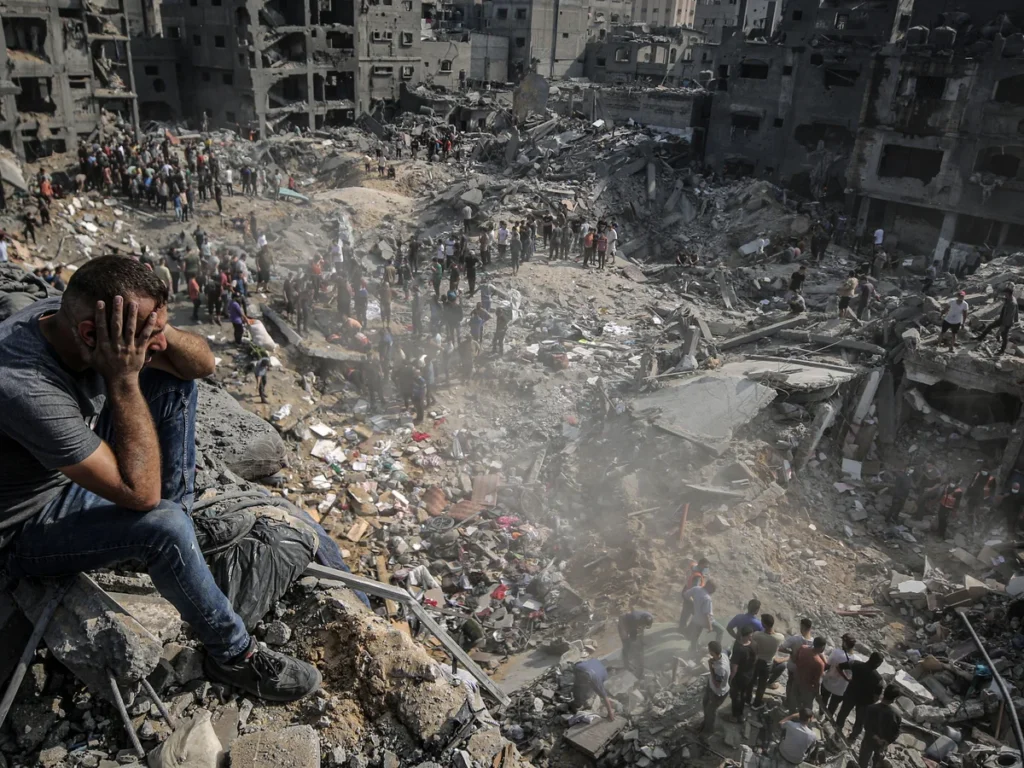
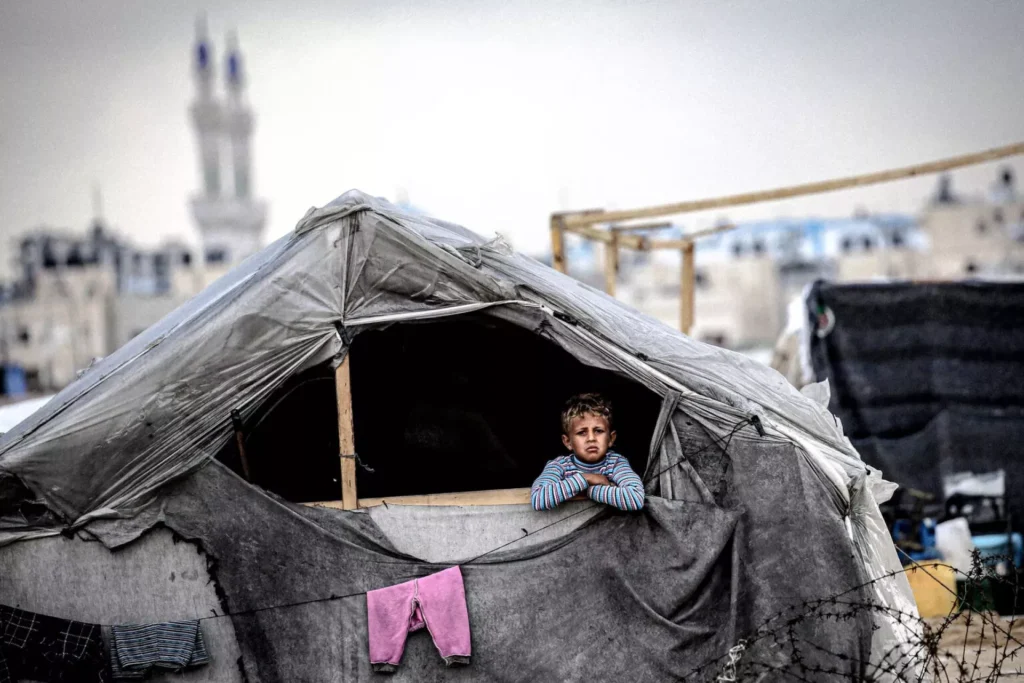
Dardouna was displaced from Jabalia in northern Gaza when Israel launched its devastating war on the territory in October 2023. Her family’s home was destroyed, forcing them to move repeatedly before settling in a displacement camp in Sheikh Ajleen, west of Gaza City.
She now lives there with her husband Muath and their three children, like thousands of other families uprooted by the war.
For Dardouna, the daily struggle to cook without gas has become one of the most exhausting parts of life in displacement.
“Our entire life has turned into a constant search for firewood and scraps,” she says. “There is no cooking gas anymore. We lost everything during displacement.”
The hardship is even more severe for her because she suffers from chronic asthma and respiratory problems that she says began years ago when her home was struck during Israel’s 2008 war on Gaza, and she inhaled smoke from a phosphorus bomb.
Although her condition had improved over the years, the constant smoke from cooking fires during the current war has worsened her health dramatically.
Recently, she was hospitalized for nearly a week after suffering severe oxygen deprivation. Doctors advised her to use an oxygen cylinder at home, but she cannot afford one.
Fuel Crisis Leaves Families With Dangerous Alternatives
Across Gaza, thousands of families share the same struggle. A severe shortage of cooking gas and fuel has persisted since the beginning of the war, forcing people to rely on unsafe and exhausting alternatives.
Even after a ceasefire agreement was announced months ago, the quantities of fuel entering the enclave have remained far below what Gaza’s population requires.
According to the United Nations humanitarian coordination office, the supply of cooking gas remains critically limited, covering less than three percent of Gaza’s actual needs.
As a result, most households have been forced to improvise.
UN data shows that more than half of Gaza’s families now rely on firewood for cooking, roughly 43 percent burn waste materials or plastic, and only a tiny fraction of households, around 1.5 percent, still have access to cooking gas.
Aid groups warn that these methods expose families to dangerous smoke and toxic fumes, particularly when plastic or waste is burned for fuel.
In displacement camps and damaged neighborhoods across Gaza, open fires fueled by wood scraps, trash, and plastic have become a daily necessity.
The hardship becomes even more difficult during the Muslim holy month of Ramadan, when families must prepare meals before dawn and again after sunset.
For many households, even lighting a fire has become a challenge.
Muath Dardouna, Islam’s husband, explains that rainy or windy weather often prevents them from cooking at all before dawn.
“Today it was raining and windy, so I couldn’t light the fire,” he says. “Sometimes we break our fast and wish we could at least drink a cup of tea afterward, but lighting the fire again is another struggle.”
Muath, who once worked providing psychosocial support for children, says it is heartbreaking to watch his own children fast without the pre-dawn meal known as suhoor.
“Every part of our life is suffering,” he says quietly. “Fetching water is suffering. Cooking is suffering. Even going to the bathroom is suffering. We are completely exhausted.”
Pointing to the black smoke stains surrounding their cooking area, he adds, “Our lives are literally covered in soot.”
Cooking gas, he says, has become something people only dream about.
“When we managed to get a gas cylinder once a few months ago, it felt like Eid,” he recalls. “But we didn’t even have a stove left to use it.”
The family lost nearly everything during the war.
“We are living on the edge of nothing,” he says. “War and displacement stripped us of everything. We are ready to live with the simplest rights inside tents, but there is no gas, no heating, no lighting. Sometimes it feels like we are living in open graves on Earth.”
Health and Food Security at Risk
Officials in Gaza warn that the continuing halt in cooking gas deliveries could have catastrophic consequences for the territory’s more than two million residents.
The General Petroleum Authority recently warned that the ongoing shortage threatens both food security and public health, particularly during Ramadan when families depend heavily on cooking fuel.
Even before the most recent restrictions, Gaza was already facing a shortage of around 70 percent of its gas needs, according to the authority.
Without immediate intervention, officials say the crisis could deepen dramatically.
Across the territory, many families have already become dependent on ready-made meals distributed by aid organizations or charity kitchens. Yet even those meals present a challenge.
“Sometimes food arrives hours before sunset,” Muath says. “But heating it becomes another problem.”
For parents, the inability to provide even the simplest comforts for their children weighs heavily.
“As a father, I cannot give my children the most basic things,” he says. “Sometimes my son just wants a cup of tea, and even a little wind can stop me from making it.”
“The Fire Suffocates Us”
In another nearby tent, 26-year-old Amani Al-Bashleqi watches as her husband stirs a pot over an open fire while preparing food for iftar.
She says meals cooked over wood fires taste different, not because of the food itself, but because exhaustion and suffering overshadow every bite.
“We start cooking hours before sunset just to finish on time,” she says. “By the time we eat, we are completely exhausted and covered in soot.”
The smoke causes constant headaches and breathing problems, she adds.
“The fire suffocates you. Almost every woman in the camp suffers health problems from cooking this way,” she says. “But we have no choice.”
Her greatest concern is her seven-month-old baby. Boiling water to prepare the infant’s milk is often difficult.
Sometimes she stores boiled water in a borrowed thermos for later use. Other nights, she has no choice but to mix the milk with unboiled water.
“I know it’s not safe,” she says quietly. “But what can I do?”
Nearby, another displaced mother, Iman Junaid, sits with her husband beside a fire fueled by plastic bottles they collected from the surrounding area.
Behind them are sacks filled with empty containers, which the family burns to keep the fire going.
Junaid knows the toxic smoke is dangerous, but says she has no other option.
“My one-year-old daughter constantly suffers from chest pain because she inhales the smoke,” she says. “Our life now is collecting plastic and burning it.”
With firewood becoming increasingly expensive, she says even that option is becoming difficult.
“We used to search for wood,” she says. “Now we wish we could even find wood. Gas has become almost impossible; we have practically forgotten what it is.”
For Dardouna, the solution goes beyond simply allowing cooking gas into Gaza.
“What we need is for life itself to become possible again,” she says.
“Let gas enter. Let goods enter at reasonable prices. Let people have the basic necessities to live like human beings.”