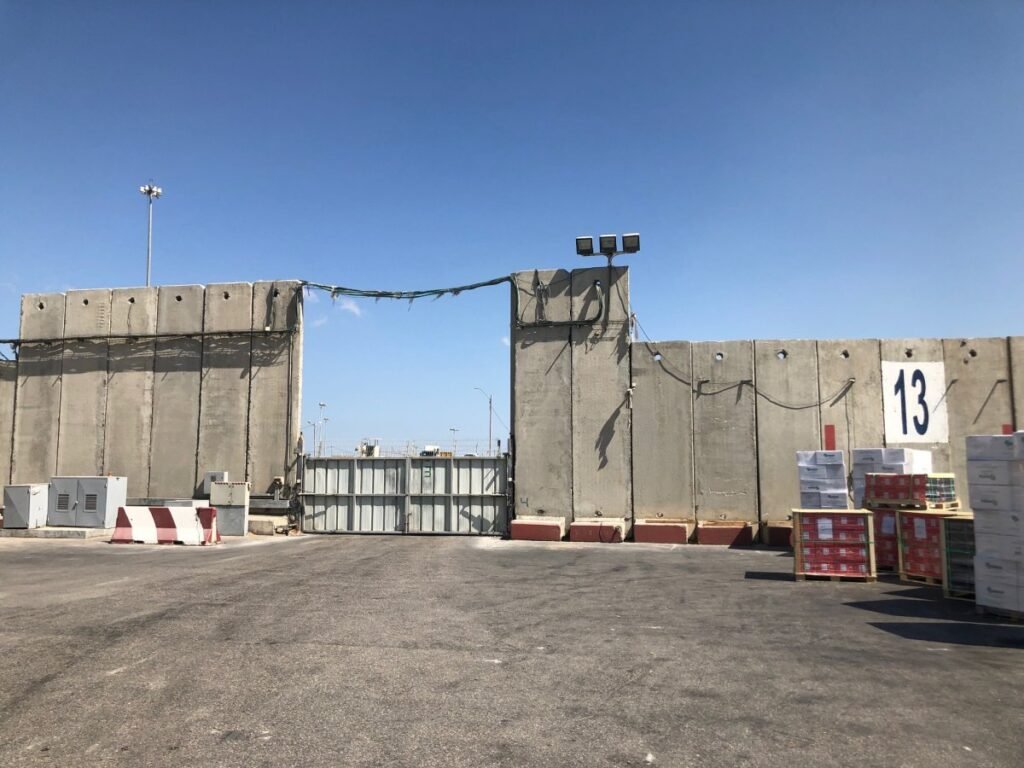
Gaza Herald —The American-Israeli war on Iran is casting its shadow over Gaza, despite the relative calm prevailing in the Strip. This comes as the Israeli government announced the closure of Gaza’s crossings, including the Rafah crossing.
There are growing fears that Israeli forces may exploit the regional escalation as a pretext to continue tightening restrictions on more than two million Palestinians and to evade commitments related to the second phase of the ceasefire agreement.
Observers agree that Gaza is not isolated from developments in the war on Iran and will be exposed to political, security, and economic consequences, particularly as it has yet to recover from the devastating war that exhausted it over the past two years.
Israeli Evasion
On the political level, Palestinian writer and political analyst Wissam Afifa believes Gaza is not an isolated arena but part of a broader regional balance. The escalation between Iran and Israel, with direct American involvement, is reshuffling regional priorities, which in turn affects the ceasefire track in Gaza.
Afifa told Al Jazeera Net that if Washington becomes preoccupied with managing a broader and prolonged confrontation with Iran, pressure on Benjamin Netanyahu’s government to complete the second phase of the Gaza agreement will decline. The likely outcome, he says, would be delays in implementation or renegotiation under the justification of “regional security circumstances.”
He added that if the conflict expands into a wider regional confrontation, Netanyahu could use it to postpone commitments related to Gaza, especially those concerning withdrawal or reconstruction.
Conversely, Afifa suggested that if Hamas perceives that the regional confrontation has not weakened the “Axis of Resistance,” it may attempt to capitalize on that in certain files. However, if Iran appears to be under significant pressure, Hamas may be forced to adapt to a new reality, prioritizing the stabilization of the ceasefire to protect Gaza’s internal front.
Afifa warned that the most dangerous scenario would be linking the Iranian track to the Gaza track,using Gaza as a bargaining chip in indirect negotiations with Washington or through mediators.
Rounds of Escalation
The outbreak of Israel’s war on Iran follows two previous rounds of military escalation between the two sides since the beginning of the war in Gaza.
On October 1, 2024, Tehran launched a missile attack against Israel in response to Israel’s assassination of Hamas political bureau chief Ismail Haniyeh in Tehran on July 31, 2024, along with other leaders of the resistance axis. Approximately 200 ballistic missiles were fired toward the occupied Palestinian territories.
At the time, the war in Gaza was at its height, and Iranian missiles reportedly targeted Israeli army positions along the Netzarim corridor in central Gaza.
On June 13, 2025, a new wave of escalation began, lasting 12 days, after Israel launched a wide-scale surprise attack on sites inside Iran, including military facilities, in what was described as a preemptive operation aimed at destroying Iran’s nuclear and military capabilities.
Iran responded by launching ballistic missiles and drones at targets inside Israel.
During that round, Gaza was still enduring the Israeli war and suffering from deliberate starvation policies due to the closure of crossings and the prevention of aid entry.
Security Repercussions
The war on Iran is reshaping regional conflict priorities and will impact the future of the Gaza ceasefire agreement, according to security and military affairs researcher Rami Abu Zubaida.
He explained that direct U.S. involvement in the war effectively shifts American focus from Gaza to the confrontation with Iran, leading to a clear slowdown in political movement related to the Gaza truce, possibly even near-total stagnation.
Abu Zubaida noted that the second phase of the ceasefire agreement appears paralyzed, as it requires sensitive and pivotal decisions, including a gradual Israeli withdrawal, the deployment of an international stabilization force, the formation of a technocratic governing committee, and complex security arrangements.
He outlined three possible scenarios for Gaza.
The first scenario involves gradual escalation. In this case, Israel could expand its limited military operations inside Gaza, relying on intelligence-based target banks to carry out selective strikes. Such actions would be intended to send deterrent messages to resistance groups, Iran, and the broader Axis of Resistance, while also helping Israeli leadership ease internal political pressure stemming from the wider regional war.
The second scenario is what he described as a tactical freeze. Under this approach, Israel might choose to keep the Gaza front relatively quiet for a period of time, seeking to avoid the risks associated with fighting on multiple fronts simultaneously. This option would become more likely if regional tensions expand to other arenas such as Iraq, Yemen, or the Red Sea, creating additional military and strategic complications.
The third and most dangerous scenario would involve a multi-front confrontation. In this case, Gaza could become directly integrated into a broader regional war, particularly if other regional actors enter the conflict in a more direct and coordinated manner.
Abu Zubaida added that the war on Iran may ultimately grant Israel greater room to delay political commitments and impose tougher conditions, especially regarding demands related to the disarmament of resistance factions and the restructuring of Gaza’s future security framework.
Economic Exhaustion
Regarding economic repercussions, researcher Ahmad Abu Qamar stated that the Palestinian economy is almost entirely tied to the Israeli economy. Therefore, any disruption in Israel’s supply chains directly impacts both the West Bank and Gaza.
He noted that the continued closure of the Rafah land crossing deprives Gaza of diversifying its sources of goods entry. Rafah had previously helped reduce dependence on the Kerem Shalom crossing and mitigate the effects of closures or restrictions.
Abu Qamar explained that Gaza’s crossings are the most fragile link during crises, as even a one-day closure immediately affects markets, particularly in light of the post-war transformations in the Strip.
Before the war, Gaza maintained food reserves sufficient for at least six months, providing some ability to absorb food security shocks. However, after the destruction of warehouses and food storage facilities, that capacity has eroded significantly. The Strip now relies almost entirely on imports, making markets highly sensitive to any security developments or border closures.
This situation, he warned, creates economic distortions reflected in sudden price fluctuations and spikes, as seen recently.
Abu Qamar concluded that continued regional tensions, combined with Gaza’s fragile economic structure, increase the likelihood of a worsening living crisis, making any military escalation an additional burden on an already exhausted economy.