Gaza Herald — Returning Palestinians at the Rafah crossing face harsh and arbitrary treatment from Israeli forces as they attempt to return home to the Gaza Strip. Travelers report invasive inspections, long delays, and strict interrogations, creating both physical exhaustion and psychological stress, especially during the holy month of Ramadan.
Israeli Measures Exacerbate Ramadan Hardships
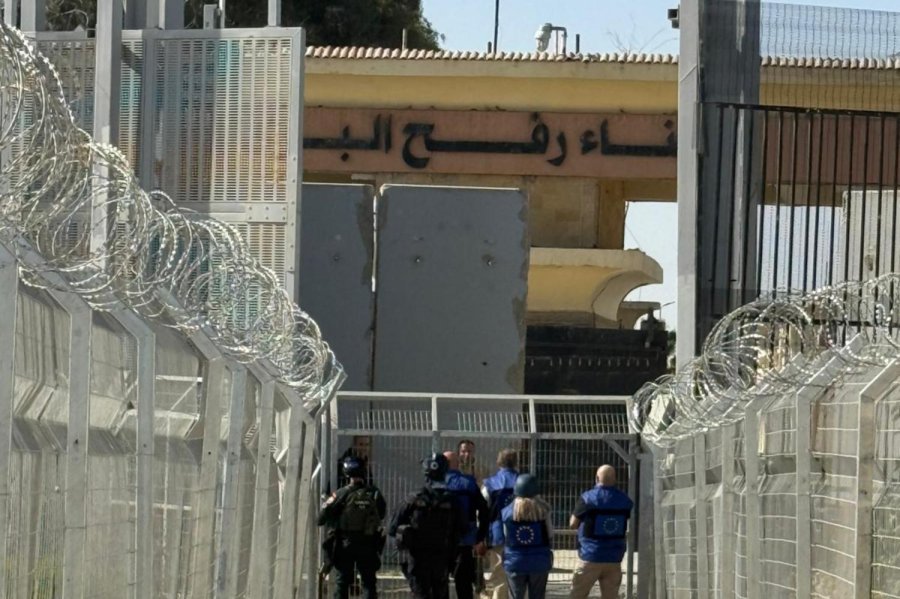
Palestinians coming back to Gaza through the Rafah border are subjected to what they describe as deliberate, humiliating procedures by Israeli forces. These measures coincide with the holy month of Ramadan, intensifying the strain on those fasting. Travelers are delayed for hours, subjected to strict security checks, and often forced into grueling field interrogations that heighten both physical exhaustion and psychological stress.
The Palestinian side of the crossing was reopened on February 2 after being closed since May 2024, yet movement remains extremely restricted. Security measures are so tight that even a simple return journey feels dangerous and mentally taxing. On Saturday evening, around 50 Palestinians successfully crossed, though many others had been sent back repeatedly in previous days. Returnees reported invasive inspections and were barred from bringing gifts or children’s toys, allowed only minimal clothing.
Personal Accounts Highlight the Harsh Reality
Hamas condemned these actions as systematic violations of established crossing protocols, urging international mediators to intervene. Um Abdulaziz Al-Sarsak, arriving in Khan Yunis, described a 20-hour ordeal from the Egyptian side to Nasser Medical Complex. She recounted how Israeli forces confined returnees, including fasting children, inside buses for hours, creating a tense military atmosphere.
Al-Sarsak likened the crossing to a military zone, with tanks and armored vehicles surrounding buses. She emphasized that these measures aim to intimidate Palestinians attempting to return home, though she praised the Egyptian authorities for providing some relief during the process.
Similarly, Abu Saeed Al-Habil shared that soldiers singled out travelers for individual interrogations, each lasting around 45 minutes. He personally tried to return to Gaza five times since the partial reopening, only to be repeatedly turned away without explanation. Despite these hardships, he expressed overwhelming joy at finally reuniting with his children and family after years of forced separation.
Broader Impact and Continuing Struggle
Official records show roughly 80,000 Palestinians have registered to return to Gaza, reflecting widespread determination to resist displacement and remain in their homeland despite massive destruction. Meanwhile, thousands of wounded and sick Palestinians urgently need to leave the Strip, with health authorities reporting 22,000 cases requiring treatment abroad as Gaza’s medical system struggles under targeted attacks.
Before the October 2023 war, Rafah served as the Strip’s lifeline under Palestinian-Egyptian coordination. Since then, Israel has reasserted control, turning the crossing into a tool of political pressure. The October 2025 ceasefire was expected to end this domination, yet Israel has repeatedly failed to honor its commitments.
The ongoing blockade and occupation policies, combined with over two years of sustained attacks, have destroyed 90% of Gaza’s infrastructure. According to health authorities, more than 72,000 Palestinians have been killed and over 171,000 injured. Despite these conditions, Palestinians continue their persistent efforts to return home, asserting their right to live freely on their land.