Gaza Herald – As the first meeting of the “Peace Council” convened on Thursday in Washington, D.C., under the leadership of U.S. President Donald Trump to discuss Gaza’s future, reconstruction, and humanitarian aid funding, Israel, despite being a participant and widely held responsible for the devastation in the Strip, pre-empted the talks by announcing its next course of action in Gaza.
Israeli officials signaled plans to renew military operations and refuse any withdrawal from areas it currently occupies, which account for more than 53% of the Gaza Strip, in contradiction to the second phase of the ceasefire framework.
While U.S. efforts focused on establishing a “National Committee for Gaza Administration” composed of independent figures to oversee reconstruction and stabilization, senior Israeli officials issued statements outlining policies that appear to override these proposals.
Israeli Cabinet Secretary Yossi Fuchs stated that Israel would grant Hamas a 60-day deadline to disarm, warning that failure to comply would result in a resumption of war. Speaking to The Times of Israel, he said the Trump administration had requested the timeline, adding that Israel “respects that,” though he did not specify when it would begin. The demand includes the surrender of all weapons, including small arms.
Fuchs indicated that either Hamas would disarm before Israel’s upcoming elections later this year, or the Israeli military would launch a large-scale offensive in Gaza. He also noted that extensive tunnel networks would be targeted as part of the operation.
These statements followed remarks by Prime Minister Benjamin Netanyahu opposing reconstruction efforts in Gaza before Hamas’ disarmament. Israel’s military chief, Lt. Gen. Eyal Zamir, reiterated that the central objective of the war remains the full disarmament of Gaza and the dismantling of Hamas. During a visit to Rafah, he stated that Israeli forces are prepared to shift from defensive to offensive operations and are continuing systematic efforts to dismantle what Israel describes as militant infrastructure, including underground networks.
Defense Minister Israel Katz further declared that Israel would not withdraw “by a single millimetre” from the so-called “yellow line” until Hamas is fully disarmed, rejecting provisions of the ceasefire’s second phase that call for a gradual withdrawal.
In parallel, Israeli Finance Minister Bezalel Smotrich renewed calls to occupy Gaza, establish Israeli settlements, and promote what he termed the “voluntary migration” of its السكان. Israeli media quoted him as advocating for a military administration in the territory.
Despite these demands, Netanyahu acknowledged that Hamas no longer possesses heavy weaponry in Gaza but insisted that all remaining arms—including rifles and mortars—must be surrendered. He added that a ceasefire does not prevent Israel from continuing what he described as “necessary measures,” stressing that Gaza “will no longer pose a threat.”
Palestinian Response
Hamas official Mahmoud Mardawi rejected reports of a 60-day disarmament ultimatum, stating that the group had received no official notification. In remarks to Al Jazeera, he described Israeli statements as “baseless threats” unrelated to ongoing negotiations.
In a separate statement, Hamas said that any political arrangements concerning Gaza must begin with a full cessation of hostilities, the lifting of the blockade, and the guarantee of Palestinian rights, including self-determination. The group called for the immediate opening of crossings, unrestricted humanitarian aid, and the launch of reconstruction efforts.
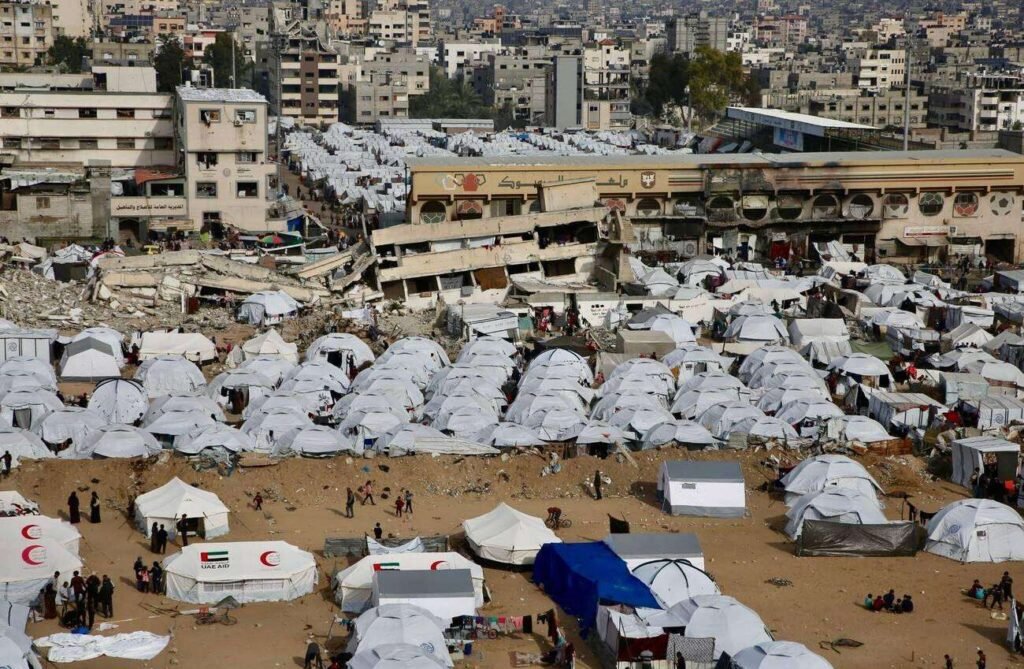
Fatah spokesperson Mounther al-Hayek accused Israel of using the disarmament issue as a pretext to maintain control over eastern and border areas of Gaza, arguing that this aligns with broader plans aimed at forced displacement. He noted that Israel continues to control more than half of the Strip and warned that current conditions—marked by severe shortages of food, water, and medical services—are rendering Gaza increasingly uninhabitable.
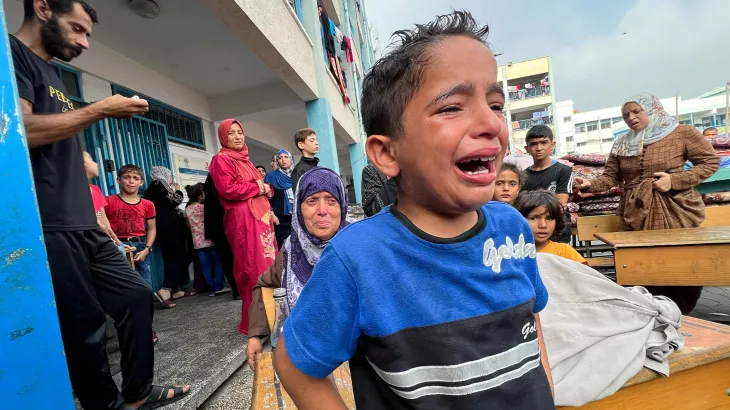
Meanwhile, Israeli forces continued intensive military operations throughout the week, including airstrikes and artillery fire that resulted in civilian casualties, including children and displaced persons. Reports also pointed to ongoing destruction of infrastructure in areas beyond the “yellow line,” alongside restrictions on the entry of food, medicine, and humanitarian aid.
UN spokesperson Stéphane Dujarric stated that Israel continues to impede humanitarian operations in Gaza despite the ceasefire. He noted that, according to the Office for the Coordination of Humanitarian Affairs (OCHA), only about half of the approximately 50 planned aid missions between February 6 and 11 were permitted to enter the territory, highlighting significant obstacles to relief efforts.