Gaza Herald _According to a report published by The Guardian, a coalition of Australian and Palestinian legal organizations has urged Australian federal police to investigate and arrest a retired Israeli general traveling with President Isaac Herzog over alleged war crimes in Gaza.
A growing coalition of Australian and Palestinian legal and human rights organizations is pressing Australian authorities to act against an Israeli military figure accused of serious crimes in Gaza, as opposition intensifies to the official visit of Israeli President Isaac Herzog. With mass protests planned and dissent emerging even within Australia’s ruling Labor Party, the case has reignited debate over accountability for alleged Israeli war crimes and the limits of political immunity.
At the center of the legal push is Doron Almog, a retired Israeli major general expected to travel with Herzog in his capacity as chair of the Jewish Agency for Israel. Almog has long faced allegations linked to Israeli military operations in Gaza in the early 2000s, including large-scale home demolitions and attacks on civilian areas. Although he denies the accusations, legal advocates argue that the evidence warrants investigation under Australian law.
Almog’s past has drawn international scrutiny before. In 2005, he narrowly avoided arrest in the United Kingdom after a British court issued a warrant accusing him of ordering the destruction of dozens of Palestinian homes near Rafah in 2002. British police were reportedly waiting to arrest him at Heathrow Airport, but Almog remained aboard his aircraft after being alerted to the warrant, and the plane later returned to Israel. While the warrant was eventually withdrawn, the allegations were never tested in court.
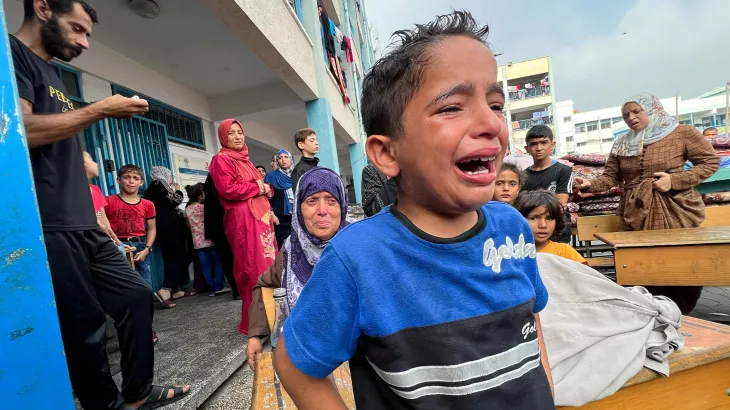
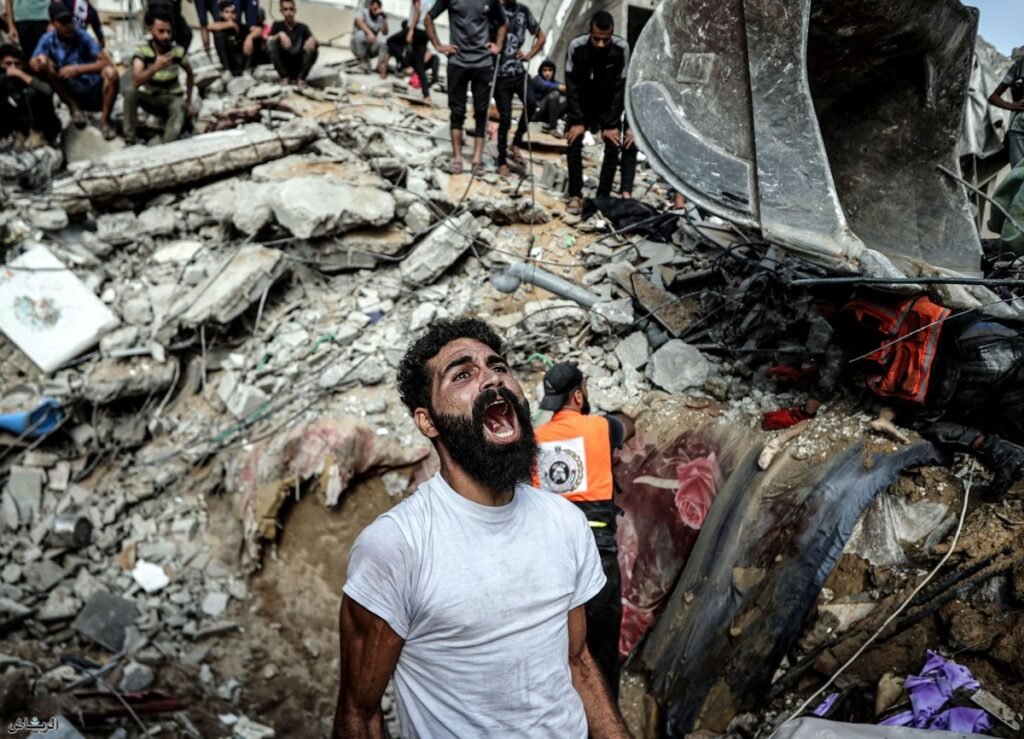
Human rights groups have also linked Almog to the 2002 bombing of Gaza City’s al-Daraj neighborhood, when a one-ton bomb was dropped on a densely populated residential area, killing 14 civilians, most of them children. The attack, which was framed by Israel as an assassination attempt, has since been cited by rights organizations as emblematic of the disproportionate force used against Gaza’s civilian population.
Four organizations, the Australian Centre for International Justice, Al-Haq, the Palestinian Centre for Human Rights, and the Al Mezan Center for Human Rights, have submitted a detailed legal brief to the Australian Federal Police. The submission argues that under Australian law, grave breaches of the Geneva Conventions constitute serious criminal offences, obligating authorities to investigate and prosecute suspects regardless of nationality. The AFP has confirmed that the case has been referred to its Special Investigations Command.
Beyond Gaza, the legal groups have also raised concerns over Almog’s role at the Jewish Agency, alleging involvement in policies facilitating the transfer of Israeli civilians into occupied Palestinian territory. Such actions, they argue, amount to illegal population transfer under international law and further strengthen the case for investigation.
The controversy has cast a shadow over Herzog’s visit itself. While the Australian government framed the invitation as a gesture of unity, several lawmakers have voiced discomfort, pointing to Herzog’s public conduct during Israel’s assault on Gaza. Herzog was previously photographed signing artillery shells destined for the enclave, and a UN commission later accused him of making statements that could amount to incitement against Palestinians, allegations he denies.
Although Herzog enjoys immunity as a sitting head of state, legal experts stress that this protection does not extend to other members of his delegation. UN commissioner Chris Sidoti recently described the invitation to Herzog as a “terrible mistake,” arguing that it undermines global efforts to uphold international law at a moment when Israel faces genocide proceedings before the International Court of Justice.
For Palestinian advocates, the call to arrest Doron Almog is a test of whether international law still applies when the alleged perpetrator is Israeli. They argue that decades of impunity have enabled repeated violations in Gaza, while victims are denied justice. As Australia weighs legal obligation against political pressure, the outcome of this case may signal whether accountability for crimes against Palestinians can finally move beyond rhetoric and into action.