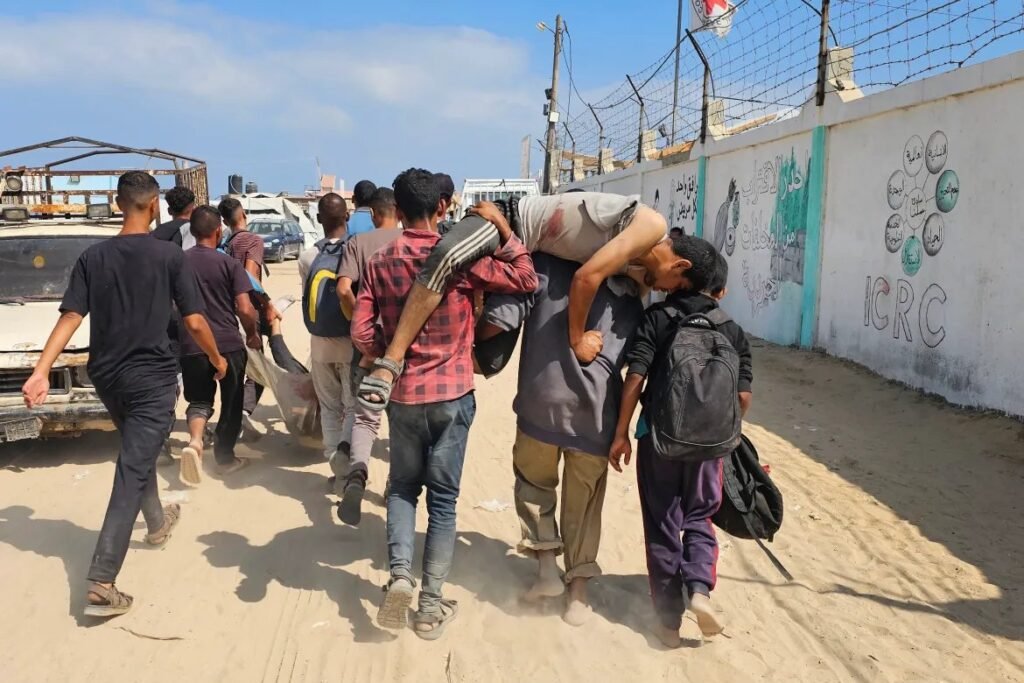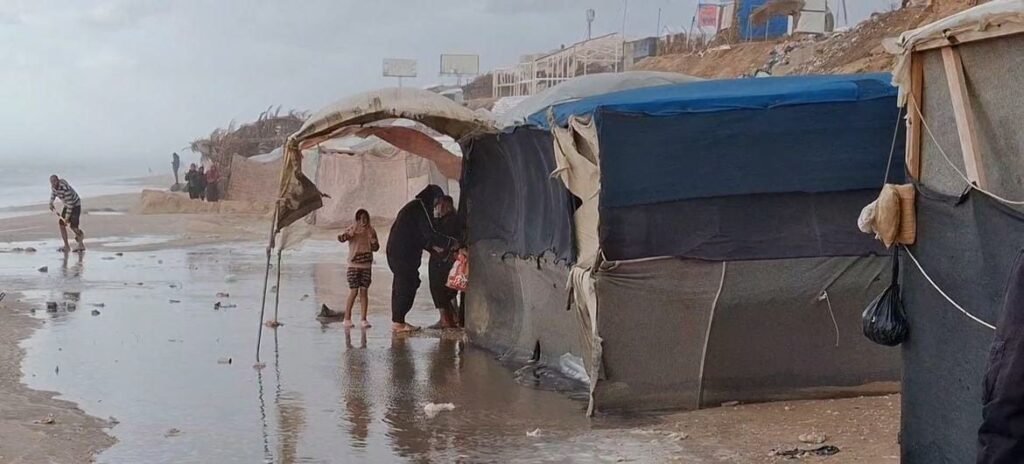
Gaza Herald_ Amid the rubble, smoke, and devastation left by Israel’s war on Gaza, one of the most controversial political proposals has emerged under the name of the so-called “Peace Board.” Presented internationally as a framework for organizing the “day after” the war, the proposal has sparked deep skepticism among Palestinians who continue to live under siege, displacement, and unrelenting humanitarian collapse.
For many in Gaza, the idea arrives at a moment of extreme exhaustion, politically, socially, and psychologically. The population is grappling not only with mass destruction and loss of life, but also with a fractured political environment, ongoing blockade, and the absence of meaningful national leadership capable of representing collective Palestinian aspirations.
This raises fundamental questions. Is the “Peace Board” a genuine gateway toward political recovery and administrative stability that could help end Gaza’s nightmare? Or is it simply another functional framework designed to manage the crisis rather than resolve it, reflecting a wide gap between international agendas, particularly those led by Washington, and the real needs of Palestinians on the ground?
At the heart of the debate lies a central uncertainty: does this body have any real chance of success in such a complex and volatile context, or is it destined to fail before it even begins?
“Not a Peace Project”
Political analyst and writer Hani al-Masri argues that what is being proposed for Gaza today cannot honestly be described as a peace initiative. Instead, he says, it amounts to a project aimed at managing the occupation itself. In his view, the initiative represents a renewed attempt to entrench Israeli dominance, this time through American backing and international sponsorship, giving occupation a more acceptable political and administrative façade.
Speaking to the Palestinian Information Center, al-Masri explained that a closer reading of both US and Israeli positions reveals no serious commitment to a just political solution. Rather, he said, the focus on the “day after” is an attempt to escape forward following Israel’s failure to achieve its military objectives. Gaza’s humanitarian catastrophe, he warned, is being instrumentalized to impose arrangements that prioritize Israeli security above all else.
According to al-Masri, the proposed “Peace Board” offers Palestinians no sovereignty, no national authority, and no political rights. Instead, it would function as an administrative tool to manage the population under occupation, without lifting the blockade or recognizing core Palestinian rights, chief among them self-determination and the establishment of an independent state.
He further argued that Israel, with clear US support, is attempting to reengineer the Palestinian political landscape by weakening unified national structures, sidelining the Palestine Liberation Organization, and hollowing out the Palestinian Authority of any genuine political role. Gaza, he warned, risks becoming a testing ground for long-term security and humanitarian control.
Al-Masri stressed that the national duty at this critical juncture is to forge a unified Palestinian position that rejects the exploitation of Gaza’s suffering and reasserts a liberation-based national project rooted in dignity, sovereignty, and freedom.
Netanyahu and the Politics of Endless Crisis
Israeli affairs researcher Jamal Zahalka views Israeli Prime Minister Benjamin Netanyahu’s statements about Gaza’s “day after”—including his claims of ignorance regarding any governing council, as evidence of deep confusion within Israel’s ruling establishment. At the same time, Zahalka says, these statements expose a dangerous political vision rooted in evasion and the absence of any viable future for Palestinians.
Zahalka told the Palestinian Information Center that Israel is not genuinely pursuing peace or a fair settlement. Instead, it is seeking to cement the status quo in Gaza, advancing a strategy focused on managing the conflict rather than resolving it. This approach, he said, ensures Gaza remains politically, economically, and humanitarianly exhausted.
Netanyahu’s rejection of any clear governing framework for Gaza, Zahalka added, underscores Israel’s refusal to accept a unified Palestinian partner or a strong national authority. Israel, he said, prefers a political vacuum, a condition that allows it to impose security and administrative arrangements at will and intervene whenever it chooses.
According to Zahalka, Israeli rhetoric about peace at this stage serves little more than international public relations purposes. On the ground, Israel continues to implement the same policies: blockade, fragmentation, control over crossings, and the imposition of realities that isolate Gaza from its broader Palestinian context.
He concluded that Israel has no real vision for peace and treats Gaza as a long-term security file, seeking to transform the current catastrophe into an opportunity to redesign reality in a way that ensures ongoing dominance and keeps the Palestinian cause trapped in a cycle of perpetual exhaustion.
Between Fear and Refusal
Within this deeply complex landscape, Palestinians in Gaza find themselves suspended between the fear of renewed war and its catastrophic consequences, and a deeply rooted rejection of occupation and all its mechanisms, particularly those repackaged as humanitarian or political solutions under Western and American sponsorship.
As for where these developments will ultimately lead, and which scenario will prevail for Gaza and its people, the answers remain uncertain. For now, these questions hang in the air, unresolved, heavy, and urgent, awaiting what the coming days may reveal.