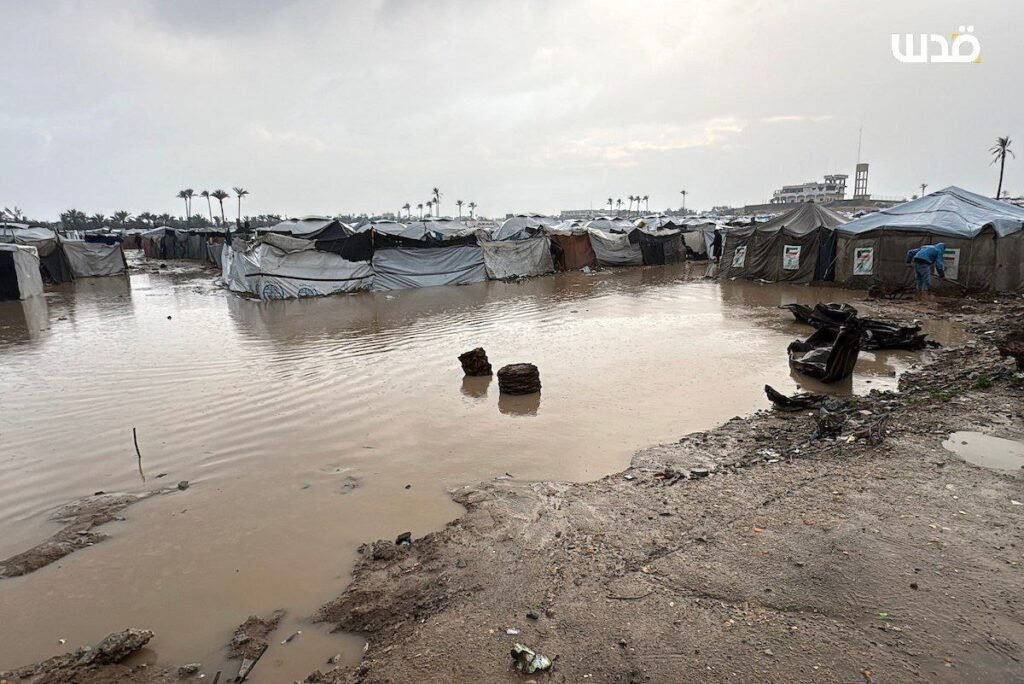
Gaza Herald _ The world continues to look on with a cold, numbing indifference as catastrophe unfolds in the Gaza Strip. Hundreds of thousands are struggling to survive relentless winter storms inside tents that barely shield them from the open air. Yet, even as Palestinians face these unbearable conditions, U.S. President Donald Trump has begun to distance himself from the crisis, once again delaying the launch of his so-called “Peace Council” until early next year.
This proposed council falls outside any known international framework for conflict resolution. Trump appears to want it precisely this way, seeking to bypass legal and political principles related to Palestinian rights. The entire concept reduces Palestinians from a people pursuing freedom and self-determination into a population to be managed and categorized. Israel, meanwhile, sets the criteria for who is considered an “acceptable” Palestinian and who is not, turning Gaza into a dystopian experiment aimed at stripping people of modern human dignity. Some Palestinians are expected to survive only as cheap labor, while others are pushed toward yet another forced displacement.
Conversations with Palestinians who left Gaza after October 7, 2023, reveal a shared belief that the resistance’s breakthrough shattered the Israeli system in ways no one, perhaps even the resistance, anticipated. Israel’s failure to contain the initial attack turned it into an event beyond any predictable scenario. For a brief moment, Gaza celebrated, but as the scale of the operation became clear, fear replaced euphoria. Israel’s response looked less like targeted strikes and more like a systematic effort to wipe Gaza off the map.
Displacement Without End: A People Trapped Between Ruins and Uncertainty
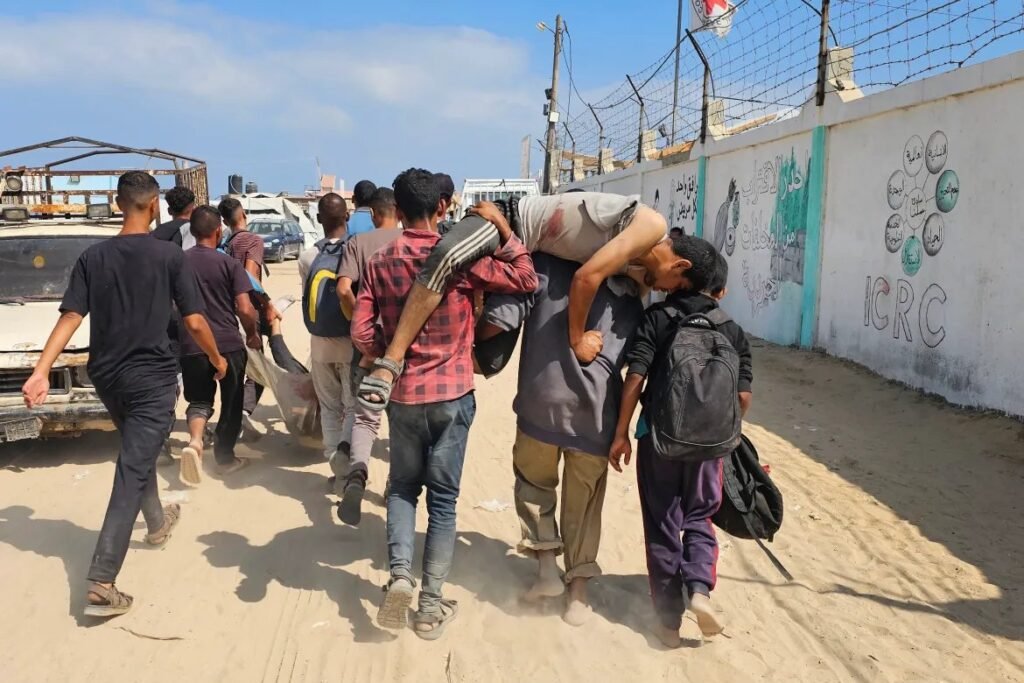
The world seems desensitized to slow, engineered death; Gaza has simply been assigned its place in this global pattern of cruelty. Entire neighborhoods have been erased, families uprooted again and again. One Gazan I spoke with described how his family’s cluster of homes near the beach was flattened completely, leaving surviving relatives displaced with no prospect of return. Many wish to leave the Strip, but without opportunities abroad or resources to rebuild their lives, they remain trapped inside a cycle of destruction and uncertainty.
Rumors circulate quietly about Gaza’s future once “reconstruction” begins. But reconstruction itself remains a vague and contested promise, its cost, form, and goals stuck on the crowded agenda of an American president who is already overwhelmed by international crises. Israel, for its part, treats Gaza primarily as a military issue, not a humanitarian one. The new doctrine will likely continue for years: Israel expresses no interest in rebuilding Palestinian life, only in clearing rubble to flatten the Strip into an empty, controllable geography shaped to serve Israeli priorities.
Gazans are expected to lose all military or security depth beyond the “yellow line,” which Israel plans to control entirely. They may also lose access to the coastline, which could be carved up into commercial zones, logistics hubs, and tourist resorts imagined in the American president’s real-estate-driven “peace” vision. Palestinians are simply expected to adapt to this engineered reality.
Political Manipulation and the Slow Erosion of Palestinian Rights
Will Trump eventually present this vision to his so-called Peace Council, turning it into a rubber-stamp body for his ambitions? Or will the council serve as an advisory panel caught in a constant political tug-of-war? Trump claims that leaders from several countries want to join the council, but any such involvement is likely to translate into more pressure on Palestinians, not on Israel, which rejects any initiative that does not fully serve its interests. Israel demands absolute security guarantees to prevent another October 7, effectively meaning outsourced governance of Gaza tailored around a single goal: preserving Israeli priorities while erasing Palestinian aspirations.
As Palestinian families watch storms wash away their tents, they also endure deliberate political time-gaps meant to weaken their collective will, drain the significance of October 7, and pacify global solidarity. The world, once momentarily moved by Palestinian suffering, is now presented with the illusion of a ceasefire to silence public outrage and rehabilitate Israel’s narrative.
The world has normalized slow, calculated death. Gaza is now firmly embedded within this architecture of desensitization, an engineered numbness maintained through empty promises, political theatrics, and the very real fear that this transitional moment is a gateway to stripping Palestinians of everything. The result is a Gaza pushed toward becoming a besieged, chaotic enclave hidden behind a thin veneer of “small achievements” that resemble commercial breaks in a long, nightmarish series the world watches with silence and disturbing ease.